
Advertisement
Co Presented By
Co Presented By


Sections
CEA’s electricity plan for 2027: Four key hurdles will prove achieving targets is a huge task
Solar and wind does not generate electricity round the clock, and hence are intermittent in nature.

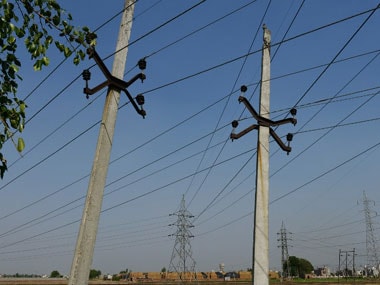 AFP[/caption]From a climate change perspective, it resonates with India's Nationally Determined Contribution (NDC) targets pledged at the UN Climate Change Conference held in Paris (COP 21, December 2015). We need to be ambitious to foresee a low-carbon future, but we should also understand the complexity associated with such aggressive planning with regards to deployment of RES. The existing 46.7 GW (as of November 2016) of renewable-based capacity is still far away from the mammoth target of achieving 175 GW by 2022. Practically, to achieve this target within a time frame of five years is a herculean task for any government. By bringing all the four portfolios i.e. power, coal, new and renewable energy, and mines under the control of one minister, there has been a clear intent for swift planning and quick decision making. Yet, the implementation of this plan will come across the following challenges, and there is a need to set out effective plans for the same:Availability of finance for renewable energyReaching 175 GW RE by 2022 would require an investment of more than $200 billion. Council on Energy, Environment, and Water (CEEW) estimates suggest that if we include the costs associated with grid integration and energy balancing, achieving 100 GW of solar alone would require investments ranging between $120 billion to $147 billion. Despite gaining a big jump of 22 percent from the previous year, India’s total RE investments adds up to only $10.2 billion for 2015. Achieving targets in another five years call for massive inflow of money considering all the perceived risks (honouring the contracts, financial health of distribution company, construction and clearance risk, delays and challenges in land acquisition, etc.) in this sector.Availability/Acquisition of land for solar projectsOne of the major constraints behind rapid expansion of renewable energy projects is availability of land and associated delays. Considering solar projects alone, as per the Ministry of New and Renewable energy (MNRE), 60 GW is likely to come in the form of utility-scale solar projects, while grid-connected rooftop is expected to constitute the remaining 40 GW share. As a simple rule of thumb, each MW of solar requires 4 acres of land. Such a massive scale of land acquisition within a short time frame, especially in India's development context, could pose significant problems. We have some examples demonstrating novel ways to minimise the use of land, such as canal-top projects, hybrid solar-wind farms, co-locating solar installations and agriculture, etc. But, such ideas also have specific challenges and limited viability.
Intermittency with renewables and grid integrationSolar and wind does not generate electricity round the clock, and hence are intermittent in nature. To integrate an intermittent source of power with the grid is a challenging task. It requires lots of planning, such as a day ahead time scheduling. Assimilation of a humongous amount of renewable power (175 GW) will require at least 53.56 mmscmd of natural gas to meet the grid balancing requirements (as per the draft plan). Alternatively, grid storage is another option. In any case, resultant tariff after balancing adjustment could be uncompetitive with prevailing coal prices. This could prove to be a major deterrent. Anyhow, a significant boost to the 24 GW of natural gas fired power generation capacity is essentially required. This shall be driven either by cheaper imported gas prices, or through subsidy/incentive linked mechanisms. From a long-term perspective, focus on R&D in storage technologies could be a game changer for India.Low PLF of thermal power plantsImplementation of NEP means a drastic fall in capacity utilisation of coal based thermal power plants, which can go to as low as 48 percent. That said many of them could turn into non-performing assets due to technical unviability.While, all three scenarios presented in the draft NEP are highly aggressive in terms of meeting RE targets, a business-as-usual scenario would also be useful to make clear the kind of efforts required by all the stakeholders. The draft NEP reaffirms India’s climate commitments and aggressive renewable energy goals. However, it requires a strategic road map and strict implementation of policies to drive India’s low carbon growth.(The writer is a Programme Lead at the Council on Energy, Environment and Water - a policy research organisation based in New Delhi. He can be reached at vaibhav.gupta@ceew.in)
First Published:Dec 28, 2016, 15:12:12 IST
Advertisement
Advertisement

Can a record May offset a shrunk international schedule and help IndiGo turn a profit?
Record domestic market share boosts operating performance, but forex losses, rising oil prices and geopolitical disruptions could weigh on IndiGo's bottom line.
3 min read
China has dominated Myanmar’s rare earth mines — now India eyes deal to harness country’s critical minerals
India is deepening rare earth cooperation with Myanmar as New Delhi seeks alternative sources of critical minerals dominated by China, including dysprosium and terbium used in EVs, defence systems and clean energy technologies
6 min read
JPMorgan to hire 1,000 technology professionals for India GCCs amid AI-led transformation
Wall Street banking giant to expand hiring across cloud, cybersecurity and AI data pipeline roles as it strengthens its India Global Capability Centres despite AI-driven workforce optimisation.
1 min read
BOJ seen raising interest rates by December as weak yen fuels inflation risks
Majority of economists expect Japan's central bank to deliver a 25-basis-point rate hike by year-end, with further policy tightening likely through 2027.
2 min read
'From make in India to launch from India': Skyroot COO on why Vikram-1 could change India’s space sector
Skyroot Aerospace’s successful Vikram-1 mission marks a major milestone for India’s private space sector, as the country seeks to shift from “Make in India” to “Launch from India” and compete in the global commercial satellite launch market
8 min read
Advertisement
Advertisement