


Toyota SHEVs: Comes with Double the benefits: Higher Fuel Efficiency and Lesser Maintenance
As of April 2020, Toyota has sold over 15 million Self-charging Hybrid Electric Vehicles (SHEVs), reducing CO2 emissions by 139 million tonnes worldwide to date.

In the summer of 1993, Eiji Toyoda, honorary chairman of the Toyota Motor Corporation, set a challenge for the company: to think about a new vision for cars for the 21st Century. The result, in October of 1997, was the Toyota Prius. A car that delivered on three pillars - environment, energy and safety; and was ready to face head-on, the issues of energy resources, global warming and air pollution.When launched, the car was a revolution: twice the fuel-efficiency of a regular petrol car and not as expensive as even Toyota had anticipated. Today, the 4th generation Prius delivers a whopping 40.8 kms to a litre*, with its signature smooth drive, exemplary safety record and low maintenance costs. The Prius was, of course, just the beginning.As of April 2020, Toyota has sold over 15 million Self-charging Hybrid Electric Vehicles (SHEVs), reducing CO2 emissions by 139 million tonnes worldwide to date. The global Toyota SHEV fleet includes the Toyota Camry, Vellfire, Avalon, RAV4, Highlander, Corolla, and of course, the Prius. In India, Toyota has launched the Toyota Camry and Vellfire.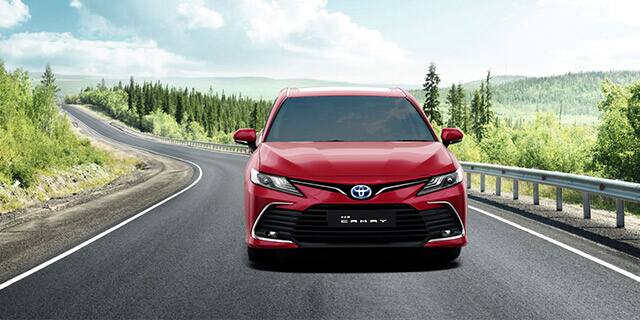 In India, we've tried to jump straight to EVs, but without the necessary investments in charging infrastructure. Our investments into renewable power are yet to bear fruit, so for most of us, even if we own EVs, we're charging them with power generated from fossil fuels. This defeats the purpose, and it keeps people from adopting EVs. In the meantime, we've overlooked hybrids (and their enormous benefits) altogether. Toyota's Hum Hai Hybrid campaign uses interesting video content to create awareness about the many benefits of SHEVs, not just for the owners, but also for the environment at large. There are a lot of benefits to talk about.What makes an SHEV unique, however, is the ability to recover kinetic energy from braking and coasting, and repurpose it to drive the car with enhanced efficiency. SHEVs are equipped with a powerful petrol engine and an advanced electric motor that seamlessly switch between each other to provide a smooth, effortless and most importantly, environmentally responsible driving experience. Since the petrol engine and hybrid motor switch off one another, the car is able to squeeze higher mileage from every drop of fuel.The cars operate in electric mode upto 60%* of the time, reducing carbon emissions and giving you enhanced fuel efficiency. Since the electric motor recovers power from braking, SHEVs perform much better in stop and go traffic, providing better mileage precisely where regular petrol cars struggle most. They're also more silent - when in electric mode (upto 60%* of the time!), the car uses its electric motor which has far fewer moving parts.SHEVs don't require any new driving skills - driving one is exactly like driving an internal combustion engine car. However, in the case of SHEVs, the car is doing a lot of work under the hood! The car starts using the electric motor, maintains optimal balance between the electric motor and petrol engine during regular driving, uses the juice from both engines when you want to accelerate or overtake, and recovers energy during braking and coasting. Best of all, it does so on its own, with no driver input.But that's not all. SHEVs can literally go the distance. Not only thanks to the higher mileage, but also because they are self-charging - unlike pure EVs, there is no need to worry about charging your battery! Each time you coast or brake, the car is charging the hybrid battery automatically. You never have to plug it in! What's more, in Toyota's case, the batteries come with an unprecedented 8 Years Hybrid Battery Warranty. That's 8 years of not worrying about your hybrid battery. Infact, this is a battery that doesn't need to be replaced during the car's lifetime. Unheard of, right?Which brings us to maintenance. Since an SHEV is more complicated in design, and has a lot more going on under the hood, it's probably harder to maintain, right? Wrong. Since they operate in electric mode for more than half the time, there is much lesser wear and tear on the petrol engine. The electric motor and battery components don't need maintenance at all, and Toyota's SHEVs eliminate several fiddly components (clutch, alternator and starter motor) further reducing the need for maintenance. Overall, you spend far less on maintenance on an SHEV, than you would on a petrol equivalent.So, in the final analysis, are SHEVs more expensive? With fuel prices that will only rise, and the much lower maintenance costs of an SHEV, on balance, the SHEV variant gives you your money's worth. Also, you can't put a price on the peace of mind that comes with an SHEV, and now with Toyota's 8 Years Hybrid Battery Warranty, you really can't compare these cars with a standard petrol or diesel vehicle.More importantly though, when you opt for an SHEV, you have the satisfaction of knowing that you are doing your bit towards a better planet today, not in the future, when a universal EV charging infrastructure exists in India. The road to reclaiming our planet is a long one, and it needs the same sort of audacious thinking that went into creating the first Prius nearly 20 years ago: how do we create something that solves the problem both today and tomorrow?In this case, we do it one mile at a time, with lower emissions, lesser fuel consumption and a car (and hybrid battery) that lasts longer. *As per iCAT Nu-Gen Nov 2019 summit report. This article has been written by Studio 18 on behalf of Toyota.
Tags

IEA predicts major oil surplus in 2027 as Hormuz reopening sparks supply rebound
CNN-News18 Launches #CNNNews18OneLess, Inspiring India to Turn Small Actions into Big Environmental Impact
Sensex crashes over 1,000 points; Nifty tumbles 359 points in late sell-off
Hindware wins case against Google, Delhi HC fines tech giant Rs 30 lakh for trademark infringement
Best Ways to Get Exposure to Gold in India?