


Driverless cars need new regulations to ensure safety: experts
The current safety regulations for driverless cars do not plan for tasks that previously could only be performed by humans, and are therefore ill-equipped to ensure that autonomous vehicles will perform safely and reliably, experts say.

New York: The current safety regulations for driverless cars do not plan for tasks that previously could only be performed by humans, and are therefore ill-equipped to ensure that autonomous vehicles will perform safely and reliably, experts say.[caption id="attachment_3223682" align="alignleft" width="380"]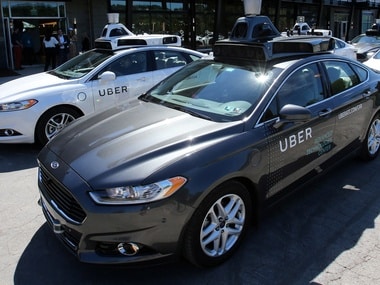 Representational photo. Reuters[/caption]"Currently, we ensure safety on the roads by regulating the performance of the various mechanical systems of vehicles and by licensing drivers," said Alex John London, professor at Carnegie Mellon University in the US."When cars drive themselves we have no comparable system for evaluating the safety and reliability of their autonomous driving systems," said London.Professor David Danks and London point to the US Department of Transportation's recent attempt to develop safety regulations for driverless cars as an example of traditional guidelines that do not adequately test and monitor the novel capabilities of autonomous systems.Instead, they suggest creating a staged, dynamic system that resembles the regulatory and approval process for drugs and medical devices, including a robust system for post-approval monitoring."Self-driving cars and autonomous systems are rapidly spreading through every part of society, but their successful use depends on whether we can trust and understand them," said Danks."We, as a society, need to find new ways to monitor and guide the development and implementation of these autonomous systems," he said. The phased process Danks and London propose would beginwith "pre-clinical trials," or testing in simulated environments, such as self-driving cars navigating variedlandscapes and climates.This would provide information about how the autonomous system makes decisions in a wide range of contexts, so that we can understand how they might act in future, new situations. Acceptable performance would permit the system to move on to "in-human" studies through a limited introduction into real-world environments with trained human "co-pilots."Successful trials in these targeted environments would then lead to monitored, permit-based testing, and further easing of restrictions as performance goals were met. Danks and London propose that this regulatory system should be modelled and managed similarly to how the US Food and Drug Administration (FDA) regulates the drug approval process."Autonomous vehicles have the potential to save lives and increase economic productivity. But these benefits won't be realised unless the public has credible assurance that such systems are safe and reliable," London added.

Kargil veteran, Brahmi and growing hope in Meghalaya's farmlands
New cocoa fruit drink to make hot chocolate a has bean
In diversity, a billion people banded together for humanity - their stories should inspire us Lifelong!
Discovery India and OPPO Bring A Stunning New Series Called Life Unscene With Videography Expert OPPO Reno5 Pro 5G
BasicFirst's easyMATH e-learning program guarantees you will score more than your last exam - find out how!