
Advertisement


Sections
Indian Railways spurred Hindi pulp fiction's boom. With trains stalled amid COVID crisis, waning book biz faces a bust
The Indian Railways was possibly the largest moving library of Hindi pulp fiction. That is, until the coronavirus pandemic.

As the nationwide lockdown was announced in the wake of the coronavirus outbreak this March, the Indian Railways announced the suspension of about 12,000 passenger trains. The railways’ state of limbo continues even with the lockdown easing in some parts of the country, uncertainty underlying its stop-and-start operations.The fourth largest rail network in the world, the Indian Railways transports perhaps the largest volume of passengers anywhere, on a daily basis. Within it is accounted an entire history of travel and migration within India. The Indian Railways accounted for something else too: it was the largest moving library of Hindi pulp fiction. That is, until the pandemic.The Hindi pulp fiction industry was born and nurtured in Meerut, Uttar Pradesh. A confluence of language, access to cheap paper made from wood pulp and the initiative of a handful of families steeped in literature helped turn a whimsical idea into a thriving business. But, “the pandemic is probably the final nail in the coffin,” says Shaurya Jain, the second generation manager of Ravi Pocket Books, one of the few surviving publishers of Hindi pulp fiction that still consider new talent.Hindi pulp fiction has been facing a decline for some time now. “At its peak in the ‘90s we published 50,000 prints of a single novel. Sometimes several lakhs,” Jain notes. “The arrival of television changed the culture of reading. But televisions couldn’t be carried around [so books still remained popular]. Then the [smart]phone came along and suddenly, nobody wanted to read anything. Mobile and internet penetration has usurped the publishing and sale of pulp significantly.”[caption id="attachment_8626351" align="alignnone" width="640"]![Publishers of Hindi pulp fiction, Ravi Pocket Books has taken the Kindle route]() Publishers of Hindi pulp fiction, Ravi Pocket Books has taken the Kindle route[/caption]Hindi pulp fiction was so successful at one point that its most famous writing import — the prolific Surendra Mohan Pathak — is believed to have sold more copies than any other author in the world. This popularity of pulp fiction could be attributed to two key factors: One, the books were inexpensive and accessible. “You could buy a novel for a rupee or two in the ‘90s. The paper we printed on was cheap. The language too was accessible, and of course there had to be entertainment in it,” Jain says. Two, the availability of these books on railway platforms. “Before mobile phones came along, people would take books along on train journeys. As journey times shortened and travel modes changed, the book too was left behind,” he says.Most pulp fiction books published today are reprints of titles from writers whose popularity was established decades ago. While Pathak spawned a slew of murder mysteries, compatriot Vinod Kumar Sharma popularised the ‘social’ novel. “Sharma was a family friend. My uncle was a writer too. After we settled in Meerut in the mid-80s, I was always surrounded by people associated with Hindi literature, especially pulp fiction. But while I knew Sharma closely, it was really Pathak who inspired me to pick up the pen and write,” says Kanwal Sharma, the genre’s latest find and one of the few new writers Jain’s company has put its faith in. Sharma is a professor of History who divides his time between Faridabad, Panipat and Kurukshetra; he started his publishing journey by translating James Hadley Chase’s stories into Hindi. Sharma wrote his first novel, One Shot, in 2014, and has since written another six.Sharma observes that the change in demand for Hindi pulp fiction has also changed what is being written and published: “A lot has changed about how we engage with stories. The social novels of Vinod ji aren’t popular anymore because they require an investment and time that people are no longer willing to offer. Pathak, on the other hand, always wrote in the ‘khichdi’ language — a mix of Hindi, Punjabi and Urdu. I write the same way, and I feel you need to know how to hook your readers.”
Publishers of Hindi pulp fiction, Ravi Pocket Books has taken the Kindle route[/caption]Hindi pulp fiction was so successful at one point that its most famous writing import — the prolific Surendra Mohan Pathak — is believed to have sold more copies than any other author in the world. This popularity of pulp fiction could be attributed to two key factors: One, the books were inexpensive and accessible. “You could buy a novel for a rupee or two in the ‘90s. The paper we printed on was cheap. The language too was accessible, and of course there had to be entertainment in it,” Jain says. Two, the availability of these books on railway platforms. “Before mobile phones came along, people would take books along on train journeys. As journey times shortened and travel modes changed, the book too was left behind,” he says.Most pulp fiction books published today are reprints of titles from writers whose popularity was established decades ago. While Pathak spawned a slew of murder mysteries, compatriot Vinod Kumar Sharma popularised the ‘social’ novel. “Sharma was a family friend. My uncle was a writer too. After we settled in Meerut in the mid-80s, I was always surrounded by people associated with Hindi literature, especially pulp fiction. But while I knew Sharma closely, it was really Pathak who inspired me to pick up the pen and write,” says Kanwal Sharma, the genre’s latest find and one of the few new writers Jain’s company has put its faith in. Sharma is a professor of History who divides his time between Faridabad, Panipat and Kurukshetra; he started his publishing journey by translating James Hadley Chase’s stories into Hindi. Sharma wrote his first novel, One Shot, in 2014, and has since written another six.Sharma observes that the change in demand for Hindi pulp fiction has also changed what is being written and published: “A lot has changed about how we engage with stories. The social novels of Vinod ji aren’t popular anymore because they require an investment and time that people are no longer willing to offer. Pathak, on the other hand, always wrote in the ‘khichdi’ language — a mix of Hindi, Punjabi and Urdu. I write the same way, and I feel you need to know how to hook your readers.”![A stack of Kanwal Sharma's titles. Sharma is among the most popular new voices in Hindi pulp fiction today]() A stack of Kanwal Sharma's titles. Sharma is among the most popular new voices in Hindi pulp fiction today.[/caption]Even before the present crisis, the relationship between the Indian Railways and Hindi pulp fiction was undergoing a change. Dominated at one time by AH Wheeler bookstalls, railway platforms have undergone a sea change over the past decade-and-a-half (especially since 2004, when the Indian Railways ended Wheeler’s monopoly). Shops selling cold drinks and snacks saw greater footfalls.Around the time of this landmark change, mobile phones arrived and began competing for the ‘pocket’ that the erstwhile linguists of the Hindi heartland once occupied. Today, there is no option left for pocket book publishers but to abandon the ways they knew, if they wish to survive. “We are already working on developing our own app where our books will go digital. We are also working with two platforms to provide e-books of our novels. But it’s not the same thing, nor is there the same joy in the business,” Jain says.For as long as India’s trains stay off the tracks and its stations remain deserted, the industry of Hindi pulp publishing too will remain on hold. “We’ve lost our blood vessels,” Jain says, of the railways. Sharma, however, sounds a note of hope. “I’m positive that there are still readers out there,” he says. “We will have to change. It is a practical decision. Everyone needs to adapt to changing times. This virus will further scare an increasingly disinterested public. We can’t wait for them to come to us. We have to go to them, if not in paper, then in the digital form. Either we leap at that promise of life, or perish.”— Featured image via Wikimedia Commons
A stack of Kanwal Sharma's titles. Sharma is among the most popular new voices in Hindi pulp fiction today.[/caption]Even before the present crisis, the relationship between the Indian Railways and Hindi pulp fiction was undergoing a change. Dominated at one time by AH Wheeler bookstalls, railway platforms have undergone a sea change over the past decade-and-a-half (especially since 2004, when the Indian Railways ended Wheeler’s monopoly). Shops selling cold drinks and snacks saw greater footfalls.Around the time of this landmark change, mobile phones arrived and began competing for the ‘pocket’ that the erstwhile linguists of the Hindi heartland once occupied. Today, there is no option left for pocket book publishers but to abandon the ways they knew, if they wish to survive. “We are already working on developing our own app where our books will go digital. We are also working with two platforms to provide e-books of our novels. But it’s not the same thing, nor is there the same joy in the business,” Jain says.For as long as India’s trains stay off the tracks and its stations remain deserted, the industry of Hindi pulp publishing too will remain on hold. “We’ve lost our blood vessels,” Jain says, of the railways. Sharma, however, sounds a note of hope. “I’m positive that there are still readers out there,” he says. “We will have to change. It is a practical decision. Everyone needs to adapt to changing times. This virus will further scare an increasingly disinterested public. We can’t wait for them to come to us. We have to go to them, if not in paper, then in the digital form. Either we leap at that promise of life, or perish.”— Featured image via Wikimedia Commons
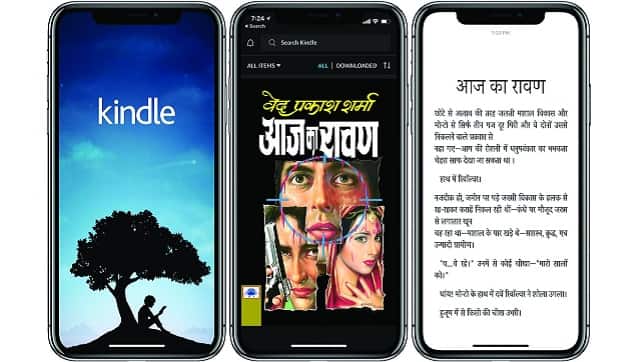 Publishers of Hindi pulp fiction, Ravi Pocket Books has taken the Kindle route[/caption]Hindi pulp fiction was so successful at one point that its most famous writing import — the prolific Surendra Mohan Pathak — is believed to have sold more copies than any other author in the world. This popularity of pulp fiction could be attributed to two key factors: One, the books were inexpensive and accessible. “You could buy a novel for a rupee or two in the ‘90s. The paper we printed on was cheap. The language too was accessible, and of course there had to be entertainment in it,” Jain says. Two, the availability of these books on railway platforms. “Before mobile phones came along, people would take books along on train journeys. As journey times shortened and travel modes changed, the book too was left behind,” he says.Most pulp fiction books published today are reprints of titles from writers whose popularity was established decades ago. While Pathak spawned a slew of murder mysteries, compatriot Vinod Kumar Sharma popularised the ‘social’ novel. “Sharma was a family friend. My uncle was a writer too. After we settled in Meerut in the mid-80s, I was always surrounded by people associated with Hindi literature, especially pulp fiction. But while I knew Sharma closely, it was really Pathak who inspired me to pick up the pen and write,” says Kanwal Sharma, the genre’s latest find and one of the few new writers Jain’s company has put its faith in. Sharma is a professor of History who divides his time between Faridabad, Panipat and Kurukshetra; he started his publishing journey by translating James Hadley Chase’s stories into Hindi. Sharma wrote his first novel, One Shot, in 2014, and has since written another six.Sharma observes that the change in demand for Hindi pulp fiction has also changed what is being written and published: “A lot has changed about how we engage with stories. The social novels of Vinod ji aren’t popular anymore because they require an investment and time that people are no longer willing to offer. Pathak, on the other hand, always wrote in the ‘khichdi’ language — a mix of Hindi, Punjabi and Urdu. I write the same way, and I feel you need to know how to hook your readers.”
“You have to kill someone by the 20th page for your reader to stay till the end, for the suspense to make it impossible to put the book down,” he adds.Sharma says he entered a publishing world in decline solely due to his love of writing. As if the receding interest in reading in general wasn’t challenging enough, books are now potentially dangerous carriers in these times of the pandemic. “Even big players like Amazon and Flipkart have raised the white flag,” rues Jain. “Their supply chains are so jammed that they can’t deliver books. We are looking at other options, but the future doesn’t look bright.”[caption id="attachment_8626371" align="alignnone" width="640"]
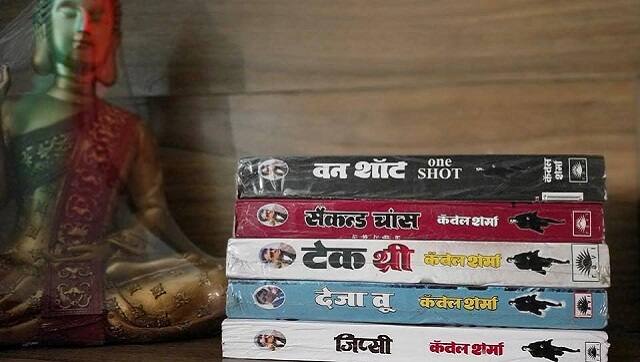 A stack of Kanwal Sharma's titles. Sharma is among the most popular new voices in Hindi pulp fiction today.[/caption]Even before the present crisis, the relationship between the Indian Railways and Hindi pulp fiction was undergoing a change. Dominated at one time by AH Wheeler bookstalls, railway platforms have undergone a sea change over the past decade-and-a-half (especially since 2004, when the Indian Railways ended Wheeler’s monopoly). Shops selling cold drinks and snacks saw greater footfalls.Around the time of this landmark change, mobile phones arrived and began competing for the ‘pocket’ that the erstwhile linguists of the Hindi heartland once occupied. Today, there is no option left for pocket book publishers but to abandon the ways they knew, if they wish to survive. “We are already working on developing our own app where our books will go digital. We are also working with two platforms to provide e-books of our novels. But it’s not the same thing, nor is there the same joy in the business,” Jain says.For as long as India’s trains stay off the tracks and its stations remain deserted, the industry of Hindi pulp publishing too will remain on hold. “We’ve lost our blood vessels,” Jain says, of the railways. Sharma, however, sounds a note of hope. “I’m positive that there are still readers out there,” he says. “We will have to change. It is a practical decision. Everyone needs to adapt to changing times. This virus will further scare an increasingly disinterested public. We can’t wait for them to come to us. We have to go to them, if not in paper, then in the digital form. Either we leap at that promise of life, or perish.”— Featured image via Wikimedia Commons
First Published:Jul 22, 2020, 10:10:11 IST
Advertisement
Advertisement

Midhaven on taking Indian Metal to Wacken this year: 'You’re sure to see a heavier, more nuanced performance'
Fresh off winning Wacken Metal Battle India and a 19-city Europe tour, Mumbai metal band Midhaven opens up about blending Indian classical traditions with sludge metal, representing India at Wacken Open Air, and the future of Indian heavy music in an exclusive interview with Firstpost.
5 min read
The woman in Lucian Freud's $39 million portrait was alive to watch herself become history
Decades after sitting for Lucian Freud, Sue Tilley reunited with one of the artist's most celebrated portraits as it headed to auction for $39 million, reflecting on fame, body image and becoming an unlikely muse
2 min read
Alexander McQueen is coming back to London Fashion Week, and its old shows explain why everyone's excited
McQueen will return to London Fashion Week for spring/summer 2027, its first time on the schedule since 2023, and the announcement has sent fashion writers straight back to the unsettling, theatrical shows that made its reputation in the first place.
3 min read
Why the Kiran Nadar Museum of Art is earning international recognition
With a new mega-campus, a former Louvre Abu Dhabi director at the helm, and growing international partnerships, the Kiran Nadar Museum of Art is emerging as a global force in the art world
2 min read
David Hockney dies at 88: The artist who put queer joy on canvas
From swimming pools and sunshine to portraits of lovers and friends, Hockney spent more than six decades showing that queer life could be ordinary, beautiful and full of colour.
2 min read
Advertisement
Advertisement