


What's next for Donald Trump? After impeachment by House, here's how Senate trial is expected to play out
Now that the House has voted to impeach President Donald Trump, the matter moves to the Senate for a trial — the third for an American president

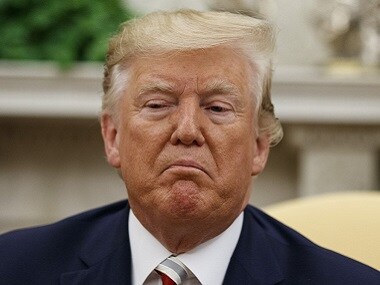
File image of US president Donald Trump. AP[/caption]How will it work?Any senator could propose a motion to dismiss the charges. (A simple majority vote would be needed.)But if the trial proceeds, there would be opening and closing statements, questions from senators to the managers and defense lawyers, and, possibly, more subpoenas, evidence requests and witnesses called. Deliberations would likely happen in a closed session before a vote.Chief Justice William Rehnquist presided over Clinton’s trial, during which senators were allowed to ask questions of the prosecution and defence through written notecards. Rehnquist read them aloud.When the White House counsel leading Clinton's defence, Charles Ruff, wanted to rebut, he put down his pen, which signalled Democratic aides to submit a question asking Ruff to comment on assertions made by the Opposition.What are the rules?Essentially, it's up to senators to decide the format of the trial, but they will most likely follow a set of rules governing impeachment trials that were revised in the 1980s.Senators also act as the jury and must take an oath to render "impartial justice". (A handful of the jurors are running for president.)Schumer laid out a detailed proposal this week that called for additional witnesses who have not previously testified (including Mick Mulvaney, Trump's acting chief of staff, and John Bolton, the president's former national security advisor) as well as subpoenas for additional documents that the White House has withheld.McConnell rejected Democrats' demands to call White House officials as witnesses and said he had no obligation to be evenhanded or impartial during the proceedings. He is working with the White House to establish rules for the trial, trying to balance Trump's desire for vindication with lawmakers’ concerns.During Clinton's trial, witnesses were not allowed to appear in person. Senators were shown videotaped portions of their testimony instead."When the Senate decided what the rules were going to be for our trial, they really made them up as they went along," Gregory Craig, who helped defend Clinton in his impeachment proceeding and later served as White House counsel to then-president Barack Obama, told The New York Times in 2017.What does the Constitution say about all this?The Constitution permits Congress to remove presidents before their term is up if enough lawmakers vote to say that they have committed "treason, bribery, or other high crimes and misdemeanours".But it does not explain how lawmakers should interpret what constitutes those offences. Similarly, there is no established standard of proof that must be met.How might it end?A conviction would require a two-thirds vote on at least one article, resulting in the president’s removal from office, with no opportunity to appeal. The vice-president would take over as president.The Senate could subsequently vote to disqualify the president from future office, using a simple majority vote.Although a conviction is unlikely — barring some unexpected development — the trial could have political ramifications for both parties.How did previous impeachment trials end?The Johnson trial, in 1868, was anticlimactic and mired in constant battles over process and authority between long-winded men in love with their own words, according to Brenda Wineapple, the author of The Impeachers.In the end, enough Republicans rallied with Democrats to spare Johnson from conviction by a single vote.On 12 February, 1999, the Senate acquitted Clinton, falling short of even a majority vote on either of the charges against him.Karen Zraick and Emily S Rueb c.2019 The New York Times Company

Pakistan's deep state weaponising LeT to counter Asim Munir critic Maulana Fazlur Rehman: Report
No premium queues, 30-minute target: What changes for Indian passport applicants in UAE
'We don't need straits': Trump says Iran war isn't about Hormuz as US strikes for 12th night
Iran claims to stop three oil tankers transiting Strait of Hormuz
Globe at a glance: From Houthis striking Saudi tankers in Red Sea to wildfires in Europe