


Toll in Kabul suicide bombing rises to 55; Afghanistan attack draws widespread condemnation from overseas
A video posted on social media purportedly filmed by one of the hundreds of attendees in Afghanistan's Kabul showed a large gathering listening to a recitation of the Koran before the explosion.

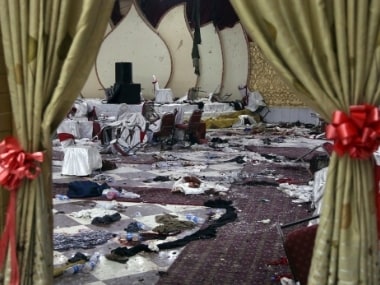
A day after the suicide attack in Afghanistan's Kabul, the interior of the wedding hall is seen on Wednesday. AP[/caption]"My friend and his little son were also next to me, covered in blood and not moving," he said.At least 55 people were killed and 94 wounded when the bomber blew himself up in the middle of the banquet hall at the Uranus Wedding Palace on Tuesday evening - one of the deadliest attacks in Afghanistan in 2018.A video posted on social media purportedly filmed by one of the hundreds of attendees showed a large gathering of men listening to a recitation of the Koran before an explosion triggered pandemonium.On Wednesday morning, as cleaners prepared the multi-storey venue for more events, bloodied turbans, sandals, overturned chairs and broken glass still littered the cavernous room where the massacre happened.The attack drew widespread condemnation in Afghanistan and abroad, with the United Nations describing it as an "atrocity".US ambassador to Kabul John Bass said he was "sickened and deeply saddened" by the bombing, while the European Union delegation to Afghanistan said the explosion was "an attack on all of us, religious or not, who value freedom".President Ashraf Ghani declared Wednesday a national day of mourning for the victims of the attack, which he described as an "unforgivable crime"."Security at the wedding hall included a body search by an armed guard followed by physical checks by several religious students," said Obaidullah, who suffered multiple injuries to his face and body.There was no immediate claim of responsibility, though the Taliban were quick to condemn the blast. The Islamic State group, which has claimed most suicide attacks in Kabul this year, has not issued a statement.It is not clear why the religious scholars were targeted on one of the holiest days in the Islamic calendar.While Muslims around the world celebrate the Prophet Mohammad's birthday, some fundamentalists criticise the events as heretical innovations in Islam."Most of the people at the gathering were Sufis, a mystical branch of Islam," said Mehrab Danish, an adviser to the religious affairs minister."But it is too early to say they were targeted because they were followers of Sufism," he cautioned.Sectarian militants in Pakistan have long targeted Sufis, but such attacks on the group are rare in Afghanistan.

Iran claims to stop three oil tankers transiting Strait of Hormuz
Globe at a glance: From Houthis striking Saudi tankers in Red Sea to wildfires in Europe
Houthis claim responsibility for attack on two Saudi oil tankers in Red Sea as a new chokepoint emerges
Air India to cut Delhi-Toronto flight time by 3 hours, resume non-stop services from August 1
US signs landmark nuclear deal with Saudi Arabia amid tensions in West Asia