


Theresa May's Cabinet reshuffle branded 'ineffectual' after top team barely changes, ministers refuse to accept new posts
Theresa May's long-awaited government reshuffle on Monday was branded ineffectual and shambolic after she promoted few fresh faces to her top team.

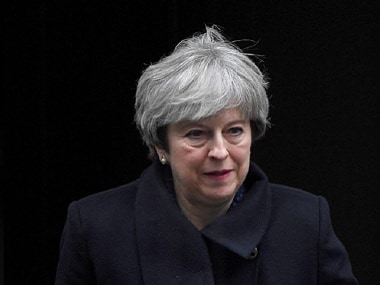
File image of Theresa May. Reuters[/caption]But the day began in a farcical fashion when her Conservative party announced a new chairman on Twitter, only to delete the tweet and later name another lawmaker for the post. "No wonder Theresa May's struggling to negotiate Brexit — she can't even organise a reshuffle," opposition Labour MP Stephen Kinnock swiftly tweeted.Following Hunt's reported refusal to move and Greening's resignation later Monday, Britain's newspapers were quick to lambast May's reboot. The Times' front page called the reshuffle "shambolic" while The Daily Telegraph declared it the "night of the blunt stiletto".Some Conservative lawmakers appeared to agree, with Tory grandee Nicholas Soames tweeting: "I don't mean to be rude or to be seen to be disloyal but there needs to be a major improvement to the reshuffle tomorrow."May is expected to announce a reshuffle of her lower government ranks on Tuesday.Fragile authorityGreening's resignation is likely to be viewed as a challenge to the prime minister's already fragile authority. She was offered the welfare ministry "but declined to take it," a Downing Street source said. "The prime minister is disappointed but respects her decision to leave the government", the source added.For her part Greening said in a tweet that educational issues like social mobility matter "more than my ministerial career", and vowed to continue to work for young people as a member of parliament.May's room for manoeuvre is limited by heading a minority government and the need to maintain a delicate Cabinet balance of eurosceptic and pro-European ministers as major Brexit decisions loom. After starting the two-year withdrawal process in March 2017, Britain struck a deal in December on the financial settlement with Brussels, as well as on expatriate rights and the Irish border.Negotiations on a transition deal begin in January, while the toughest talks, on Britain's future relationship with the EU including trade, are set to start in March. Johnson, a leading Brexit supporter, kept his job at the foreign office, despite challenging May's strategy last year, as did fellow eurosceptic Liam Fox, the international trade minister.Finance minister Hammond and interior minister Amber Rudd, who campaigned to stay in the EU, continue as before. Former justice secretary David Lidington took over the policy coordination role previously held by Green but did not inherit the title of May's deputy.Northern Ireland Secretary James Brokenshire, who failed to secure a deal to restore the power-sharing government in Belfast after it collapsed a year ago, stepped down for health reasons Monday and has been replaced by culture minister Karen Bradley.The former Conservative party chairman, Patrick McLoughlin, lost his job after the disastrous snap election.It was one of several low points last year for the prime minister, who took office in July 2016 after the referendum on leaving the EU and began her tenure strongly with a bold Cabinet reshuffle.

Are Chinese UN peacekeepers spies? Trump’s UN envoy sends out a warning
Why has Bangladesh’s choice of India spokespersons raised eyebrows?
Indian judo contender withdrawn from 2026 Commonwealth Games after failed dope test
US House passes $1 trillion defence bill despite concerns over Iran war and Israel ties
Explorers discover wreckage of plane 72 years later. Will this help in finding MH370?