


Seals may have introduced tuberculosis to South America: Study
According to co-investigator Johannes Krause from University of Tubingen in Germany, “The connection to seals and sea lions is important to explain how a mammalian-adapted pathogen that evolved in Africa around 6,000 years ago could have reached Peru 5,000 years later

Washington: In a bizarre turn of events, research shows that tuberculosis likely spread from humans in Africa to seals and sea lions that brought the disease to South America.The sea animals then transmitted it to native people there before Europeans landed on the continent, it added.[caption id="attachment_789007" align="alignleft" width="380"]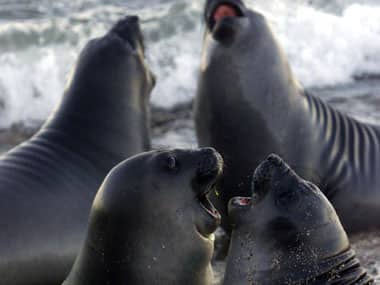 Reuters[/caption]“We found that the tuberculosis strains were most closely related to strains in pinnipeds which are seals and sea lions,” said Anne Stone, a professor at Arizona State University's school of human evolution and social change.Researchers found that genomes from humans in Peru dating from about 1,000 year ago provide unequivocal evidence that a member of the tuberculosis strain caused disease in South America before Europeans arrived.The next question was: What types of tuberculosis strains were present before contact?In the study, researchers collected genetic samples from throughout the world and tested those for tuberculosis DNA.They focused on three samples and compared them against a larger data set of modern genomes and animal strains.The results showed the clear relationship to animal lineages, specifically seals and sea lions.“Our results show unequivocal evidence of human infection caused by pinnipeds (sea lions and seals) in pre-Columbian South America. Within the past 2,500 years, the marine animals likely contracted the disease from an African host species and carried it across the ocean to coastal people in South America,” Stone maintained.Researchers hypothesise that when the more virulent European strains came, they quickly replaced the pinniped strains.According to co-investigator Johannes Krause from University of Tubingen in Germany, “The connection to seals and sea lions is important to explain how a mammalian-adapted pathogen that evolved in Africa around 6,000 years ago could have reached Peru 5,000 years later”.The results also show that tuberculosis, formerly believed to have spread around the world with ancient human migration events, is in fact a relatively young disease.The paper was published in the journal Nature.IANS

Are Chinese UN peacekeepers spies? Trump’s UN envoy sends out a warning
Why has Bangladesh’s choice of India spokespersons raised eyebrows?
Indian judo contender withdrawn from 2026 Commonwealth Games after failed dope test
US House passes $1 trillion defence bill despite concerns over Iran war and Israel ties
Explorers discover wreckage of plane 72 years later. Will this help in finding MH370?