


Returning jihadists carry Islamic State back home with them
The Muthana case illustrates the dilemmas. In November 2014, Hoda Muthana left the US without telling her parents, and travelled to the Islamic State’s capital of Raqqa.

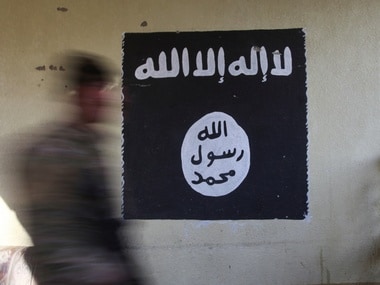
File image of the Islamic State flag. Reuters[/caption]The Muthana case illustrates the dilemmas. In November 2014, Hoda, then just 16, left the United States without telling her parents, and travelled through Istanbul to the Islamic State’s capital of Raqqa.There she married Australian national Suhan Rahman, one of the estimated 40,000 foreign fighters who served with the Islamic State. In 2015, Rahman was killed fighting Kurdish and United States forces during the battle of Kobani.In most cases, the survivors of the Islamic State are expressing contrition for their actions. In an interview to The Guardian, Muthana blamed her turn to jihadism on her conservative parents, saying their decision to wall her off from society led her to rebel against her homeland.“You want to go out with your friends and I didn’t get any of that,” she said. “I turned to my religion and went in too hard.” There’s no way to tell how genuine the repentance is, and with their crimes having been committed halfway across the world, it’s hard to bring successful prosecutions.Last year, Interpol chief Jürgen Stock warned the world “could soon be facing a second wave of other Islamic State linked or radicalised individuals that you might call ISIS 2.0”. “Many of those who left, for instance from Europe or Asia, have not yet returned. Some of them have been killed on the battlefield but some of them are missing.”In addition, Stock said, Islamic State supporters were arrested for their roles in pre-empted attacks. “Because they were not convicted of a concrete terrorist attack but only support for terrorist activities, their sentences are perhaps not so heavy,” he said.Even though some countries, like the United Kingdom and United States, are stripping naturalised citizens of their acquired nationalities, that isn’t an option for the 6,000-odd cases of European jihadists, almost 20 percent of them women.United States-born Muthana went on to marry two more Islamic State jihadists in quick succession. Her child, fathered by her second husband, is by law a United States citizen, too.The most endangered are Arab countries, whose citizens made up the bulk of the Islamic State’s foreign fighter contingent. Large numbers have joined units of the Islamic State’s fighting units in Libya and Afghanistan, potentially providing a foundation for those countries to turn into regional threats.Thousands have, however, returned to their homelands and, hidden away from the view of law-enforcement, could be potential sources of long-term disruption.Mokhtar Ben Nasr, the head of Tunisia’s national counterterrorism commission, recently warned parliamentarians that 1,000 Islamic State terrorists returned to the North African nation between 2011 and 2018. Though some were arrested and are awaiting prosecution, he said, a majority re-entered the country clandestinely.“This could well be true of India, too,” a National Investigations Agency official said. “We have no firm idea of how many Indians actually served with the Islamic State or al-Qaeda, how many survived, and where they are now.”In one case pending in a court, Tamil Nadu resident Subhani Haja Moideen is alleged to have travelled to Turkey to join the Islamic State after being recruited online. He served briefly in Mosul, NIA officials say, but fled the battlefield after two men alongside him were blown apart by a missile. Following his desertion, Moideen was held for 40 days in an Islamic State prison, but eventually allowed to return home, with a $200 payment for the time he had served.The Indian consulate in Istanbul issued Moideen with an emergency certificate, allowing him to return home since he had lost his passport. Police and intelligence services were not notified though Moideen was unable to account for his activities in Turkey, government sources say.Following his return, the NIA alleges, Moideen contacted the Islamic State’s top Indian operative Muhammad Sultan Armar, also known as Yusuf al-Hindi, and was plotting strikes on foreigners visiting south India.

Pakistan's deep state weaponising LeT to counter Asim Munir critic Maulana Fazlur Rehman: Report
No premium queues, 30-minute target: What changes for Indian passport applicants in UAE
'We don't need straits': Trump says Iran war isn't about Hormuz as US strikes for 12th night
Iran claims to stop three oil tankers transiting Strait of Hormuz
Globe at a glance: From Houthis striking Saudi tankers in Red Sea to wildfires in Europe