
Advertisement


Sections
Maldives crisis: Is humanitarian intervention ever justified? International report offers guidance, lessons for global powers
However, what is lost in the back and forth between interventionism and calls for India to let the citizens of Maldives sort out their own affairs is the perennial question: Is "humanitarian intervention" ever justified? And if so, when?

As President Abdulla Yameen cracks down on the judiciary, the media and the Opposition, the Maldives crisis is heating up. Indian soldiers have been reportedly placed on standby and are prepared for "any eventuality".[caption id="attachment_4340013" align="alignleft" width="380"]![Representational image. Reuters]() Representational image. Reuters[/caption]Some have made the case for military intervention, arguing that India must use all tools in its basket — coercive, tactical and military — to secure its strategic interests. Others have argued that a repeat of 1988, when India sent in paratroopers to help safeguard former president Abdul Gayoom's regime from Sri Lankan Tamil militants financed by Maldivian businessman Abdullah Luthufi would perhaps yield a short-term advantage for India, but create a problem in the long run.However, what is lost in the back and forth between interventionism and calls for India to let the citizens of Maldives sort out their own affairs is the perennial question: Is "humanitarian intervention" ever justified? And if so, when?GenesisThat was the question the international community was pondering in the 90s, during the genocides in Rwanda and Bosnia. Indeed, it was the then United Nations secretary-general Kofi Annan, in his Millennium Report of 2000, who wondered: "If humanitarian intervention is, indeed, an unacceptable assault on sovereignty, how should we respond to a Rwanda, to a Srebrenica to gross and systematic violation of human rights that offend every precept of our common humanity?"
Representational image. Reuters[/caption]Some have made the case for military intervention, arguing that India must use all tools in its basket — coercive, tactical and military — to secure its strategic interests. Others have argued that a repeat of 1988, when India sent in paratroopers to help safeguard former president Abdul Gayoom's regime from Sri Lankan Tamil militants financed by Maldivian businessman Abdullah Luthufi would perhaps yield a short-term advantage for India, but create a problem in the long run.However, what is lost in the back and forth between interventionism and calls for India to let the citizens of Maldives sort out their own affairs is the perennial question: Is "humanitarian intervention" ever justified? And if so, when?GenesisThat was the question the international community was pondering in the 90s, during the genocides in Rwanda and Bosnia. Indeed, it was the then United Nations secretary-general Kofi Annan, in his Millennium Report of 2000, who wondered: "If humanitarian intervention is, indeed, an unacceptable assault on sovereignty, how should we respond to a Rwanda, to a Srebrenica to gross and systematic violation of human rights that offend every precept of our common humanity?"
 Representational image. Reuters[/caption]Some have made the case for military intervention, arguing that India must use all tools in its basket — coercive, tactical and military — to secure its strategic interests. Others have argued that a repeat of 1988, when India sent in paratroopers to help safeguard former president Abdul Gayoom's regime from Sri Lankan Tamil militants financed by Maldivian businessman Abdullah Luthufi would perhaps yield a short-term advantage for India, but create a problem in the long run.However, what is lost in the back and forth between interventionism and calls for India to let the citizens of Maldives sort out their own affairs is the perennial question: Is "humanitarian intervention" ever justified? And if so, when?GenesisThat was the question the international community was pondering in the 90s, during the genocides in Rwanda and Bosnia. Indeed, it was the then United Nations secretary-general Kofi Annan, in his Millennium Report of 2000, who wondered: "If humanitarian intervention is, indeed, an unacceptable assault on sovereignty, how should we respond to a Rwanda, to a Srebrenica to gross and systematic violation of human rights that offend every precept of our common humanity?"
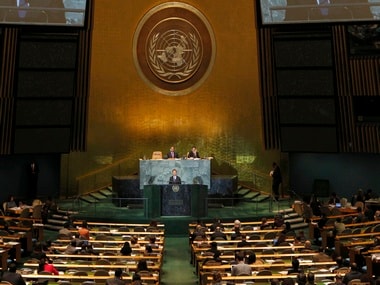
Attempting to Annan's question, in September 2000, the Canadian government set up the the International Commission on Intervention and State Sovereignty (ICISS), which, in a report entitled Responsibility to Protect, found that sovereignty not only gave a State the right to "control" its affairs, it also conferred on the State primary "responsibility" for protecting the people within its borders. However, it stated that when a State failed to protect its people — either through lack of ability or a lack of willingness — the responsibility shifted to the broader international community.The reports stated that the foundations of the responsibility to protect, as a guiding principle for the international community of states, lie in its obligations inherent in the concept of sovereignty; the responsibility of the Security Council, under Article 24 of the UN Charter, for the maintenance of international peace and security; specific legal obligations under human rights and human protection declarations, covenants and treaties, international humanitarian law and national law and the developing practice of states, regional organisations and the Security Council itself.Prevent, react, rebuildThe responsibility to protect embraced three specific responsibilities: Prevention, reaction and rebuilding. Prevention sought to address both the root causes and direct causes of internal conflict and other man-made crises putting populations at risk, reaction sought to respond to situations of compelling human need with appropriate measures, which may include coercive measures like sanctions and international prosecution, and in extreme cases military intervention. Rebuilding sought to provide particularly after a military intervention, full assistance with recovery, reconstruction and reconciliation, addressing the causes of the harm the intervention was designed to halt or avert.
The report singled out prevention as the most important dimension of the of the responsibility to protect, it stated that prevention options should always be exhausted before intervention is contemplated, and more commitment and resources must be devoted to it. The report added that the exercise of the responsibility to both prevent and react should always involve less intrusive and coercive measures being considered before more coercive and intrusive ones are applied'Military intervention'The report also laid out certain parameters to assess when military intervention is appropriate:The Just Cause Threshold: Military intervention for human protection purposes is an exceptional and extraordinary measure. To be warranted, there must be serious and irreparable harm occurring to human beings, or imminently likely to occur, such as large-scale loss of life, actual or apprehended, with genocidal intent or not, which is the product either of deliberate state action, or state neglect or inability to act, or a failed State situation; or large scale ‘ethnic cleansing’, actual or apprehended, whether carried out by killing, forced expulsion, acts of terror or rape.The Precautionary Principles:
- Right intention, where the primary purpose must be to halt or avert human suffering. This intention is better assured with multilateral operations, clearly supported by regional opinion and the victims concerned.
- Last resort: Military intervention can only be justified when every non-military option for the prevention or peaceful resolution of the crisis has been explored, with reasonable grounds for believing lesser measures would not have succeeded.
- Proportional means: The scale, duration and intensity of the planned military intervention should be the minimum necessary to secure the defined human protection objective.
- Reasonable prospects: There must be a reasonable chance of success in halting or averting the suffering which has justified the intervention, with the consequences of action not likely to be worse than the consequences of inaction.
- There is no better or more appropriate body than the United Nations Security Council to authorise military intervention for human protection purposes, the report argued. The task is not to find alternatives to the Security Council as a source of authority, but to make the Security Council work better than it has, it stated.
- Security Council authorisation should in all cases be sought prior to any military intervention action being carried out. Those calling for an intervention should formally request such authorisation, or have the Council raise the matter on its own initiative, or have the Secretary-General raise it under Article 99 of the UN Charter.
- The Security Council should deal promptly with any request for authority to intervene where there are allegations of large-scale loss of human life or ethnic cleansing. It should in this context seek adequate verification of facts or conditions on the ground that might support a military intervention.
- The Permanent Five members of the Security Council should agree not to apply their veto power, in matters where their vital state interests are not involved, to obstruct the passage of resolutions authorizing military intervention for human protection purposes for which there is otherwise majority support.
- If the Security Council rejects a proposal or fails to deal with it in a reasonable time, alternative options are: 1. Consideration of the matter by the General Assembly in Emergency Special Session under the “Uniting for Peace” procedure. 2. Action within area of jurisdiction by regional or sub-regional organizations under Chapter VIII of the Charter, subject to their seeking subsequent authorisation from the Security Council.
- The Security Council should take into account in all its deliberations that, if it fails to discharge its responsibility to protect in conscience shocking situations crying out for action, concerned states may not rule out other means to meet the gravity and urgency of that situation – and that the stature and credibility of the United Nations may suffer thereby.
- Clear objectives; clear and unambiguous mandate at all times; and resources to match.
- . Common military approach among involved partners; unity of command; clear and unequivocal communications and chain of command.
- Acceptance of limitations, incrementalism and gradualism in the application of force, the objective being protection of a population, not defeat of a state.
- Rules of engagement which fit the operational concept; are precise; reflect the principle of proportionality; and involve total adherence to international humanitarian law.
- Acceptance that force protection cannot become the principal objective.
- Maximum possible coordination with humanitarian organisations.
First Published:Feb 07, 2018, 22:26:47 IST
Advertisement
Advertisement

Are Chinese UN peacekeepers spies? Trump’s UN envoy sends out a warning
US UN Envoy Mike Waltz has warned that China has been using United Nations' platforms, such as peacekeeping missions, for espionage. He accused Chinese peacekeepers of serving as the eyes and ears of the Communist Party of China.
2 min read
Why has Bangladesh’s choice of India spokespersons raised eyebrows?
Bangladesh’s appointment of journalists Md Saidur Rahman and Umme Marufa to media roles in New Delhi and Kolkata has triggered controversy over their past anti-India social media posts, many of which were later deleted, prompting diplomatic scrutiny as India and Bangladesh seek to improve bilateral ties
6 min read
Indian judo contender withdrawn from 2026 Commonwealth Games after failed dope test
India's contingent at the 2026 Commonwealth Games has been restricted to 124 after judoka Arun Kumar was withdrawn from the 2026 Commonwealth Games in Glasgow due to a failed dope test.
1 min read
US House passes $1 trillion defence bill despite concerns over Iran war and Israel ties
The US House of Representatives narrowly passed a massive defence policy bill that would boost Washington's security ties with Israel, despite criticism from the Democrats.
2 min read
Explorers discover wreckage of plane 72 years later. Will this help in finding MH370?
On April 11, 1952, a Pan Am Flight 526A, crashed into the Atlantic Ocean, killing 52 of the 69 people on board. After decades of effort, explorers have found the wreck of the plane at the bottom of the seabed near Puerto Rico. The discovery offers new hope to families who lost loved ones in the Malaysia Airlines Flight 370 crash in 2014
5 min read
Advertisement
Advertisement