
Advertisement


Sections
Twitter answers the age-old question: What makes something go viral?
While there's no magic formula for a viral video, Twitter has provided some insights by studying how three massively popular viral videos did it

As soon as things started "going viral", the question immediately arose: why do some things go viral, and why do some other things stagnate in virtual anonymity?[caption id="attachment_1030039" align="alignleft" width="380"]![A screengrab from the 'Real Beauty Sketches' by Dove]() A screengrab from the 'Real Beauty Sketches' by Dove[/caption]What is the common link between Gangnam Style, 'Man sees double rainbow', Rebecca Black's Friday, and the robust defense of Islam by scholar Mehdi Hasan at an Oxford University debate?The question, despite the best efforts of marketing professionals, has no definite answers yet. But there might be some insights emerging with a new study done by Twitter UK, which the company shared on a blog post on Monday."There are no rules to 'virality,'" wrote the post's author, Gordon MacMillan, Twitter UK's editorial manager. "While some ignite, and spread like wildfire across the web, the growth of others is much more measured, like ripples spreading across a lake." The study looked at three examples of "going viral", and you can check them out below. A Vine clip of actor Ryan Gosling supposedly refusing to eat his cereal, a Youtube video of astronaut Commander Hadfield singing 'Space Oddity' and Dove's 'Real Beauty Sketches'.Is there a better place to sing David Bowie's song Space Oddity, than, well, in space? When Commander Hadfield decided to give it a shot as he was orbiting the earth in the International Space Station. The study finds that in this case, more than 90 percent of the shares happened in the first three days."Hadfield’s link was much more appealing to the crowd because of its unique nature than a more earthbound video and as a result he featured much more prominently in the sharing of this video than other viral examples," says Twitter's blog post. So apparently one way of going viral is to post it from space. Good luck with that one.Of the three examples taken by the Twitter study, the Dove 'Real Beauty' video is the one that prompted the most conversations - viewers didn't just watch it, they shared it and discussed its merits, as well as the social issue it was highlighting.It was driven by "a long tail of link-sharing and by positive audience sentiment," says the study. "Conversation existed in clusters of communities spread around the world — showing the value of local engagement — and highlighted the good use of a digital outreach programme."Read the whole study over at Twitter's blog.
A screengrab from the 'Real Beauty Sketches' by Dove[/caption]What is the common link between Gangnam Style, 'Man sees double rainbow', Rebecca Black's Friday, and the robust defense of Islam by scholar Mehdi Hasan at an Oxford University debate?The question, despite the best efforts of marketing professionals, has no definite answers yet. But there might be some insights emerging with a new study done by Twitter UK, which the company shared on a blog post on Monday."There are no rules to 'virality,'" wrote the post's author, Gordon MacMillan, Twitter UK's editorial manager. "While some ignite, and spread like wildfire across the web, the growth of others is much more measured, like ripples spreading across a lake." The study looked at three examples of "going viral", and you can check them out below. A Vine clip of actor Ryan Gosling supposedly refusing to eat his cereal, a Youtube video of astronaut Commander Hadfield singing 'Space Oddity' and Dove's 'Real Beauty Sketches'.Is there a better place to sing David Bowie's song Space Oddity, than, well, in space? When Commander Hadfield decided to give it a shot as he was orbiting the earth in the International Space Station. The study finds that in this case, more than 90 percent of the shares happened in the first three days."Hadfield’s link was much more appealing to the crowd because of its unique nature than a more earthbound video and as a result he featured much more prominently in the sharing of this video than other viral examples," says Twitter's blog post. So apparently one way of going viral is to post it from space. Good luck with that one.Of the three examples taken by the Twitter study, the Dove 'Real Beauty' video is the one that prompted the most conversations - viewers didn't just watch it, they shared it and discussed its merits, as well as the social issue it was highlighting.It was driven by "a long tail of link-sharing and by positive audience sentiment," says the study. "Conversation existed in clusters of communities spread around the world — showing the value of local engagement — and highlighted the good use of a digital outreach programme."Read the whole study over at Twitter's blog.
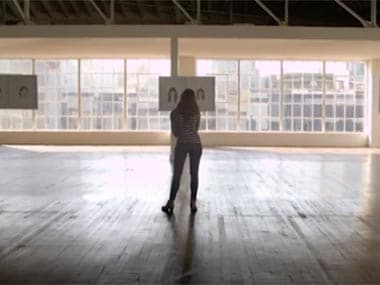 A screengrab from the 'Real Beauty Sketches' by Dove[/caption]What is the common link between Gangnam Style, 'Man sees double rainbow', Rebecca Black's Friday, and the robust defense of Islam by scholar Mehdi Hasan at an Oxford University debate?The question, despite the best efforts of marketing professionals, has no definite answers yet. But there might be some insights emerging with a new study done by Twitter UK, which the company shared on a blog post on Monday."There are no rules to 'virality,'" wrote the post's author, Gordon MacMillan, Twitter UK's editorial manager. "While some ignite, and spread like wildfire across the web, the growth of others is much more measured, like ripples spreading across a lake." The study looked at three examples of "going viral", and you can check them out below. A Vine clip of actor Ryan Gosling supposedly refusing to eat his cereal, a Youtube video of astronaut Commander Hadfield singing 'Space Oddity' and Dove's 'Real Beauty Sketches'.
Ryan gosling won't eat his cereal https://t.co/E6QDOOOUHA — Best Vines (@TheFunnyVines) June 7, 2013In the case of the Ryan Gosling viral video, the study found that the video was affectively "seeded" into a few top influencers, such as Twitter accounts @BestVineEver and @VineLoops. "This ensured that the videos went viral quickly, echoing the online journey of a major breaking news story," says the study.
First Published:Aug 13, 2013, 16:07:31 IST
Advertisement
Advertisement

Google burns cash for first time as AI spending pushes 2026 capex to $205 billion
Google parent Alphabet reported negative free cash flow of $5.9 billion in the second quarter for the first time since going public, as surging AI infrastructure spending pushed its 2026 capital expenditure forecast to as much as $205 billion
6 min read
Tesla sells more cars but makes less money: Why Musk’s AI pivot is squeezing profits
Tesla’s record Q2 deliveries failed to translate into higher profits as price cuts, falling regulatory-credit revenue and Elon Musk’s aggressive AI spending squeezed margins and pushed the EV maker into negative free cash flow
5 min read
OpenAI launches Presence to bring AI agents into customer support and enterprise workflows
OpenAI has launched Presence, an enterprise AI agent platform designed to automate customer support, internal workflows and business operations with human oversight.
2 min read
Samsung Galaxy Fold 8 Ultra, Fold 8, Flip 8 launched: Here is how much it costs in India with discounts
Samsung has opened India pre-orders for its Galaxy Z Fold8, Fold8 Ultra and Flip8, bringing slimmer designs, deeper Galaxy AI integration and upgraded cameras.
4 min read
Florida pastor sues OpenAI, says ChatGPT's medical advice delayed emergency treatment: Report
A Florida pastor has sued OpenAI, alleging ChatGPT's medical advice discouraged him from seeking treatment and led to a life-threatening pulmonary embolism.
2 min read
Advertisement
Advertisement