


World Contraception Day 2019: If an app claims that it prevents pregnancy, don't count on it
Fertility awareness methods and apps help women better understand their bodies, are relatively cost-effective and have no side-effects

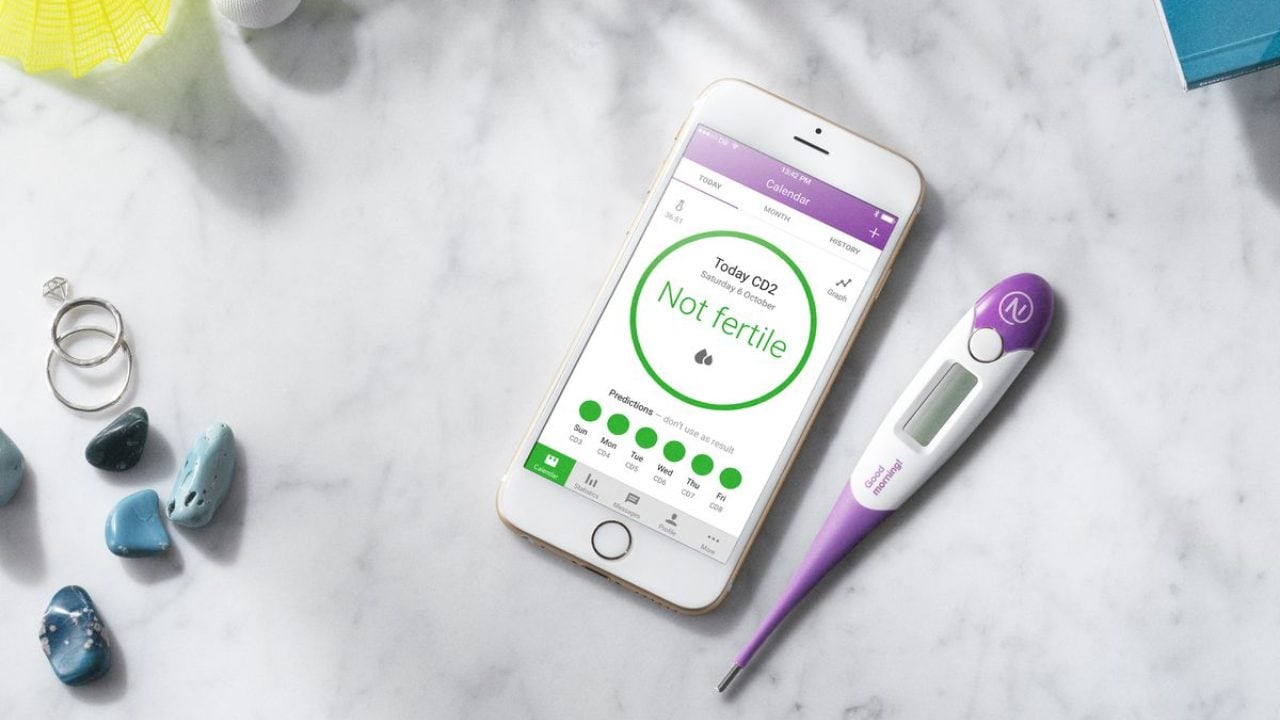
Digital birth control isn't all that reliable.[/caption]
How many women use them?
How do fertility apps work?
While the eggs released from the ovary each month survive for around 24 hours, sperm can survive for five days or more in the uterus and fallopian tubes. This means a woman has roughly six fertile days each month.This “fertile window” extends from the five days before ovulation to one day after ovulation. The challenge lies in predicting exactly when ovulation – the egg release from the ovary – occurs.Calendar-based methods rely entirely on menstrual cycle length and an assumption that ovulation occurs 14 days before the next period. But both menstrual cycle length and ovulation timing are highly variable, making these methods less effective than fertility awareness methods of contraception which include additional fertility indicators."Symptothermal" methods, for instance, involve taking the basal body temperature first thing every morning with a special thermometer in the vagina. This checks for the small rise in core temperature that follows ovulation (although illness or a late alcohol-fuelled night out can affect the reading).A daily check for a sensation of wetness at the entrance to the vagina can also be added. Cervical mucus becomes stretchy and viscous during fertile days to help sperm swim up into the uterus.The number of directed 'abstinence days' varies between apps. The Natural Cycles app plays it safe with approximately ten “red for no sex” days per cycle, and sends motivational messages to help support adherence.An app called Dot advises 11–13 high-risk days, depending on the user’s cycle lengths and other factors. This longer window is likely because this app relies on menstrual cycle length alone, and so maybe less precise in predicting ovulation.
How effective are fertility apps for contraception?
Contraceptive effectiveness is based on the number of pregnancies occurring in the first year of use, both in perfect research conditions and in typical everyday use. The oral contraceptive pill is more than 99 percent effective in perfect use, but up to seven in every 100 women become pregnant in the first year of typical use, due to forgetting pills or running out. Implants and intrauterine devices (IUDs) are more than 99 percent effective in each case.High-quality studies for fertility awareness methods of contraception are lacking, but rates are quoted at between 75 percent for typical use, and up to more than 99 percent in perfect use.[caption id="attachment_7406141" align="alignnone" width="1280"]
Different women will have different preferences for contraception. But it’s important to understand the pros and cons of each option.[/caption]Studies of the Natural Cycles app report a typical use failure rate of 7 percent, similar to the contraceptive pill. But these studies have been controversial and their authors have acknowledged limitations in capturing accurate data on unplanned pregnancies.For example, in one study, the pregnancy rate relied on users logging a positive pregnancy test result on the app, but also on assumptions made about possible pregnancies among women who discontinued the app and therefore weren’t followed for the duration of the research.
Where to from here?
Although the “perfect use” figures may look high, we need more rigorous research into fertility apps – which notably leave much room for “imperfect use”.Learning to use fertility awareness methods of contraception can be complicated and arduous to maintain. Modifying sexual behaviour in line with instructions from the app can also be a challenge.Research into the Natural Cycles app found high discontinuation rates. Some 54 percent of women stopped using it after one year of use.Women who are dissatisfied with other methods of contraception or prefer a hormone-free approach for personal or medical reasons, and are comfortable with the demands of the method, may choose to use apps.But the bottom line is, fertility awareness apps are not as effective as other methods of contraception (particularly IUDs and implants). Apps require dedicated daily monitoring and data entry, strict adherence to when you can and can’t have unprotected sex, and leave room for user error.The scientific community will continue to call for more high-quality research, while fertility apps with seductive “scientifically proven” and “clinically tested” claims will undoubtedly proliferate.In making an informed choice, it’s important for every woman to be aware of the pros and cons of all contraceptive methods. Your doctor or local family planning clinic can provide advice and direct you to evidence-based resources. Deborah Bateson, Clinical Associate Professor, Discipline of Obstetrics, Gynaecology and Neonatology, University of SydneyThis article is republished from The Conversation under a Creative Commons license. Read the original article.

Careless Whispers: Scientists discover that plants can 'talk' to each other using smells
Life on Mars? European Space Agency’s Orbiter discovers ice water deposits at equator
Microsoft briefly overtakes Apple as the most valuable company, Apple back on top again
Even NASA is facing a tough time, starts layoffs following major budget cuts
ISRO, NASA's NISAR satellite to get ready by Jan-end, will monitor Earth's snow-covered regions