
Advertisement


Sections
WHO calls ban on germline gene-editing research, clinical use of CRISPR in embryos
A Chinese scientist claimed he had secretly gene-edited the DNA of an embryo and it led to birth twin girls.

In December 2018, a Chinese scientist made a bold claim that he had secretly edited the genes of embryos. Not just that, he also claimed to have implanted these gene-edited embryos into seven couples undergoing IVF — two of the couples went on to be pregnant. One of the two couples successfully delivered their babies — twin girls, who He Jiankui, the Chinese geneticist that led the gene-editing trial, said were given natural resistance to the human immunodeficiency virus (HIV) infection caused by the acquired immunodeficiency syndrome (AIDS) virus. For more than one reason, Jiankui's claim created quite a stir in the scientific community.()The World Health Organization, the leading authority in global public health, released a statement on 26 July stating its qualms with the practice of gene editing in humans. "It would be irresponsible at this time for anyone to proceed with clinical applications of human germline genome editing," Dr Tedros Adhanom Ghebreyesus, WHO Director-General, said during a committee meeting.[caption id="attachment_7086261" align="alignnone" width="1280"]![He-Jiankui-during-an-interview-at-his-laboratory-in-Shenzhen-in-China_AP]() He Jiankui during an interview at his laboratory in Shenzhen in China. Image credit: AP[/caption]The WHO has asked that regulatory and ethics authorities in all countries put a stop and deny approvals to gene editing experiments that could lead to babies being born with gene-edited DNA (a process known as germline gene-editing, where the modified DNA is passed on from generation to next). This limitation will last till a time when the "implications have been properly considered," since gene editing in humans presents unique and unprecedented ethical and technical challenges, the WHO director-general said.The recommendation comes from an 18-member expert advisory committee to the WHO on human genome editing, formed in December after news about Dr He Jiankui's gene-editing trials first surfaced. The committee also suggested that WHO create a global registry of all experiments involve genome editing, and human genome editing in particular.The matter will be revisited during a WHO meeting in Geneva in August 2019. They will also look into the instruments that can deter and prevent irresponsible and unacceptable uses of genome-editing in embryos before implantation and pregnancy. Some scientists have announced their support for the strong words from WHO.Fyodor Urnov, a gene-editing scientist at the Altius Institute for Biomedical Sciences in Seattle and the University of California, Berkeley said to Wired, "I commend the WHO for taking a stance on what I think is the right side of the issue."[caption id="attachment_7086291" align="alignnone" width="1280"]
He Jiankui during an interview at his laboratory in Shenzhen in China. Image credit: AP[/caption]The WHO has asked that regulatory and ethics authorities in all countries put a stop and deny approvals to gene editing experiments that could lead to babies being born with gene-edited DNA (a process known as germline gene-editing, where the modified DNA is passed on from generation to next). This limitation will last till a time when the "implications have been properly considered," since gene editing in humans presents unique and unprecedented ethical and technical challenges, the WHO director-general said.The recommendation comes from an 18-member expert advisory committee to the WHO on human genome editing, formed in December after news about Dr He Jiankui's gene-editing trials first surfaced. The committee also suggested that WHO create a global registry of all experiments involve genome editing, and human genome editing in particular.The matter will be revisited during a WHO meeting in Geneva in August 2019. They will also look into the instruments that can deter and prevent irresponsible and unacceptable uses of genome-editing in embryos before implantation and pregnancy. Some scientists have announced their support for the strong words from WHO.Fyodor Urnov, a gene-editing scientist at the Altius Institute for Biomedical Sciences in Seattle and the University of California, Berkeley said to Wired, "I commend the WHO for taking a stance on what I think is the right side of the issue."[caption id="attachment_7086291" align="alignnone" width="1280"]![Part of the IVF procedure in progress. Image credit: AP]() Part of the IVF procedure in progress. Image credit: AP[/caption]Others, like Jiankui, believe they should be allowed to conduct gene-editing studies, even if regulated, with human embryos. Dr George Church, a Harvard geneticist, in an interview with The Associated Press, defended He Jiankui's attempt to edit vulnerability to HIV from human DNA, calling it "justifiable" since HIV is "a major and growing public health threat."()UNESCO, too, has called for a ban on the editing of human DNA and tampering with traits that are hereditary. Parents of the twin baby girls, who allegedly had their DNA edited using a gene-editing technology called CRISPR, do not want to be identified or interviewed, according to Jiankui. There is no official paperwork published in a scientific journal to vet Jiankui's attempt at giving the twins resistance to HIV using CRISPR.CRISPR-Cas9 is a tool that makes it possible to operate on DNA — either to add a much-needed gene or to disable one that's causing a problem. The technology has been used in adults to treat deadly diseases. While there are ethical issues involved in using gene editing to treat adults, too, the effects of the treatment at adulthood will likely be confined to that person alone, and not passed on to their future generations. The lack of long-term safety data for the effects of CRISPR in humans is responsible for the ethical grey area around gene-editing and CRISPR's clinical applications.
Part of the IVF procedure in progress. Image credit: AP[/caption]Others, like Jiankui, believe they should be allowed to conduct gene-editing studies, even if regulated, with human embryos. Dr George Church, a Harvard geneticist, in an interview with The Associated Press, defended He Jiankui's attempt to edit vulnerability to HIV from human DNA, calling it "justifiable" since HIV is "a major and growing public health threat."()UNESCO, too, has called for a ban on the editing of human DNA and tampering with traits that are hereditary. Parents of the twin baby girls, who allegedly had their DNA edited using a gene-editing technology called CRISPR, do not want to be identified or interviewed, according to Jiankui. There is no official paperwork published in a scientific journal to vet Jiankui's attempt at giving the twins resistance to HIV using CRISPR.CRISPR-Cas9 is a tool that makes it possible to operate on DNA — either to add a much-needed gene or to disable one that's causing a problem. The technology has been used in adults to treat deadly diseases. While there are ethical issues involved in using gene editing to treat adults, too, the effects of the treatment at adulthood will likely be confined to that person alone, and not passed on to their future generations. The lack of long-term safety data for the effects of CRISPR in humans is responsible for the ethical grey area around gene-editing and CRISPR's clinical applications.
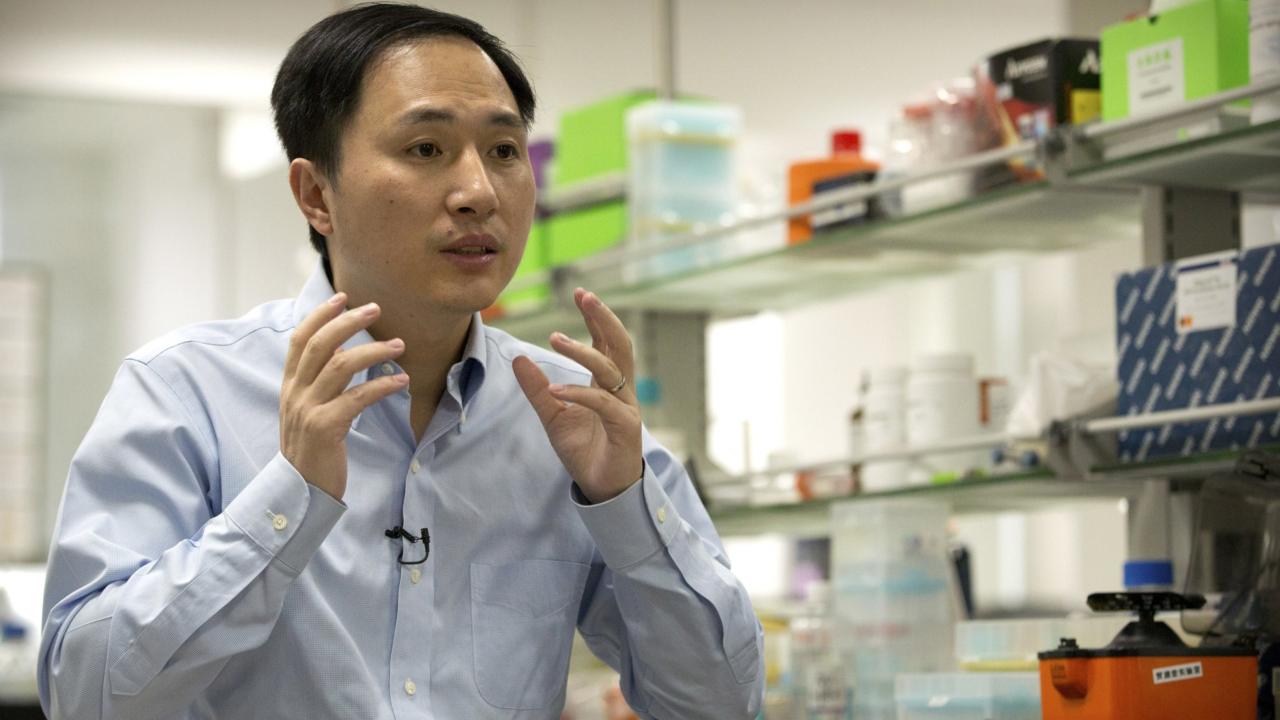 He Jiankui during an interview at his laboratory in Shenzhen in China. Image credit: AP[/caption]The WHO has asked that regulatory and ethics authorities in all countries put a stop and deny approvals to gene editing experiments that could lead to babies being born with gene-edited DNA (a process known as germline gene-editing, where the modified DNA is passed on from generation to next). This limitation will last till a time when the "implications have been properly considered," since gene editing in humans presents unique and unprecedented ethical and technical challenges, the WHO director-general said.The recommendation comes from an 18-member expert advisory committee to the WHO on human genome editing, formed in December after news about Dr He Jiankui's gene-editing trials first surfaced. The committee also suggested that WHO create a global registry of all experiments involve genome editing, and human genome editing in particular.
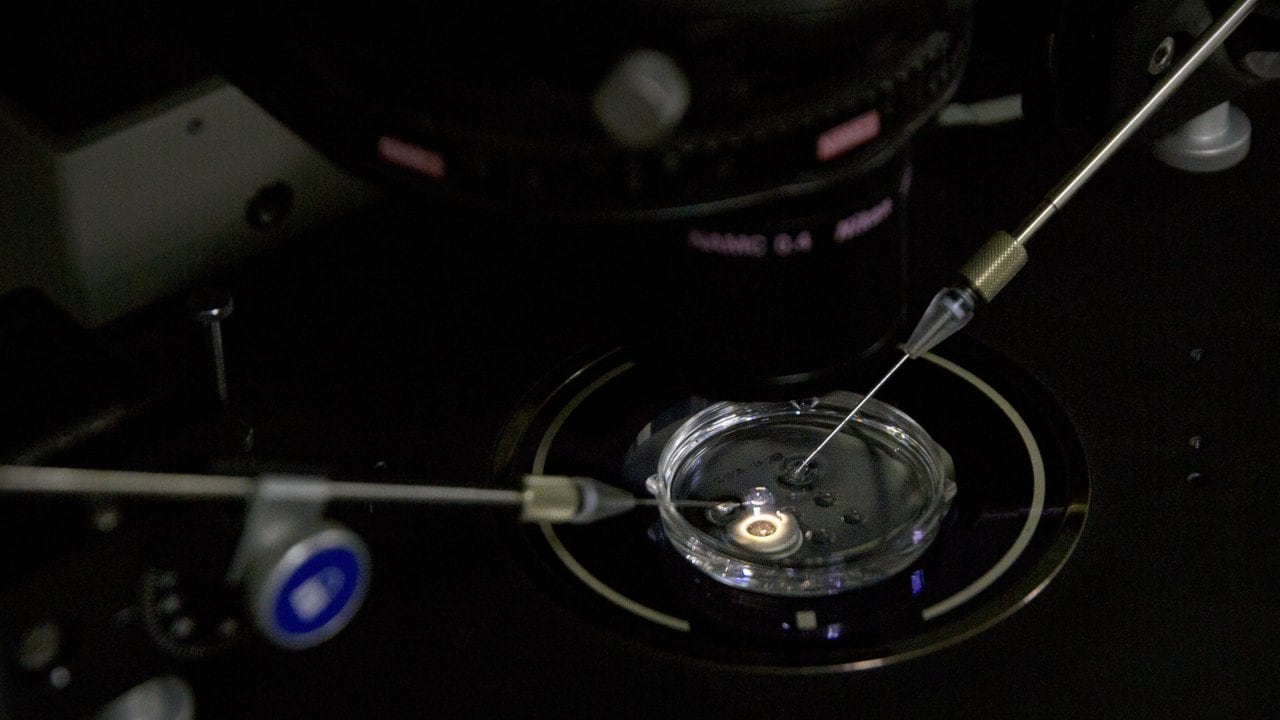 Part of the IVF procedure in progress. Image credit: AP[/caption]Others, like Jiankui, believe they should be allowed to conduct gene-editing studies, even if regulated, with human embryos. Dr George Church, a Harvard geneticist, in an interview with The Associated Press, defended He Jiankui's attempt to edit vulnerability to HIV from human DNA, calling it "justifiable" since HIV is "a major and growing public health threat."()
Advertisement
First Published:Jul 31, 2019, 17:45:22 IST
Advertisement
Advertisement

Careless Whispers: Scientists discover that plants can 'talk' to each other using smells
Japanese scientists have recorded a video that shows plants, in certain conditions, communicate with each other using mists that carry smells. The discovery, reveals that plants release a fine mist of airborne compounds, to warn nearby plants of potential dangers
Life on Mars? European Space Agency’s Orbiter discovers ice water deposits at equator
European Space Agency's Mars Express Orbiter has identified massive ice and ice water deposits beneath the surface of Mars. The Mars Express orbiter was also the first to confirmed the presence of ice on Mars in 2004
Microsoft briefly overtakes Apple as the most valuable company, Apple back on top again
At its peak during the session, Microsoft's value reached $2.903 trillion, with a 2% surge. As of writing this article, Apple closed at $2.89 trillion, whereas Microsoft closed at $2.86 trillion
Even NASA is facing a tough time, starts layoffs following major budget cuts
NASA is facing some massive budget cuts, because of which, it has been forced to postpone some upcoming missions. NASA's Jet Propulsion Laboratory has been hit hard by recent federal budget cuts, resulting in the layoff of 100 contractors last week
ISRO, NASA's NISAR satellite to get ready by Jan-end, will monitor Earth's snow-covered regions
The NISAR satellite which has been developed jointly ISRO and NASA, should be ready for launch by the end of January 2024. The collaboration between NASA and ISRO on NISAR is the first time the two agencies have cooperated on hardware development for an Earth-observing mission
Advertisement
Advertisement