
Advertisement


Sections
Using gene editing to create virus-resistant plants could backfire say researchers
In a weird turn of events, researchers created mutated viruses in plants instead of a virus resistant plant

Using gene-editing tools to create virus-resistant plants may have an unintended consequence of propagating of mutated viruses, according to scientists including one of Indian origin.Researchers at the University of Alberta in Canada and the University of Liege in Belgium attempted to genetically engineer cassava plants to fight off viruses."Because this technology creates a selection pressure on the viruses to evolve more quickly, and also provides the viruses with a means to evolve, it resulted in a virus mutant that is resistant to our interventions," said Devang Mehta, from the University of Alberta.For the study, published in the journal Genome Biology, the researchers used a new gene-editing technology called CRISPR-Cas9 in an attempt to design cassava plants that could cut the DNA of the mosaic virus and make the plants resistant to its damaging effects. They were not successful and decided to sequence hundreds of viral genomes found in each plant to understand exactly what happened.[caption id="attachment_5125541" align="alignnone" width="1280"]![Representational image. Wikimedia Commons]() Representational image. Wikimedia Commons[/caption]"We discovered that the pressure that CRISPR-Cas9 applied to the virus probably encouraged it to evolve in a way that increased resistance to intervention," said Mehta, who noted CRISPR-Cas9 has many other applications in food and agriculture that do not pose the same risks.CRISPR-Cas9 is found in nature, where bacteria use it to defend against viruses. However, the researchers found the technology results in different outcomes in plants — and researchers are stressing the importance of screening against these sorts of unintended results in the future.The cassava plant is a starchy root vegetable that is consumed for food throughout the tropics.Cassava is a primary staple crop grown in South America, Africa and Asia, from which a billion people get most of their calories each day. Each year, cassava crops are plagued by cassava mosaic disease, which causes 20 per cent crop loss. It is the mosaic disease that researchers endeavoured to engineer against.The research team is encouraging other scientists who are using CRISPR-Cas9 technology to engineer virus-resistant plants, to test their plants to detect similar viral mutations."We need to do more research on these types of applications of CRISPR-Cas9 technology before we proceed with field testing," said Mehta.
Representational image. Wikimedia Commons[/caption]"We discovered that the pressure that CRISPR-Cas9 applied to the virus probably encouraged it to evolve in a way that increased resistance to intervention," said Mehta, who noted CRISPR-Cas9 has many other applications in food and agriculture that do not pose the same risks.CRISPR-Cas9 is found in nature, where bacteria use it to defend against viruses. However, the researchers found the technology results in different outcomes in plants — and researchers are stressing the importance of screening against these sorts of unintended results in the future.The cassava plant is a starchy root vegetable that is consumed for food throughout the tropics.Cassava is a primary staple crop grown in South America, Africa and Asia, from which a billion people get most of their calories each day. Each year, cassava crops are plagued by cassava mosaic disease, which causes 20 per cent crop loss. It is the mosaic disease that researchers endeavoured to engineer against.The research team is encouraging other scientists who are using CRISPR-Cas9 technology to engineer virus-resistant plants, to test their plants to detect similar viral mutations."We need to do more research on these types of applications of CRISPR-Cas9 technology before we proceed with field testing," said Mehta.
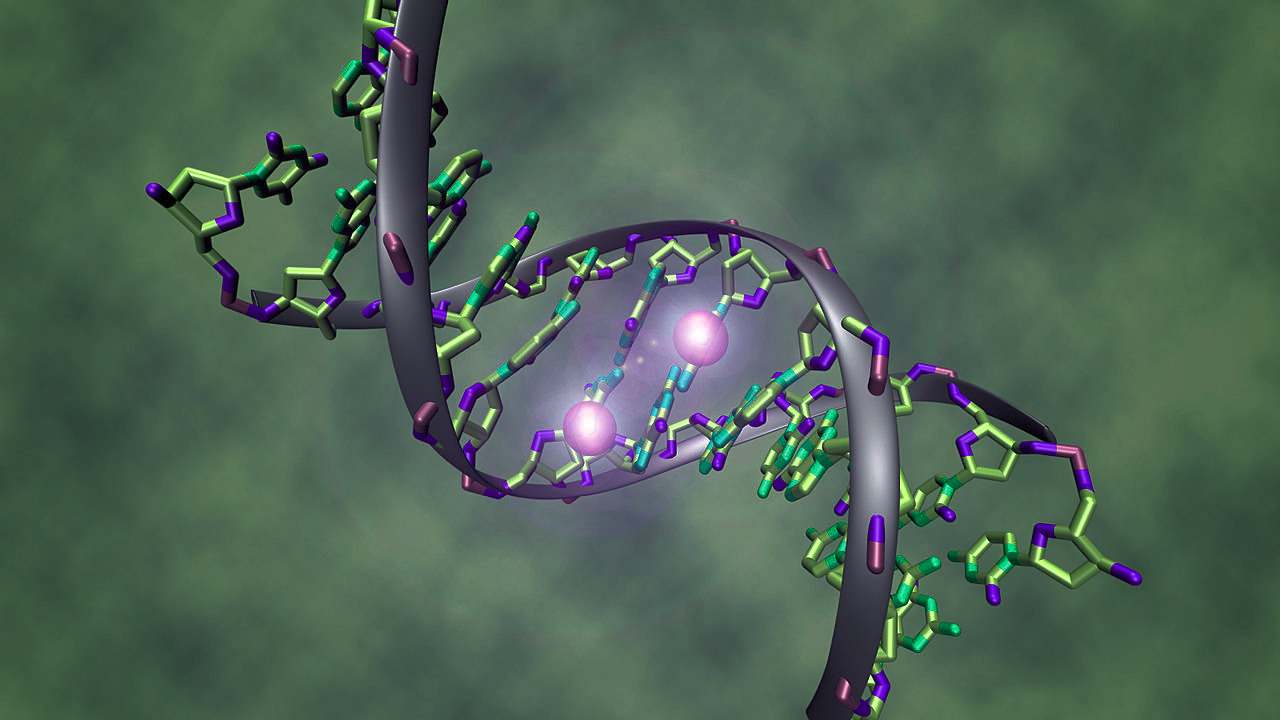 Representational image. Wikimedia Commons[/caption]"We discovered that the pressure that CRISPR-Cas9 applied to the virus probably encouraged it to evolve in a way that increased resistance to intervention," said Mehta, who noted CRISPR-Cas9 has many other applications in food and agriculture that do not pose the same risks.CRISPR-Cas9 is found in nature, where bacteria use it to defend against viruses. However, the researchers found the technology results in different outcomes in plants — and researchers are stressing the importance of screening against these sorts of unintended results in the future.The cassava plant is a starchy root vegetable that is consumed for food throughout the tropics.
First Published:Apr 29, 2019, 08:39:05 IST
Advertisement
Advertisement

Careless Whispers: Scientists discover that plants can 'talk' to each other using smells
Japanese scientists have recorded a video that shows plants, in certain conditions, communicate with each other using mists that carry smells. The discovery, reveals that plants release a fine mist of airborne compounds, to warn nearby plants of potential dangers
Life on Mars? European Space Agency’s Orbiter discovers ice water deposits at equator
European Space Agency's Mars Express Orbiter has identified massive ice and ice water deposits beneath the surface of Mars. The Mars Express orbiter was also the first to confirmed the presence of ice on Mars in 2004
Microsoft briefly overtakes Apple as the most valuable company, Apple back on top again
At its peak during the session, Microsoft's value reached $2.903 trillion, with a 2% surge. As of writing this article, Apple closed at $2.89 trillion, whereas Microsoft closed at $2.86 trillion
Even NASA is facing a tough time, starts layoffs following major budget cuts
NASA is facing some massive budget cuts, because of which, it has been forced to postpone some upcoming missions. NASA's Jet Propulsion Laboratory has been hit hard by recent federal budget cuts, resulting in the layoff of 100 contractors last week
ISRO, NASA's NISAR satellite to get ready by Jan-end, will monitor Earth's snow-covered regions
The NISAR satellite which has been developed jointly ISRO and NASA, should be ready for launch by the end of January 2024. The collaboration between NASA and ISRO on NISAR is the first time the two agencies have cooperated on hardware development for an Earth-observing mission
Advertisement
Advertisement