


The Thing: Second-largest fossil egg ever found, from Antartica has scientists bewildered
While birds, crocodilians and many dinosaurs laid hard-shelled eggs, the Antarctic egg had a soft, parchment-like shell.

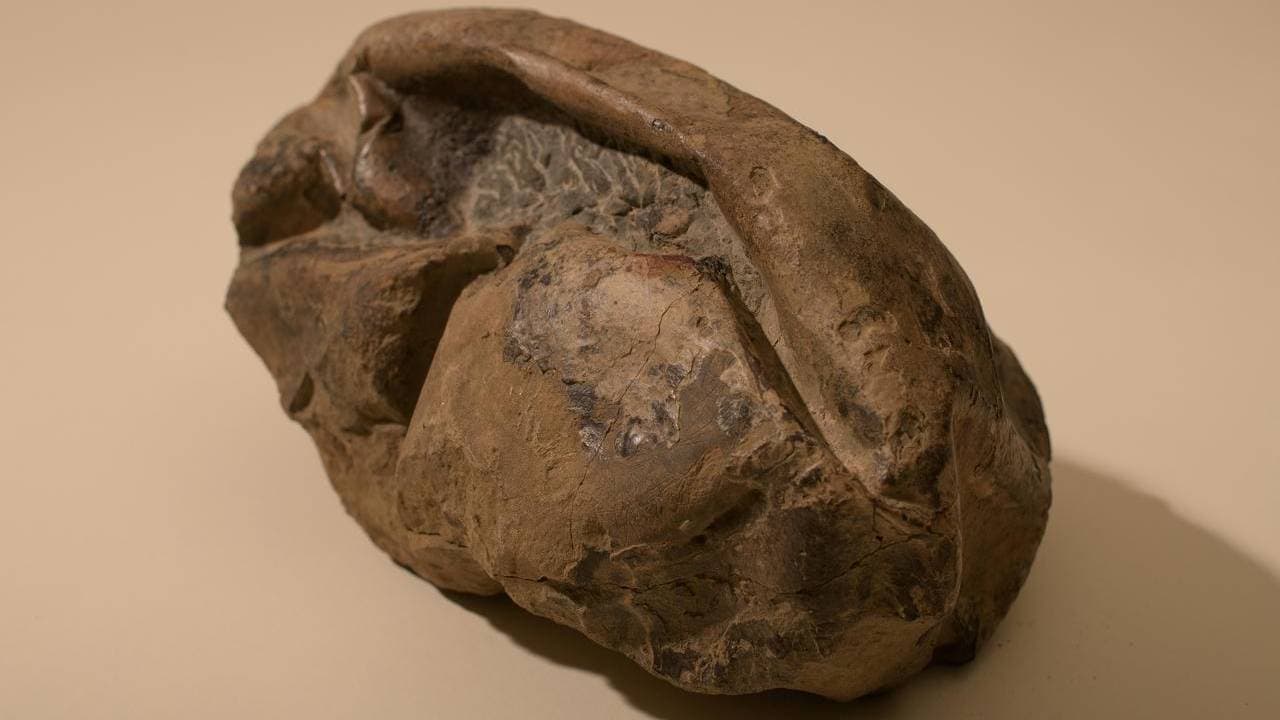
A soft-shell fossil egg of a marine reptile found in Antarctica. Image: University of Chile[/caption]“It looks a bit like a deflated football: elongated, collapsed, with many creases and folds on its surface. One side is flattened, suggesting this is where it came in contact with the seafloor. Its eggshell is very thin and poorly mineralized, like in the eggs of lizard and snakes.”The only creatures in Antarctica at that time large enough to lay such an egg were seagoing reptiles: the marine lizards called mosasaurs and the long-necked plesiosaurs. The fossil challenges the notion that these animals did not lay eggs and were fully viviparous, giving birth to live young.“We suspect these large reptiles had the same reproductive strategy as viviparous lizards and snakes, which lay eggs with a very thin shell that hatch immediately after being laid,” Legendre said.The egg had no embryonic remains and the mother’s skeleton was not found to identify what animal laid it. Among the candidates are species of mosasaurs reaching 50 feet (15 meters) long and plesiosaurs reaching 33 feet (10 meters) long, Legendre said.Mosasaurs and plesiosaurs went extinct at the same time as the dinosaurs after an asteroid struck Earth 66 million years ago.Scientists from the University of Chile and the country’s Museum of Natural History found the fossil in 2011. Initially bewildered by it, they nicknamed it “The Thing,” after the name of a science-fiction film.“When we arrived at camp we asked the geologists that accompanied us if they had ever seen anything like it,” said University of Chile paleontology researcher Rodrigo Otero. “Their expression of bewilderment said it all.”

Careless Whispers: Scientists discover that plants can 'talk' to each other using smells
Life on Mars? European Space Agency’s Orbiter discovers ice water deposits at equator
Microsoft briefly overtakes Apple as the most valuable company, Apple back on top again
Even NASA is facing a tough time, starts layoffs following major budget cuts
ISRO, NASA's NISAR satellite to get ready by Jan-end, will monitor Earth's snow-covered regions