


The definition of the kilogram has been changed, by scientists, 130 years later
20 May 2019 is a red letter day with the changes in the definition of the ampere, the Kelvin and the mole.

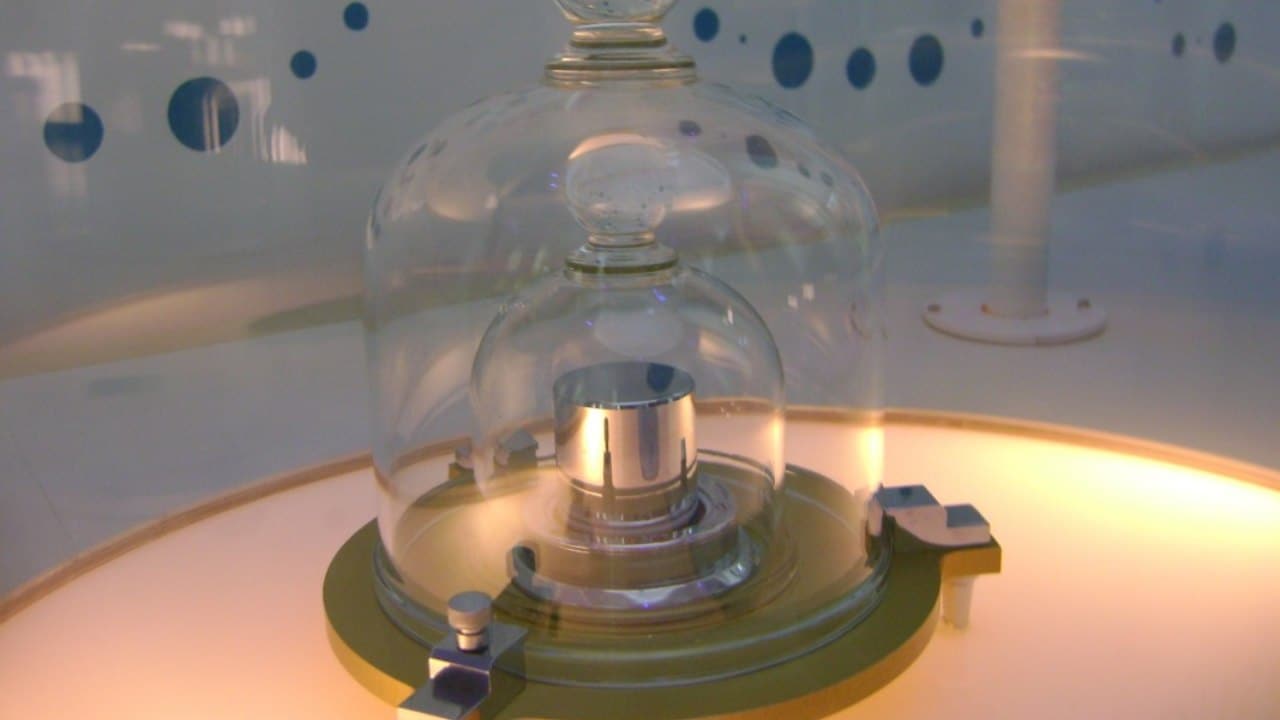
A prototype kilogram replica on display at a Paris Museum, featuring three layers of protective glass. Image courtesy: Jabs 88[/caption]Instead of relating to the mass of a singular physical object, the kilogram will now be defined in terms of the Planck constant -- the ratio of a frequency of light, on the one hand, to the quantum energy of that frequency, on the other.Put another way, it is 6.626 x 10⁻³⁴ joule seconds. Energy is intrinsically linked to mass, as Einstein demonstrated with his equation E = mc squared. The Planck constant, combined with two quantum phenomena that allow for the creation of electrical power, can be used to calculate mass based on the equivalent mechanical power needed to displace it. Proponents of this approach say it will be at least one million times more stable than physical artifacts and will have a range of practical applications, from pharmaceutical measurements to scientific research.Monday also saw new definitions adopted for the ampere — the rate of electrical current flow; the Kelvin — the base unit of temperature; and the mole — the unit measuring the amount of a given substance.While changing how we define fundamental units might sound like a weighty affair, the BIPM, the Paris-based international custodian of measurement systems, said much care had been taken to ensure the shift will have "no perceptible impact on daily life. Few users outside national metrology laboratories will notice the changes," it said.

Careless Whispers: Scientists discover that plants can 'talk' to each other using smells
Life on Mars? European Space Agency’s Orbiter discovers ice water deposits at equator
Microsoft briefly overtakes Apple as the most valuable company, Apple back on top again
Even NASA is facing a tough time, starts layoffs following major budget cuts
ISRO, NASA's NISAR satellite to get ready by Jan-end, will monitor Earth's snow-covered regions