


Surprise! Undiscovered dust, asteroids rings may share orbits with Mercury, Venus
It's not every day you discover something new & amazing in our very own planetary neighborhood.

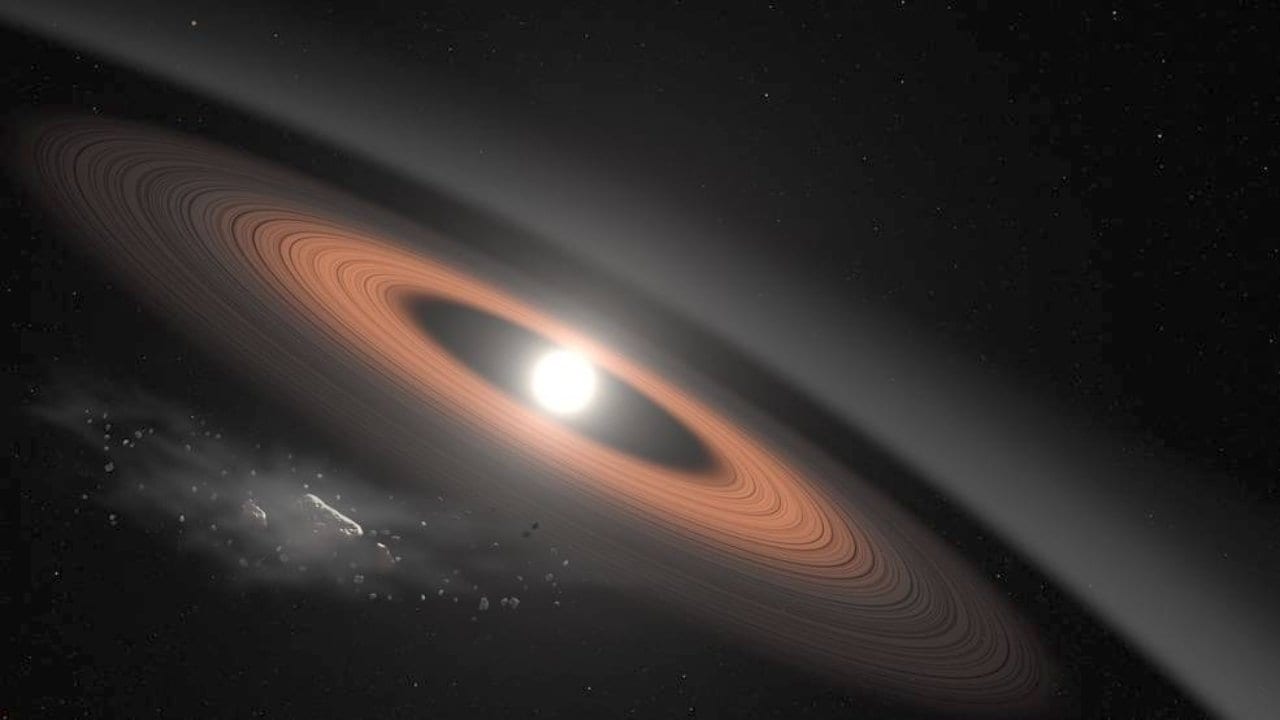
Scientists think crumbling asteroids supply the dust rings surrounding this old star. Image courtesy: NASA[/caption]The dust is nothing but remnants from the early formation of the solar system 4.6 billion years ago. Whether rubble from asteroid collisions or crumbs from blazing comets, all these particles are dispersed throughout our entire solar system.But when the dust settles in the solar system, it’s often in rings. They gather and form grainy rings along the orbits of Earth and Venus – rings that can be seen with telescopes on Earth. Studying the dust — its composition, its origin, and how it moves through space — can give scientists clues as to how planets came to be, and how they've become as they are in the solar system today.
The Sun's dusty halo
Researchers have described a fine haze of cosmic dust all along Mercury’s orbit, making a ring that's roughly 15 million kilometres wide. Mercury, on the other hand, is just 4,878 kilometres wide and is enveloped completely in the vast cloud of dust as it orbits the Sun.The pair of scientists that discovered the ring, in a wonderful irony, stumbled upon it when they were looking for proof of a region close to the Sun that was reportedly dust-free![caption id="attachment_6250571" align="alignnone" width="1280"] Many dust rings orbit the Sun, formed when planets’ gravities tug dust grains into their orbits around the Sun. Scientists detected a dust ring at Mercury’s orbit in 2018. Image courtesy: NASA[/caption]According to a prediction from decades ago, the Sun's heat vaporises dust, sweeping and keeping a stretch of space close to the Sun completely dust-free. This boundary, if it exists, could tell scientists a lot – of the dust's composition, and of planet formation after the Big Bang.Wherever from Earth they look towards the Sun, scientists are peering at all the dust transiting between the Earth and Sun, tricking them into thinking the Sun's close quarters are dustier than they actually are. The pair of scientists built a model of interplanetary space, based on pictures from NASA’s Solar and Terrestrial Relations Observatory (STEREO) to work around this problem.There are two kinds of light picked up by STEREO's instruments – light from the Sun’s piping outer atmosphere (the corona), and light reflected off the dust floating around through space. The sunlight reflected off this dust, which orbits the Sun slowly, is about 100 times brighter than coronal light, the researchers said in the statement.The scientists built their model as a tool to get rid of the pesky dust in STEREO's — and eventually, the Parker Solar Probe's — images. But that same map was also key to separating the two sources of light, i.e. if all the light in an image came from the corona alone, that could indicate they’ve found the mythical dust-free space after all.[caption id="attachment_6250621" align="alignnone" width="1280"]
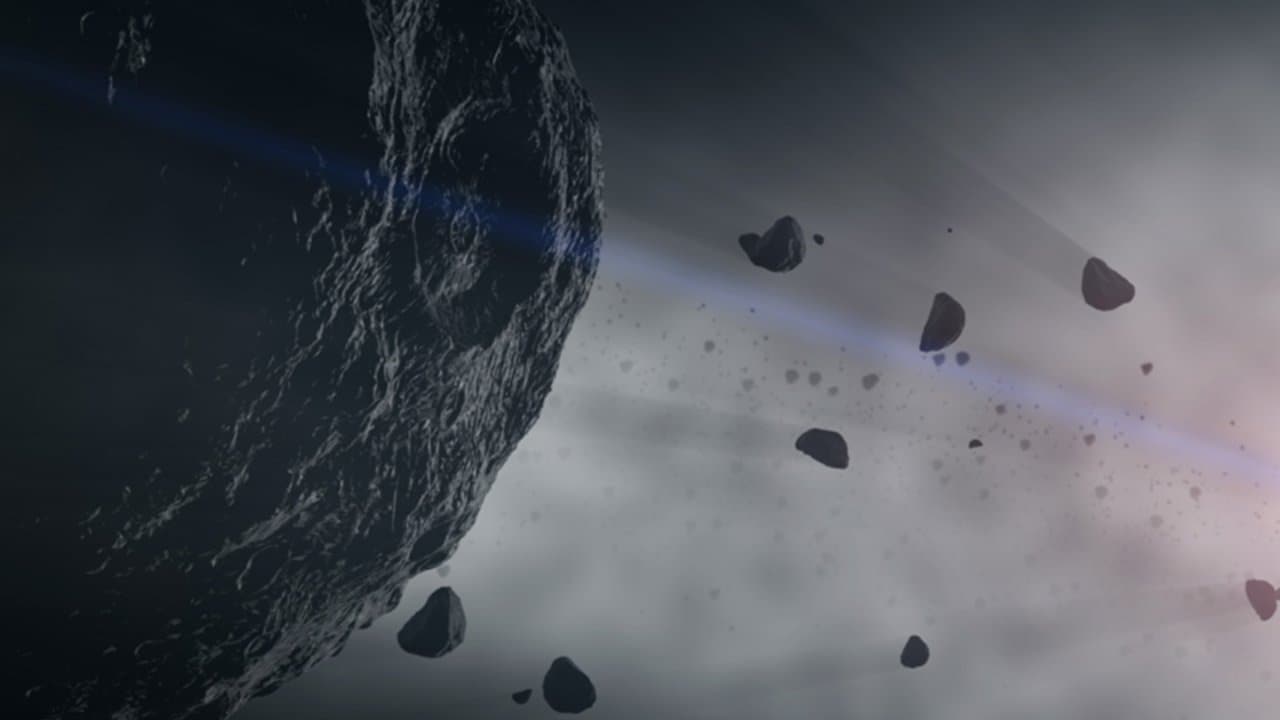 Scientists think planets start off as mere grains of dust, emerging from giant disks of gas & dust circling young stars. Gravity and other forces cause material within the disk to collide and coalesce with each other, creating celestial objects like our planets and asteroids. Image courtesy: NASA[/caption]In all of STEREO's images of Mercury's orbit, they found a consistent, five percent increase in brightness throughout and only along the planet's orbit."(It's) all around the Sun, regardless of the spacecraft’s position...that said something was there, and it’s something that extends all around the Sun," Howard said.The researchers reported their results last November in The Astrophysical Journal.
Asteroids in Venus’ Orbit

Careless Whispers: Scientists discover that plants can 'talk' to each other using smells
Life on Mars? European Space Agency’s Orbiter discovers ice water deposits at equator
Microsoft briefly overtakes Apple as the most valuable company, Apple back on top again
Even NASA is facing a tough time, starts layoffs following major budget cuts
ISRO, NASA's NISAR satellite to get ready by Jan-end, will monitor Earth's snow-covered regions