


SpaceX Falcon Heavy booster may be lost to sea despite perfect landing last week
All 3 Falcon 9 boosters made a perfect landing after launch, but the core booster fell into rough seas.

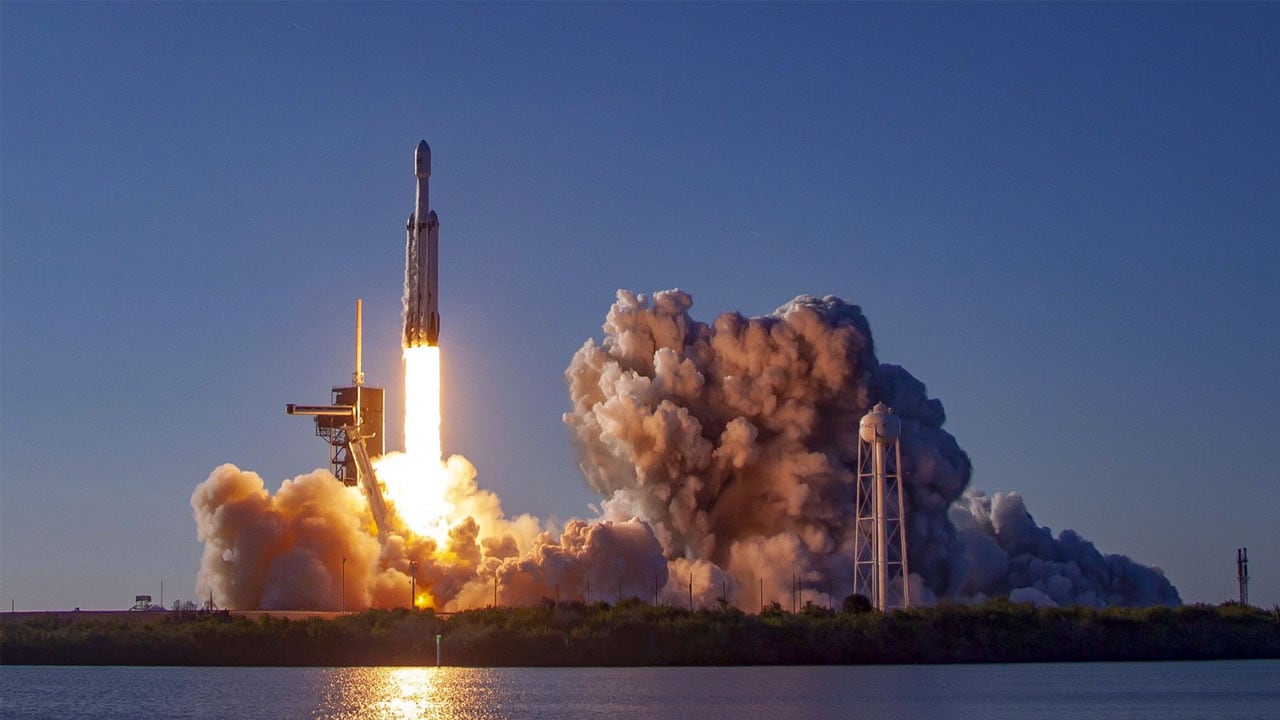
The Falcon 9 Heavy lifting off from the historic Pad 39A at NASA's Kennedy Space Centre.[/caption]The Falcon 9 Heavy lifting off from the historic Pad 39A at NASA's Kennedy Space Centre."While we had hoped to bring the booster back intact, the safety of our team always takes precedence. We do not expect future missions to be impacted," SpaceX told The Verge.The launch on 11 April was the first commercial launch of the Falcon Heavy, but the second time the Falcon Heavy was launched since it was developed. The rocket's central booster is a modified version of SpaceX's Falcon 9 booster, flanked by two other Falcon 9 boosters in the flight-ready Falcon Heavy rocket.
Falcon Heavy’s side boosters land on Landing Zones 1 and 2 pic.twitter.com/nJCCaVHOeo— SpaceX (@SpaceX) April 12, 2019After liftoff, all three of the rocket's boosters successfully landed on their respective landing pads — the two side-boosters at the twin pads at Cape Canaveral, and the core booster out at sea on the Of Course I Still Love You! droneship. But the core booster saw that success last only momentarily. SpaceX has efficient robots designed to recover its Falcon 9 boosters — the "octagrabber" — but the core booster had a different configuration that doesn't latch on to the base of any booster except the Falcon 9's (for now). It still fared better than the Heavy's first landing attempt in February 2018, when the outer cores made a perfect landing, but the centre core missed the drone ship by a big margin, slamming into the ocean in rather dramatic fashion.
Careless Whispers: Scientists discover that plants can 'talk' to each other using smells
Life on Mars? European Space Agency’s Orbiter discovers ice water deposits at equator
Microsoft briefly overtakes Apple as the most valuable company, Apple back on top again
Even NASA is facing a tough time, starts layoffs following major budget cuts
ISRO, NASA's NISAR satellite to get ready by Jan-end, will monitor Earth's snow-covered regions