


Space debris detected in broad daylight for the first time using a powerful laser instrument
The distance to the object was also determined by scientists using a special, powerful 'geodetic' laser.

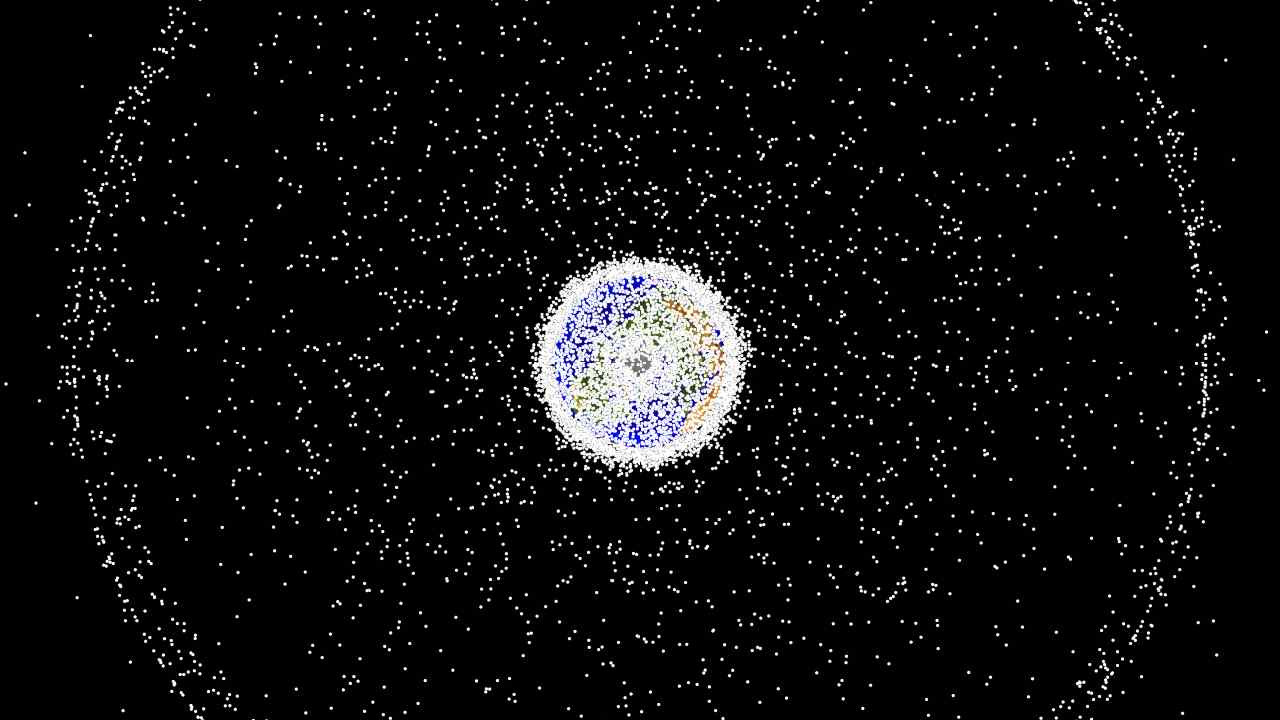
From a vantage point above the north pole, a look at the concentrations of objects in Earth's LEO and geosynchronous orbits. Image Credit: NASA ODPO[/caption]Space junk or space debris is "any piece of machinery or debris left by humans in space," as per the Natural History Museum. These can be large objects like dead satellites or spent rocket parts or even waste used by human beings dumped into space.Satellites need to steer clear of any existent debris in order to avoid collision. With the growing number of satellites being launched, and rise in space traffic in orbit, the amount of junk left behind is also increasing at a rapid pace. The problem is such that the low-Earth orbit has become an "orbital space junkyard."Hence, it is important that organizations work on steps to detect space debris more efficiently. The recent finding will help scientists detect collisions with satellites at an early stage and initiate evasive manoeuvres, as per a press release by University of Bern.The laser technology used was previously thought to only work in the night, the release added.The feat of tracking the debris in daylight was only possible because of a CMOS (complementary metal oxide semiconductor) camera that was actively tracking the debris. This was aided by real-time image processing and a real-time digital filter to detect the photons reflected by the object in the daytime.

Careless Whispers: Scientists discover that plants can 'talk' to each other using smells
Life on Mars? European Space Agency’s Orbiter discovers ice water deposits at equator
Microsoft briefly overtakes Apple as the most valuable company, Apple back on top again
Even NASA is facing a tough time, starts layoffs following major budget cuts
ISRO, NASA's NISAR satellite to get ready by Jan-end, will monitor Earth's snow-covered regions