


Scientists identify new dinosaur species as the largest flying mammal to live
Despite their large size and wide distribution, only fragmentary remains have been unearthed.

Scientists on Tuesday unveiled a new species pterosaur, the plane-sized reptiles that lorded over primaeval skies above T-rex, Triceratops and other dinosaurs of the late Cretaceous.With a wingspan of ten metres and weighing 250 kilos, Cryodrakon boreas rivals another pterosaur as the largest flying animal of all time, researchers reported in the Journal of Vertebrate Paleontology."This is a cool discovery," said David Hone, lead author of the study and a researcher at Queen Mary University in London. "It is great that we can identify Cryodrakon as being distinct from Quetzalcoatlus," the other giant pterosaur for which it was initially mistaken, he said in a statement.[caption id="attachment_7321091" align="alignnone" width="1280"] An artist illustration of Cryodrakon boreas. Credit: David Maas[/caption]C. boreas was hiding in plain sight.Its remains were first discovered more than 30 years ago in Alberta, Canada, yet elicited scant excitement because of the misclassification.But a closer look at the fossil remains of a juvenile and the intact giant neck bone of a full-grown specimen left no doubt that a new species had been discovered.Like other winged reptiles living at the same time, about 77 million years ago, C. boreas was carnivorous and probably fed on lizards, small mammals and even baby dinosaurs.[caption id="attachment_7321101" align="alignnone" width="1280"]
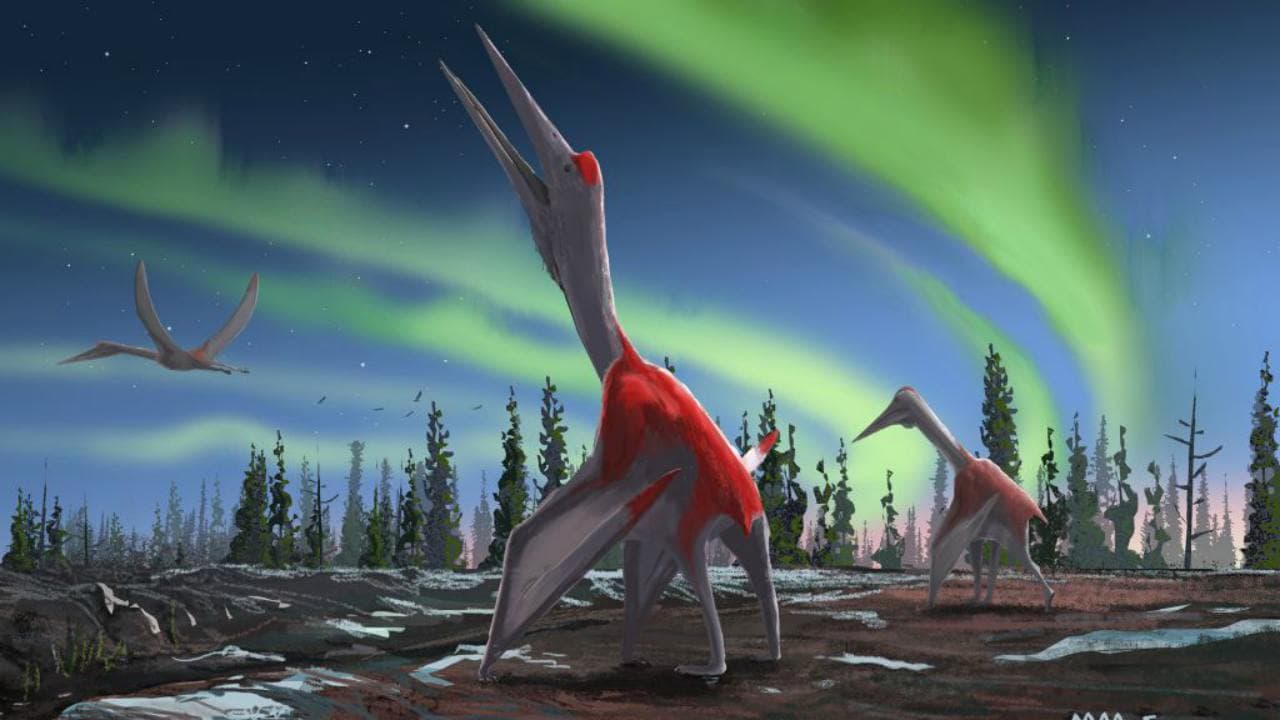 An artist illustration of Cryodrakon boreas. Credit: David Maas[/caption]Despite a likely capacity to cross large bodies of water, the location of fossil remains and the animal's features point to an inland habitat, Hone said.There are more than 100 known species of pterosaurs.Despite their large size and wide distribution – across North and South America, Asia, Africa and Europe - only fragmentary remains have been unearthed, making the new find especially important.

Careless Whispers: Scientists discover that plants can 'talk' to each other using smells
Life on Mars? European Space Agency’s Orbiter discovers ice water deposits at equator
Microsoft briefly overtakes Apple as the most valuable company, Apple back on top again
Even NASA is facing a tough time, starts layoffs following major budget cuts
ISRO, NASA's NISAR satellite to get ready by Jan-end, will monitor Earth's snow-covered regions