


Russia's heavy-class Angara flies for the second time, six years after first launch in 2014
The Angara rockets — named after a Siberian river flowing out of Lake Baikal — are the first new family of launchers to be built after the collapse of the Soviet Union.

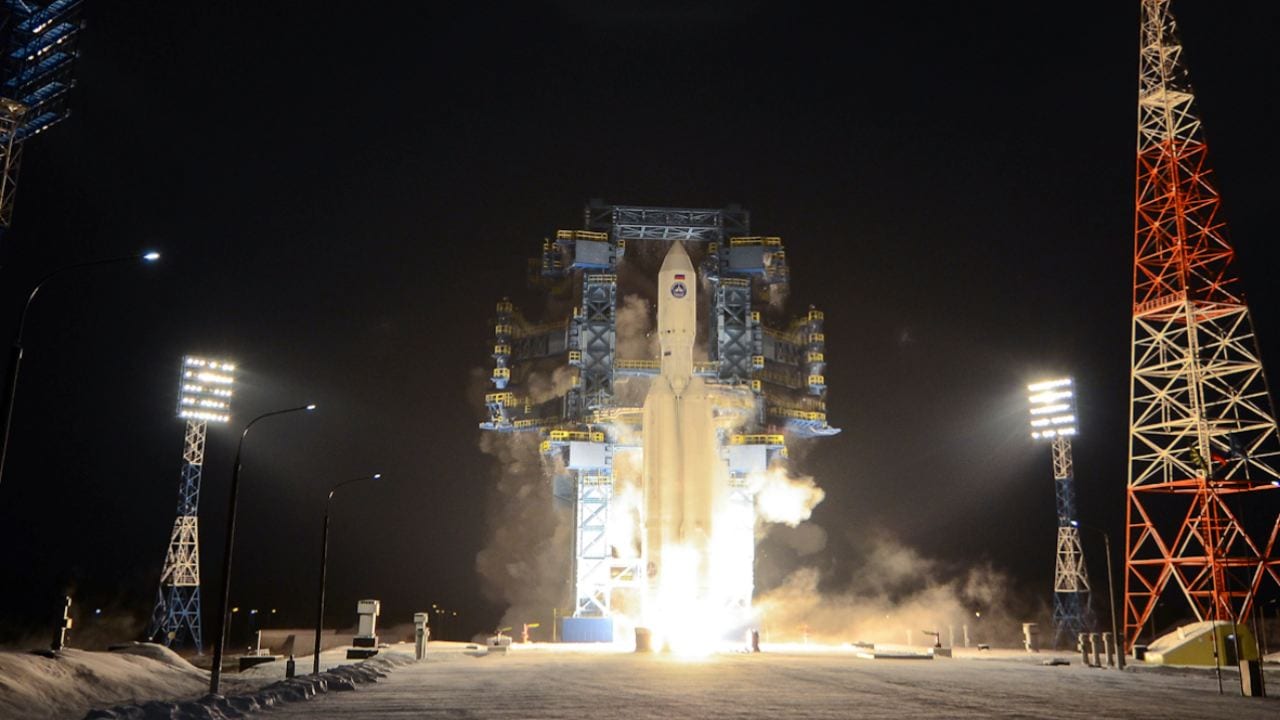
A test launch of a heavy-class carrier rocket - Angara - was carried out by the Russian space agency. Image credit: Russian Ministry of Defence[/caption]Agency head Dmitry Rogozin welcomed the news on Twitter, posting a picture of the rocket and writing: "She flies, damn it!"The only other launch of the heavy-class Angara rocket took place in late December 2014, while a test of a lighter class version of the rocket was conducted in July that year.The Angara rockets — named after a Siberian river flowing out of Lake Baikal — are the first new family of launchers to be built after the collapse of the Soviet Union.They are designed to replace the Proton rockets that date back to the 1960s and have suffered a series of embarrassing failures in recent years.President Vladimir Putin hopes the new launchers will revive Russia's space industry and reduce reliance on other former Soviet countries.Officials say the heavy-class Angara rocket is more environmentally friendly than its predecessors because it is fuelled by oxygen and kerosene rather than hugely toxic heptyl.The Russian space programme sent the first man into space in 1961 and launched the first satellite four years earlier.But since the collapse of the USSR in 1991, it has been plagued by corruption scandals and a series of other setbacks, losing expensive spacecraft and satellites in recent years.

Careless Whispers: Scientists discover that plants can 'talk' to each other using smells
Life on Mars? European Space Agency’s Orbiter discovers ice water deposits at equator
Microsoft briefly overtakes Apple as the most valuable company, Apple back on top again
Even NASA is facing a tough time, starts layoffs following major budget cuts
ISRO, NASA's NISAR satellite to get ready by Jan-end, will monitor Earth's snow-covered regions