


Russia's FEDOR not suited for space, ISS waves goodbye to tall, lanky robot
FEDOR was not programmed to grab ISS handrails to move about in microgravity, could not replace astronauts in spacewalks.

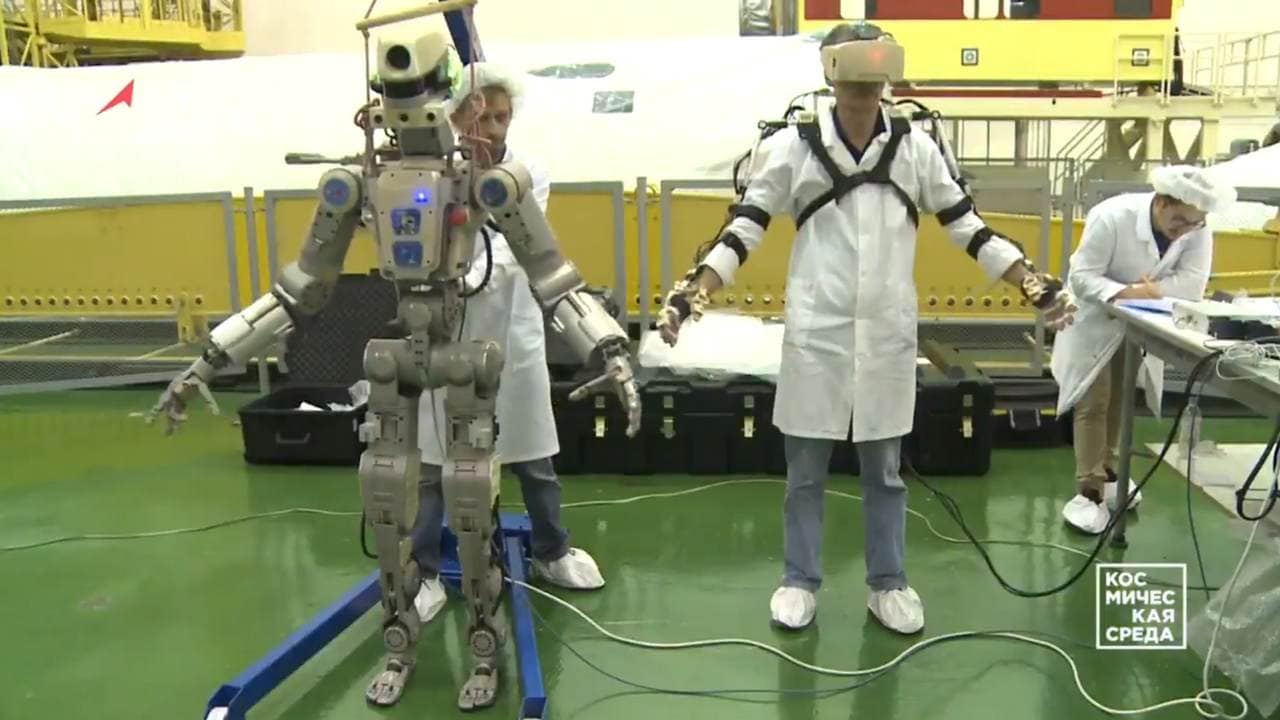
FEDOR, the Russian robot showing off his skills. Image credit: Twitter[/caption]Fedor, or Final Experimental Demonstration Object Research, was built to assist space station astronauts. A storm of publicity surrounded Fedeor's space odyssey and provided some light relief for Russia's beleaguered space industry.In the last year, it has seen the unprecedented failure of a manned launch and continuing delays on construction of the Vostochny space pad where President Vladimir Putin upbraided officials last week.But Fedor turned out to have a design that does not work well in space – standing 180 centimetres tall, its long legs were not needed on space walks, Dudorov said. The Russian space agency said the legs were immobilised during the trip and Fedor was not programmed to grab space station handrails to move about in microgravity.Dudorov said developers were sketching out plans for a replacement "that must suit the demands of working on the outside of the ship".
Fedor, officially Skybot F-850, rocketed to the ISS on 22 August, entering the orbiting laboratory five days later. On the station, the robot posed holding a Russian flag and for hugs with cosmonauts who were assigned to train it before touching down back on Earth on Monday.A final tweet posted in an account in the robot's name said: "Now I'm in my case. I await directions for further tests after the flight."Fedor was not the first robot to go into space. In 2011, NASA sent up Robonaut 2, a humanoid developed with General Motors that had a similar aim of working in high-risk environments. It was returned to Earth in 2018 after experiencing technical problems.In 2013, Japan sent up a small robot called Kirobo along with the ISS's first Japanese space commander. Developed with Toyota, it was able to hold conversations -- albeit only in Japanese.
Careless Whispers: Scientists discover that plants can 'talk' to each other using smells
Life on Mars? European Space Agency’s Orbiter discovers ice water deposits at equator
Microsoft briefly overtakes Apple as the most valuable company, Apple back on top again
Even NASA is facing a tough time, starts layoffs following major budget cuts
ISRO, NASA's NISAR satellite to get ready by Jan-end, will monitor Earth's snow-covered regions