
Advertisement


Sections
Researcher bakes 'delicious' Egyptian sourdough bread with 4,500-year-old yeast strain
The sourdough bread loaf was made using grains that existed at that time — barley, Einkorn & Kamut.

An archaeologist appears to have baked a loaf of sourdough bread using a 4,500-year-old yeast strain from Egypt — an irresistibly delicious-looking loaf, no less! Self-proclaimed "gastroegyptologist" Seamus Blackley set off on the exciting experiment and kept his followers on Twitter updated with the latest, every step of the bake.Blackley, who is an archaeologist by trade, along with Richard Bowman — a microbiologist, and Serena Love — an Egyptologist, got access to vessels from the Old Kingdom, a 400-year period of time during in Ancient Egyptian history between 2575 BC and 2150 BC. The vessels used to bake, the trio hypothesized, would certainly have remnants of age-old yeast.[caption id="attachment_7155311" align="alignnone" width="1280"]![The loaf of sourdough bread that was made from 4,500 year old yeast. Image credit: Twitter/ Seamus Blackley]() The loaf of sourdough bread that was made from 4,500-year-old yeast. Image credit: Twitter/ Seamus Blackley[/caption]"If some of these things (yeast) were driven into the porous ceramic matrix of these vessels that were used for brewing, raising bread, molding bread, or in the bread itself if it wasn't completely baked — the Egyptian baking technique didn't involve an oven, so it's likely that some of the dough remained slightly raw — then those microbes will still be around, and we can revive them. This was the thesis," Blackley said in an interview with Eater.And revive them he did.[caption id="attachment_7155361" align="alignnone" width="1280"]
The loaf of sourdough bread that was made from 4,500-year-old yeast. Image credit: Twitter/ Seamus Blackley[/caption]"If some of these things (yeast) were driven into the porous ceramic matrix of these vessels that were used for brewing, raising bread, molding bread, or in the bread itself if it wasn't completely baked — the Egyptian baking technique didn't involve an oven, so it's likely that some of the dough remained slightly raw — then those microbes will still be around, and we can revive them. This was the thesis," Blackley said in an interview with Eater.And revive them he did.[caption id="attachment_7155361" align="alignnone" width="1280"]![The ancient pots from where they extracted the yeast samples. Image credit: Twitter/ Seamus Balckley]() The ancient pots from where they extracted the yeast samples. Image credit: Twitter/Seamus Blackley[/caption]When collecting a yeast sample, he had to ensure that they do no destroy the artefacts or contaminate the actual yeast with the outside environment. They used a method that Blackley describes to be similar to "fracking," the process of injecting high-pressure liquid into rocks, boreholes, etc. to force open existing fissures and extract oil or gas. In this way, they "pumped a fluid carefully into a syringe and some sterile cotton in contact with the ceramics. It soaks in and you vacuum it back out."He kept one sample of the yeast with himself for future experiments and did the next best thing with a second sample – baked bread with it, documenting the process start-to-finish.[caption id="attachment_7155371" align="alignnone" width="1280"]
The ancient pots from where they extracted the yeast samples. Image credit: Twitter/Seamus Blackley[/caption]When collecting a yeast sample, he had to ensure that they do no destroy the artefacts or contaminate the actual yeast with the outside environment. They used a method that Blackley describes to be similar to "fracking," the process of injecting high-pressure liquid into rocks, boreholes, etc. to force open existing fissures and extract oil or gas. In this way, they "pumped a fluid carefully into a syringe and some sterile cotton in contact with the ceramics. It soaks in and you vacuum it back out."He kept one sample of the yeast with himself for future experiments and did the next best thing with a second sample – baked bread with it, documenting the process start-to-finish.[caption id="attachment_7155371" align="alignnone" width="1280"]![The sourdough culture. Image credit: Twitter/ Seamus Blackley]() The sourdough culture. Image credit: Twitter/ Seamus Blackley[/caption]Blackley grew the culture sample for a week and when it was all bubbly and ready, the baking began. He tweeted that modern wheat wasn't invented till long after these organisms went into hibernation. Hence, Blackley used grains that would have been used for baking in Egypt to keep the experiment authentic and scientific — "ancient, organic and milled fresh: barley and Einkorn and Kamut," as he put it. Also part of the recipe was water and unfiltered olive oil. After the top was carved with the hieroglyph for "T", the bread was off to bake.Blackley said the aroma was "amazing and new. It's much sweeter and more rich than the sourdough we are used to." He also said that the bread with light and airy. Blackley's wife, "the Sekhmet" (Egyptian warrior goddess), as he called her endearingly, also liked the bread. Two more loaves with the hieroglyphs "Di" and "Ankh" followed, which roughly translate to "Given Life."[caption id="attachment_7155291" align="alignnone" width="1280"]
The sourdough culture. Image credit: Twitter/ Seamus Blackley[/caption]Blackley grew the culture sample for a week and when it was all bubbly and ready, the baking began. He tweeted that modern wheat wasn't invented till long after these organisms went into hibernation. Hence, Blackley used grains that would have been used for baking in Egypt to keep the experiment authentic and scientific — "ancient, organic and milled fresh: barley and Einkorn and Kamut," as he put it. Also part of the recipe was water and unfiltered olive oil. After the top was carved with the hieroglyph for "T", the bread was off to bake.Blackley said the aroma was "amazing and new. It's much sweeter and more rich than the sourdough we are used to." He also said that the bread with light and airy. Blackley's wife, "the Sekhmet" (Egyptian warrior goddess), as he called her endearingly, also liked the bread. Two more loaves with the hieroglyphs "Di" and "Ankh" followed, which roughly translate to "Given Life."[caption id="attachment_7155291" align="alignnone" width="1280"]![The two loafs with the Given life hieroglyphs. Image credit: Twitter/ Seamus Blackley]() The two loafs with the Given life hieroglyphs. Image credit: Twitter/ Seamus Blackley[/caption]In all seriousness, though, Blackley isn't certain that the yeast is legitimate, and further tests will need to be conducted. He told The Standard Tuesday, "This project arose out of my love for Egyptology and baking. I realised that I could possibly recreate the bread that the Egyptians loved so much. This bread was baked in an oven like normal sourdough, just for practice and fun. We are developing the tools we need to properly bake like Egyptians over the next few months."This was also not the first time that Blackley has baked bread with yeast from ancient Egypt. He conducted another similar experiment in April this year.
The two loafs with the Given life hieroglyphs. Image credit: Twitter/ Seamus Blackley[/caption]In all seriousness, though, Blackley isn't certain that the yeast is legitimate, and further tests will need to be conducted. He told The Standard Tuesday, "This project arose out of my love for Egyptology and baking. I realised that I could possibly recreate the bread that the Egyptians loved so much. This bread was baked in an oven like normal sourdough, just for practice and fun. We are developing the tools we need to properly bake like Egyptians over the next few months."This was also not the first time that Blackley has baked bread with yeast from ancient Egypt. He conducted another similar experiment in April this year.
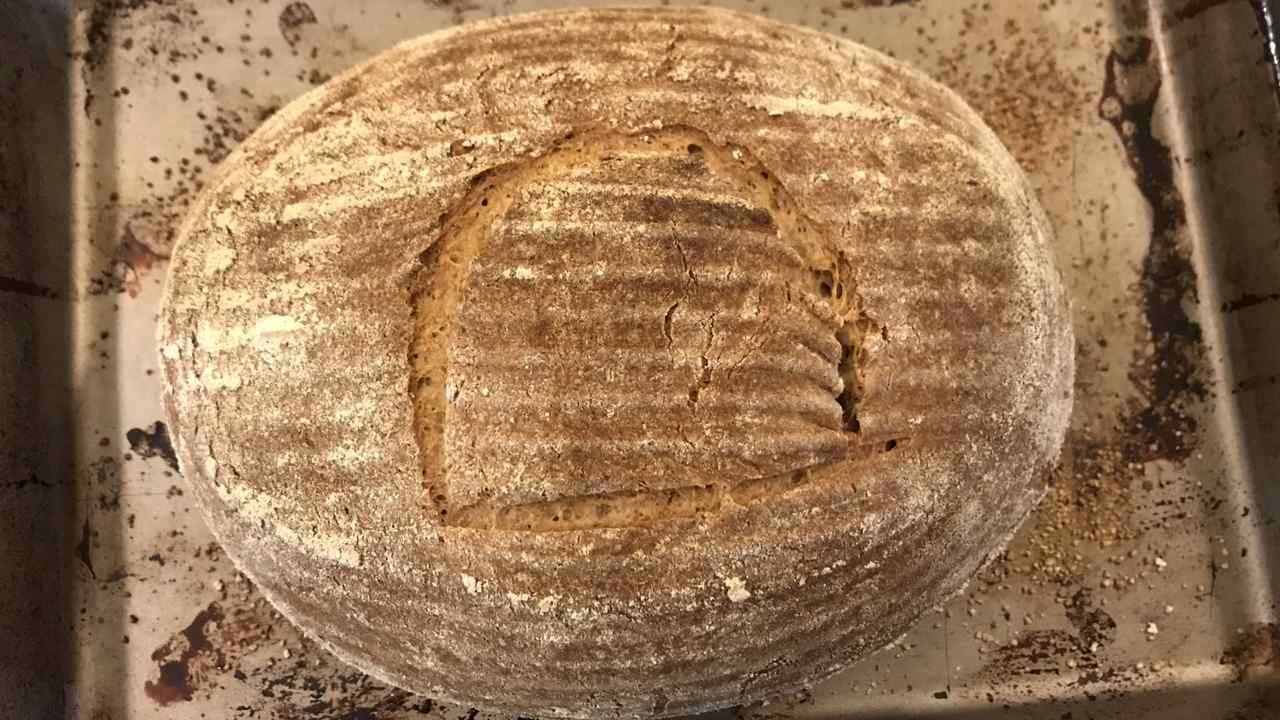 The loaf of sourdough bread that was made from 4,500-year-old yeast. Image credit: Twitter/ Seamus Blackley[/caption]"If some of these things (yeast) were driven into the porous ceramic matrix of these vessels that were used for brewing, raising bread, molding bread, or in the bread itself if it wasn't completely baked — the Egyptian baking technique didn't involve an oven, so it's likely that some of the dough remained slightly raw — then those microbes will still be around, and we can revive them. This was the thesis," Blackley said in an interview with Eater.And revive them he did.[caption id="attachment_7155361" align="alignnone" width="1280"]
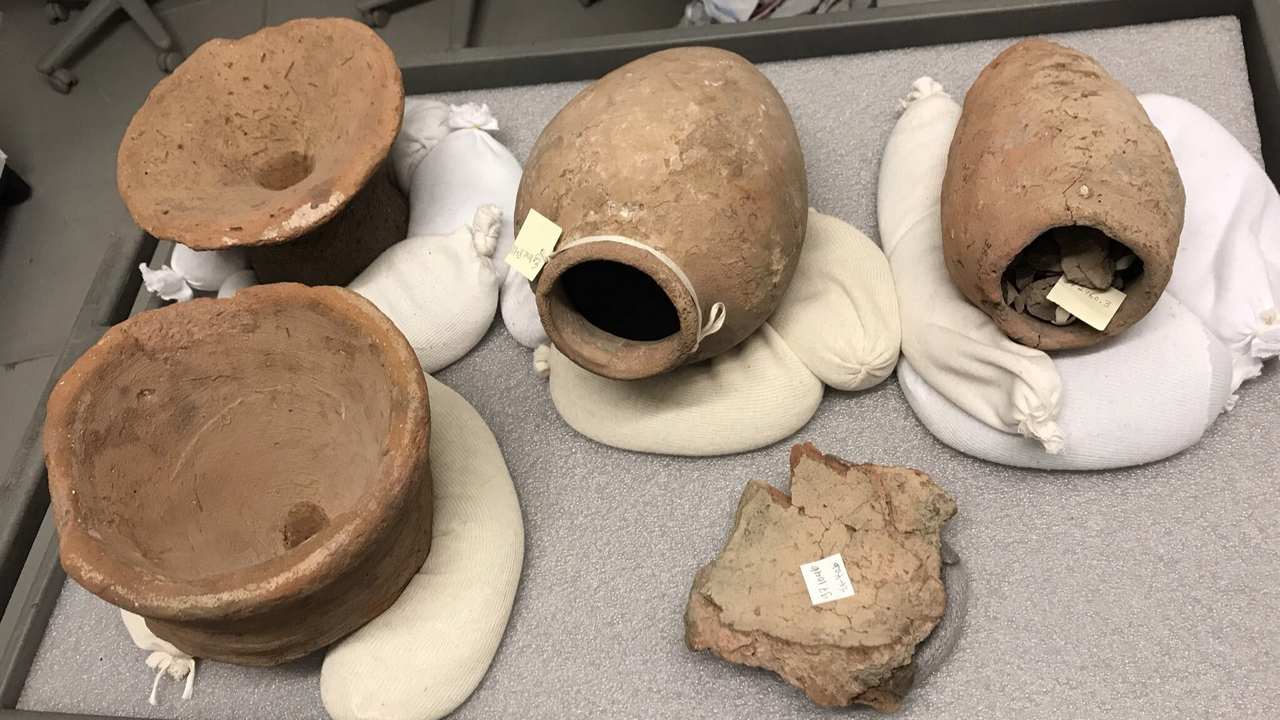 The ancient pots from where they extracted the yeast samples. Image credit: Twitter/Seamus Blackley[/caption]When collecting a yeast sample, he had to ensure that they do no destroy the artefacts or contaminate the actual yeast with the outside environment. They used a method that Blackley describes to be similar to "fracking," the process of injecting high-pressure liquid into rocks, boreholes, etc. to force open existing fissures and extract oil or gas. In this way, they "pumped a fluid carefully into a syringe and some sterile cotton in contact with the ceramics. It soaks in and you vacuum it back out."He kept one sample of the yeast with himself for future experiments and did the next best thing with a second sample – baked bread with it, documenting the process start-to-finish.[caption id="attachment_7155371" align="alignnone" width="1280"]
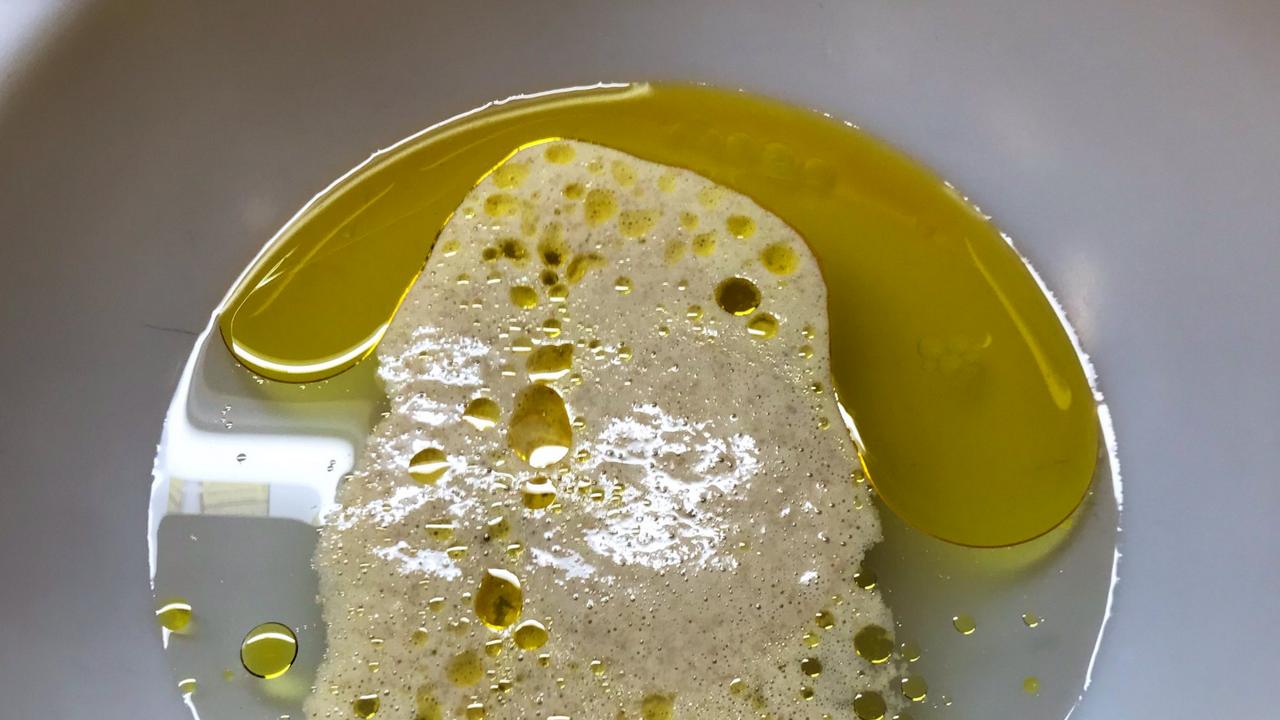 The sourdough culture. Image credit: Twitter/ Seamus Blackley[/caption]Blackley grew the culture sample for a week and when it was all bubbly and ready, the baking began. He tweeted that modern wheat wasn't invented till long after these organisms went into hibernation. Hence, Blackley used grains that would have been used for baking in Egypt to keep the experiment authentic and scientific — "ancient, organic and milled fresh: barley and Einkorn and Kamut," as he put it. Also part of the recipe was water and unfiltered olive oil. After the top was carved with the hieroglyph for "T", the bread was off to bake.Blackley said the aroma was "amazing and new. It's much sweeter and more rich than the sourdough we are used to." He also said that the bread with light and airy. Blackley's wife, "the Sekhmet" (Egyptian warrior goddess), as he called her endearingly, also liked the bread. Two more loaves with the hieroglyphs "Di" and "Ankh" followed, which roughly translate to "Given Life."[caption id="attachment_7155291" align="alignnone" width="1280"]
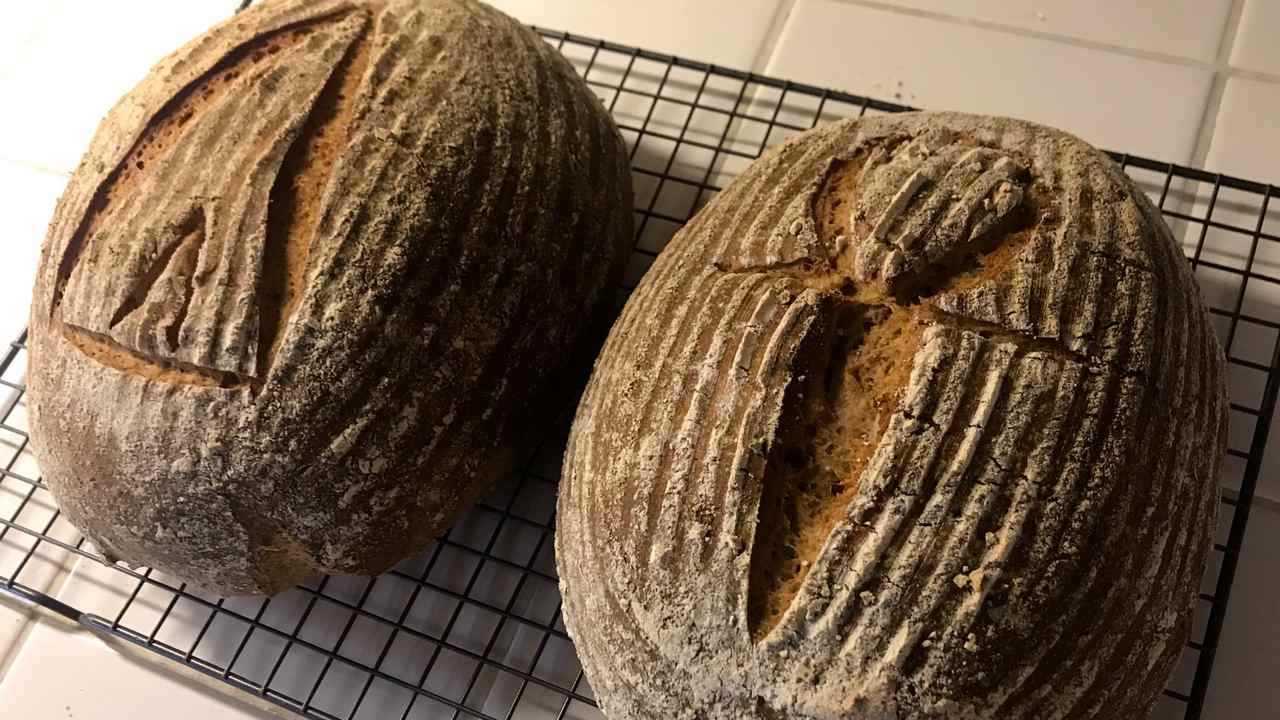 The two loafs with the Given life hieroglyphs. Image credit: Twitter/ Seamus Blackley[/caption]In all seriousness, though, Blackley isn't certain that the yeast is legitimate, and further tests will need to be conducted. He told The Standard Tuesday, "This project arose out of my love for Egyptology and baking. I realised that I could possibly recreate the bread that the Egyptians loved so much. This bread was baked in an oven like normal sourdough, just for practice and fun. We are developing the tools we need to properly bake like Egyptians over the next few months."This was also not the first time that Blackley has baked bread with yeast from ancient Egypt. He conducted another similar experiment in April this year.
First Published:Aug 13, 2019, 16:55:07 IST
Advertisement
Advertisement

Careless Whispers: Scientists discover that plants can 'talk' to each other using smells
Japanese scientists have recorded a video that shows plants, in certain conditions, communicate with each other using mists that carry smells. The discovery, reveals that plants release a fine mist of airborne compounds, to warn nearby plants of potential dangers
Life on Mars? European Space Agency’s Orbiter discovers ice water deposits at equator
European Space Agency's Mars Express Orbiter has identified massive ice and ice water deposits beneath the surface of Mars. The Mars Express orbiter was also the first to confirmed the presence of ice on Mars in 2004
Microsoft briefly overtakes Apple as the most valuable company, Apple back on top again
At its peak during the session, Microsoft's value reached $2.903 trillion, with a 2% surge. As of writing this article, Apple closed at $2.89 trillion, whereas Microsoft closed at $2.86 trillion
Even NASA is facing a tough time, starts layoffs following major budget cuts
NASA is facing some massive budget cuts, because of which, it has been forced to postpone some upcoming missions. NASA's Jet Propulsion Laboratory has been hit hard by recent federal budget cuts, resulting in the layoff of 100 contractors last week
ISRO, NASA's NISAR satellite to get ready by Jan-end, will monitor Earth's snow-covered regions
The NISAR satellite which has been developed jointly ISRO and NASA, should be ready for launch by the end of January 2024. The collaboration between NASA and ISRO on NISAR is the first time the two agencies have cooperated on hardware development for an Earth-observing mission
Advertisement
Advertisement