


Precision agriculture could boost India's food production capacity, encourage sustainable farming
For precision agriculture innovators to rewrite age-old agricultural practices, access to technology is key for effective adoption.

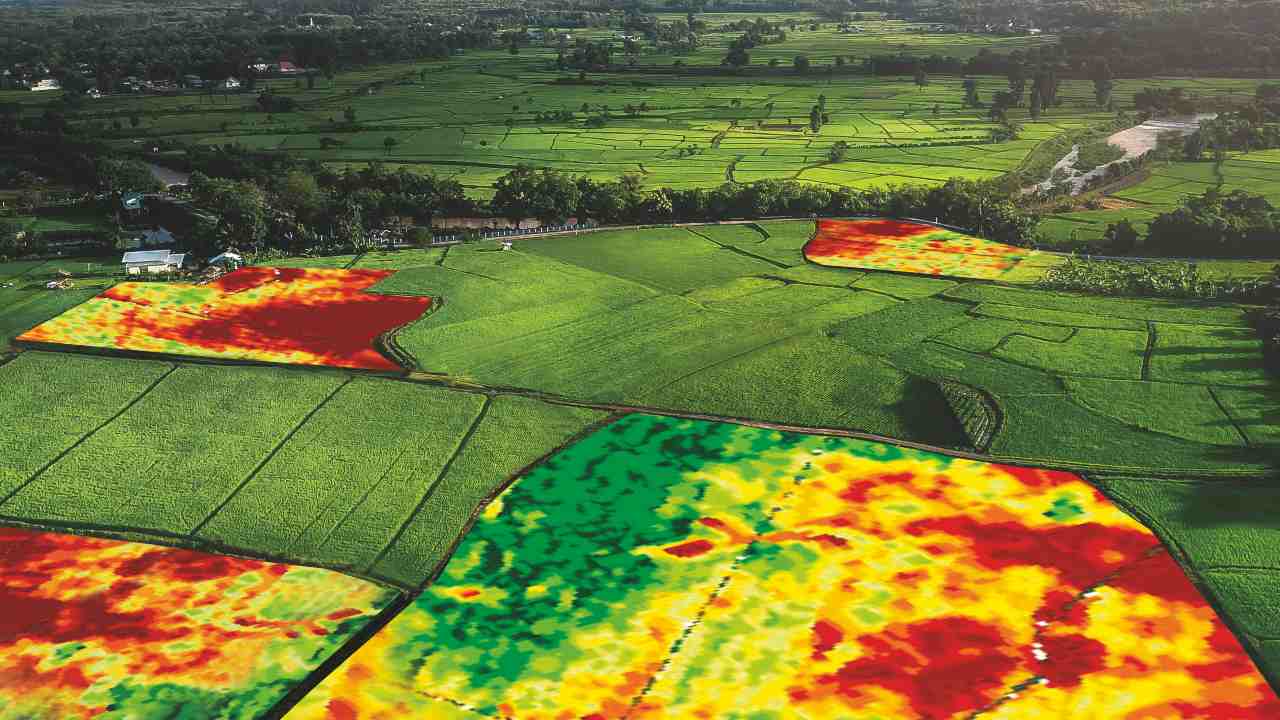
Farmers are now accessing advanced satellites to provide near-live images of fields and crop damage. Image Credit: RHIZA/Em7[/caption]The Green Revolution legacy playbook for Indian farming has very little to offer for dealing with collapsing water tables, decreasing soil fertility, erratic rainfall, and rising temperatures. With increasing capital availability, more and more precision agriculture startups are working to solve climate challenges, especially targeted solutions to optimize use of scarce resources while helping farmers improve their profit margins.Precision agriculture, like all farming, starts with the soil. Soil health in India is terribly neglected, with government and private labs failing to have any real impact. Soil samples are usually collected via a grid system, a flawed approach given Indian landholding patterns. Due to small farm sizes, an area spread across even a few hectares can have significantly varied soil health. Moreover, test results can take anywhere from weeks to months to reach farmers, often only arriving after fields have already been sowed. It should be of little surprise that an estimated 5.3 billion MT of soil is degraded each year due to incorrect fertilisation. Precision agriculture technologies, like rapid targeted soil testing, deliver quick results, help farmers understand farm-specific soil nutrition requirements, and accurately determine the required quantum of fertiliser, thereby optimising resource utilisation.However, for precision agriculture innovators to rewrite age-old agricultural practices, access to technology is key for effective adoption. With increasingly ubiquitous 4G connectivity and cheaper cloud computing, agritech startups can now build rich multidimensional datasets for improving predictive analysis on farms. Furthermore, rising smartphone penetration has empowered farmers to access on-farm sensors that can reveal deep insights about microclimate and other field conditions. Steady adoption of such technology-aided farming has shown significant reduction in pesticide and water usage, and increased yields and profits. This is a testament to the immense potential precision agriculture technologies in the crusade against climate change.

Careless Whispers: Scientists discover that plants can 'talk' to each other using smells
Life on Mars? European Space Agency’s Orbiter discovers ice water deposits at equator
Microsoft briefly overtakes Apple as the most valuable company, Apple back on top again
Even NASA is facing a tough time, starts layoffs following major budget cuts
ISRO, NASA's NISAR satellite to get ready by Jan-end, will monitor Earth's snow-covered regions