
Advertisement


Sections
OneWeb successfully launches 36 satellites from Russian cosmodrome
This will be OneWeb's eighth launch and they will have a total fleet of 254 satellites in LEO.

OneWeb has launched 36 satellites today, 1 July, at 6:18 pm IST. Named Flight ST33, the launch took place from the Soyuz launch complex in Vostochny Cosmodrome, a Russian spaceport. Arianespace will be operating this launch on OneWeb's behalf, and this will be its fifth launch of 2021. The duration of the mission (from liftoff to separation of the satellites) will take about three hours and 51 minutes.[caption id="attachment_9771471" align="alignnone" width="1280"]![OneWeb's eight launch has the words “Hello North Pole” is branded on the Russian Soyuz rocket. Image credit: OneWeb]() OneWeb's eighth launch has the words 'Hello North Pole!' branded on the Russian Soyuz rocket. Image credit: OneWeb[/caption]The company will achieve its ‘Five to 50' goal, providing connectivity services to places about 50 degrees North latitude to the North Pole by year-end. This includes Alaska, Canada, Greenland, Northern Europe, Finland, the United Kingdom, Iceland and the Arctic seas. This will be its eighth launch and it will have a total fleet of 254 satellites in low Earth orbit (LEO). After separation from the rocket, the satellites will place themselves in their operational orbit.Also known as the 50th parallel north, it is a circle of latitude that is 50 degrees north of the Earth's equatorial plane. It crosses the European and Asian continents, along with the Pacific Ocean, North America and the Atlantic Ocean.As OneWeb prepares for full commercial operation in these regions in the next six months, service trials will begin this summer in several critical locations, including Alaska and Canada. 'Hello North Pole!' is branded on the rocket to show the progress OneWeb has made to secure its Arctic coverage.According to a press statement, the first six OneWeb satellites were successfully orbited by Arianespace on Soyuz Flight VS21 from French Guiana on 27 February, 2019.Almost a year later, on 7 February, 2020, 34 satellites were launched from the Baikonur Cosmodrome, Russia. On 21 March, 2020, an additional 34 satellites were sent into orbit, followed by 36 satellites on 18 December.Another 36 satellites were launched on 25 March, 2021 and on 26 April, Flight ST31 put 36 satellites into orbit. The most recent launch took place on 29 May, 2021, when Flight ST32 successfully delivered 36 satellites into orbit.[caption id="attachment_9771461" align="alignnone" width="1280"]
OneWeb's eighth launch has the words 'Hello North Pole!' branded on the Russian Soyuz rocket. Image credit: OneWeb[/caption]The company will achieve its ‘Five to 50' goal, providing connectivity services to places about 50 degrees North latitude to the North Pole by year-end. This includes Alaska, Canada, Greenland, Northern Europe, Finland, the United Kingdom, Iceland and the Arctic seas. This will be its eighth launch and it will have a total fleet of 254 satellites in low Earth orbit (LEO). After separation from the rocket, the satellites will place themselves in their operational orbit.Also known as the 50th parallel north, it is a circle of latitude that is 50 degrees north of the Earth's equatorial plane. It crosses the European and Asian continents, along with the Pacific Ocean, North America and the Atlantic Ocean.As OneWeb prepares for full commercial operation in these regions in the next six months, service trials will begin this summer in several critical locations, including Alaska and Canada. 'Hello North Pole!' is branded on the rocket to show the progress OneWeb has made to secure its Arctic coverage.According to a press statement, the first six OneWeb satellites were successfully orbited by Arianespace on Soyuz Flight VS21 from French Guiana on 27 February, 2019.Almost a year later, on 7 February, 2020, 34 satellites were launched from the Baikonur Cosmodrome, Russia. On 21 March, 2020, an additional 34 satellites were sent into orbit, followed by 36 satellites on 18 December.Another 36 satellites were launched on 25 March, 2021 and on 26 April, Flight ST31 put 36 satellites into orbit. The most recent launch took place on 29 May, 2021, when Flight ST32 successfully delivered 36 satellites into orbit.[caption id="attachment_9771461" align="alignnone" width="1280"]![Representational Image of the OneWeb satellite. image credit: OneWeb]() Representational image of the OneWeb satellite. image credit: OneWeb[/caption]OneWeb's mission, according to its website, is to create a global communication infrastructure with a satellite constellation in LEO. It will serve various customers from the aviation, maritime and corporate sectors along with governments who will benefit from its high-speed, low-latency connectivity. OneWeb's mission is to deliver connectivity to the most difficult-to-reach areas where fibre cannot reach, and bridge the digital divide.Yesterday, OneWeb announced it has received an additional $500 million (over Rs 3,700 crore) in investment from Bharti Global, which becomes the largest shareholder in the company. The satellite communications company was rescued last year by billionaire Sunil Mittal-run Bharti Group along with the UK government.
Representational image of the OneWeb satellite. image credit: OneWeb[/caption]OneWeb's mission, according to its website, is to create a global communication infrastructure with a satellite constellation in LEO. It will serve various customers from the aviation, maritime and corporate sectors along with governments who will benefit from its high-speed, low-latency connectivity. OneWeb's mission is to deliver connectivity to the most difficult-to-reach areas where fibre cannot reach, and bridge the digital divide.Yesterday, OneWeb announced it has received an additional $500 million (over Rs 3,700 crore) in investment from Bharti Global, which becomes the largest shareholder in the company. The satellite communications company was rescued last year by billionaire Sunil Mittal-run Bharti Group along with the UK government.
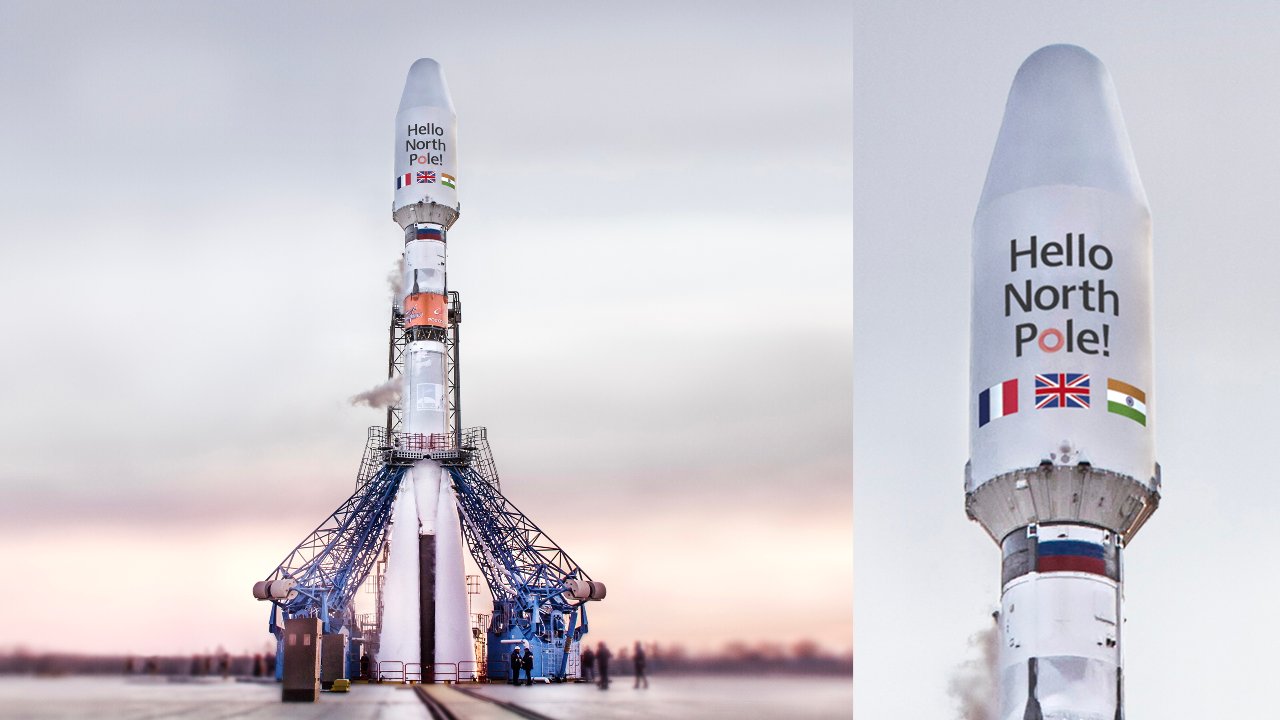 OneWeb's eighth launch has the words 'Hello North Pole!' branded on the Russian Soyuz rocket. Image credit: OneWeb[/caption]The company will achieve its ‘Five to 50' goal, providing connectivity services to places about 50 degrees North latitude to the North Pole by year-end. This includes Alaska, Canada, Greenland, Northern Europe, Finland, the United Kingdom, Iceland and the Arctic seas. This will be its eighth launch and it will have a total fleet of 254 satellites in low Earth orbit (LEO). After separation from the rocket, the satellites will place themselves in their operational orbit.Also known as the 50th parallel north, it is a circle of latitude that is 50 degrees north of the Earth's equatorial plane. It crosses the European and Asian continents, along with the Pacific Ocean, North America and the Atlantic Ocean.As OneWeb prepares for full commercial operation in these regions in the next six months, service trials will begin this summer in several critical locations, including Alaska and Canada. 'Hello North Pole!' is branded on the rocket to show the progress OneWeb has made to secure its Arctic coverage.According to a press statement, the first six OneWeb satellites were successfully orbited by Arianespace on Soyuz Flight VS21 from French Guiana on 27 February, 2019.Almost a year later, on 7 February, 2020, 34 satellites were launched from the Baikonur Cosmodrome, Russia. On 21 March, 2020, an additional 34 satellites were sent into orbit, followed by 36 satellites on 18 December.Another 36 satellites were launched on 25 March, 2021 and on 26 April, Flight ST31 put 36 satellites into orbit. The most recent launch took place on 29 May, 2021, when Flight ST32 successfully delivered 36 satellites into orbit.[caption id="attachment_9771461" align="alignnone" width="1280"]
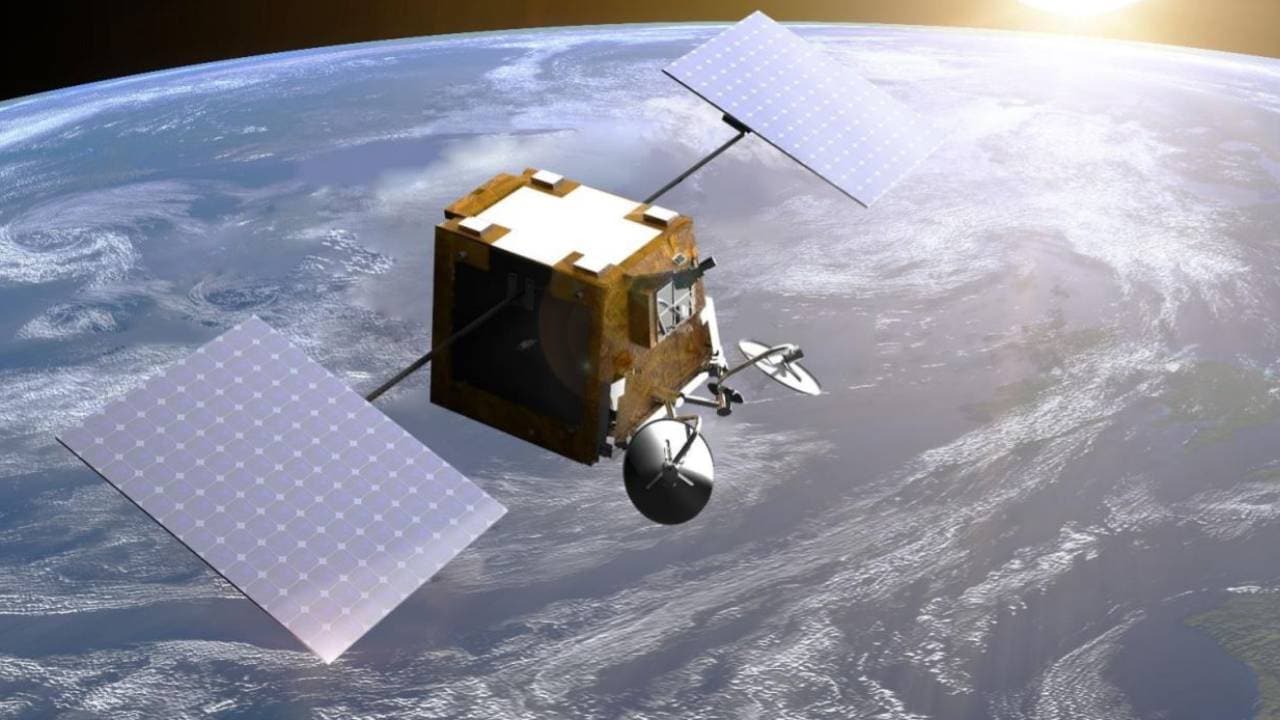 Representational image of the OneWeb satellite. image credit: OneWeb[/caption]OneWeb's mission, according to its website, is to create a global communication infrastructure with a satellite constellation in LEO. It will serve various customers from the aviation, maritime and corporate sectors along with governments who will benefit from its high-speed, low-latency connectivity. OneWeb's mission is to deliver connectivity to the most difficult-to-reach areas where fibre cannot reach, and bridge the digital divide.Yesterday, OneWeb announced it has received an additional $500 million (over Rs 3,700 crore) in investment from Bharti Global, which becomes the largest shareholder in the company. The satellite communications company was rescued last year by billionaire Sunil Mittal-run Bharti Group along with the UK government.
First Published:Jul 01, 2021, 19:31:47 IST
Advertisement
Advertisement

Careless Whispers: Scientists discover that plants can 'talk' to each other using smells
Japanese scientists have recorded a video that shows plants, in certain conditions, communicate with each other using mists that carry smells. The discovery, reveals that plants release a fine mist of airborne compounds, to warn nearby plants of potential dangers
Life on Mars? European Space Agency’s Orbiter discovers ice water deposits at equator
European Space Agency's Mars Express Orbiter has identified massive ice and ice water deposits beneath the surface of Mars. The Mars Express orbiter was also the first to confirmed the presence of ice on Mars in 2004
Microsoft briefly overtakes Apple as the most valuable company, Apple back on top again
At its peak during the session, Microsoft's value reached $2.903 trillion, with a 2% surge. As of writing this article, Apple closed at $2.89 trillion, whereas Microsoft closed at $2.86 trillion
Even NASA is facing a tough time, starts layoffs following major budget cuts
NASA is facing some massive budget cuts, because of which, it has been forced to postpone some upcoming missions. NASA's Jet Propulsion Laboratory has been hit hard by recent federal budget cuts, resulting in the layoff of 100 contractors last week
ISRO, NASA's NISAR satellite to get ready by Jan-end, will monitor Earth's snow-covered regions
The NISAR satellite which has been developed jointly ISRO and NASA, should be ready for launch by the end of January 2024. The collaboration between NASA and ISRO on NISAR is the first time the two agencies have cooperated on hardware development for an Earth-observing mission
Advertisement
Advertisement