
Advertisement


Sections
Global warming: October 2019 might have been second-hottest month in the second-hottest year on record
The report comes after numerous similar studies of monthly global temperatures that show Earth's climate has warmed steadily.

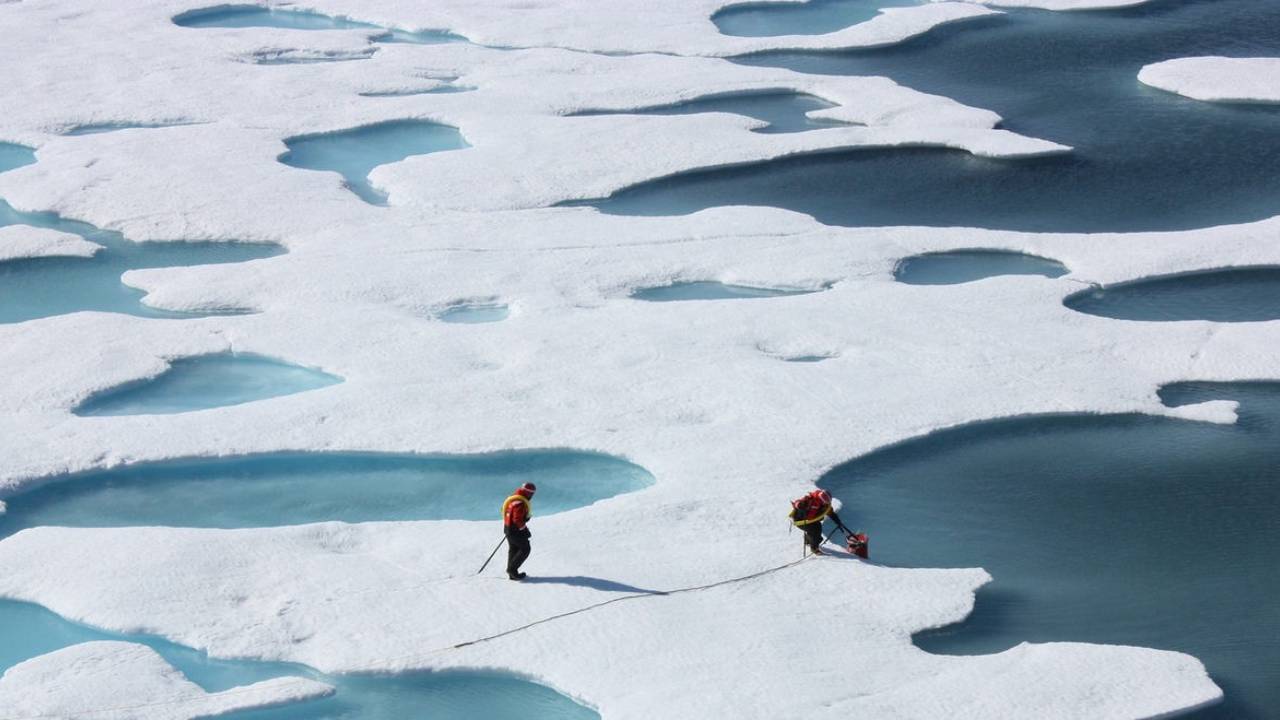
October 2019 was the second-warmest month ever recorded since people started keeping tabs on the planet's rising temperatures in 1880.As per a statement released by NASA on 18 November, the average temperature of October stopped a mere 0.05 degrees Celsius short of the record-holding numbers from October 2015.January-October of 2019 also happened to be the second warmest on record worldwide, just 0.09 degrees behind 2016, the National Oceanic and Atmospheric Administration (NOAA) of the US. Both the ocean and land temperatures, on average, were the second-warmest on record, too.[caption id="attachment_5763641" align="alignnone" width="1280"]![Researchers carrying out an arctic ice mapping experiment. Image: NASA Goddard]() Researchers carrying out an arctic ice mapping experiment. Image: NASA Goddard[/caption]The report cites global yearly temperature rankings over the years and a host of data that indicate (strongly) that 2019 will end up among the top warmest years in the history of the Earth. We know with virtual certainty that 2019 won't be the warmest ever year on record, but it is poised to place second or third on the list.Also laid out in the report is the growing influence long-term, anthropogenic warming has had on the warming trends over time. This is an especially important trend to note because this year (unlike 2015), there was no influence of strong El Niño (periodic, warm ocean) currents in the tropical Pacific Ocean this year.[caption id="attachment_7425841" align="alignnone" width="753"]
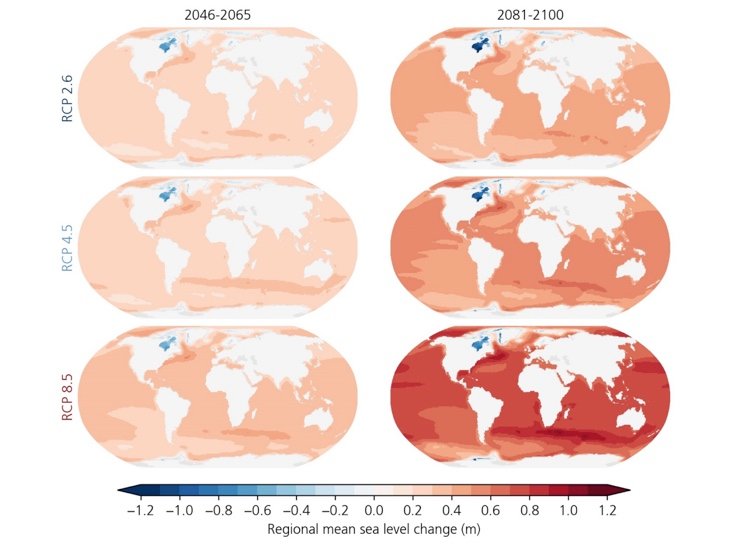
Researchers carrying out an arctic ice mapping experiment. Image: NASA Goddard[/caption]The report cites global yearly temperature rankings over the years and a host of data that indicate (strongly) that 2019 will end up among the top warmest years in the history of the Earth. We know with virtual certainty that 2019 won't be the warmest ever year on record, but it is poised to place second or third on the list.Also laid out in the report is the growing influence long-term, anthropogenic warming has had on the warming trends over time. This is an especially important trend to note because this year (unlike 2015), there was no influence of strong El Niño (periodic, warm ocean) currents in the tropical Pacific Ocean this year.[caption id="attachment_7425841" align="alignnone" width="753"]![Predicted sea level rise this century if warming reaches 2.6 degrees C, 4.5 degrees C or 8.5 degrees C by 2100. Image: Author Provided]() Predicted sea-level rise this century if warming reaches 2.6 degrees C, 4.5 degrees C or 8.5 degrees C by 2100. Image:[/caption]The El Niño is a large-scale climate interaction between the ocean and atmosphere, linked with a periodic rise in sea surface temperature rise in the central and east-central Pacific Ocean along the equator.[caption id="attachment_5927001" align="alignnone" width="1280"]
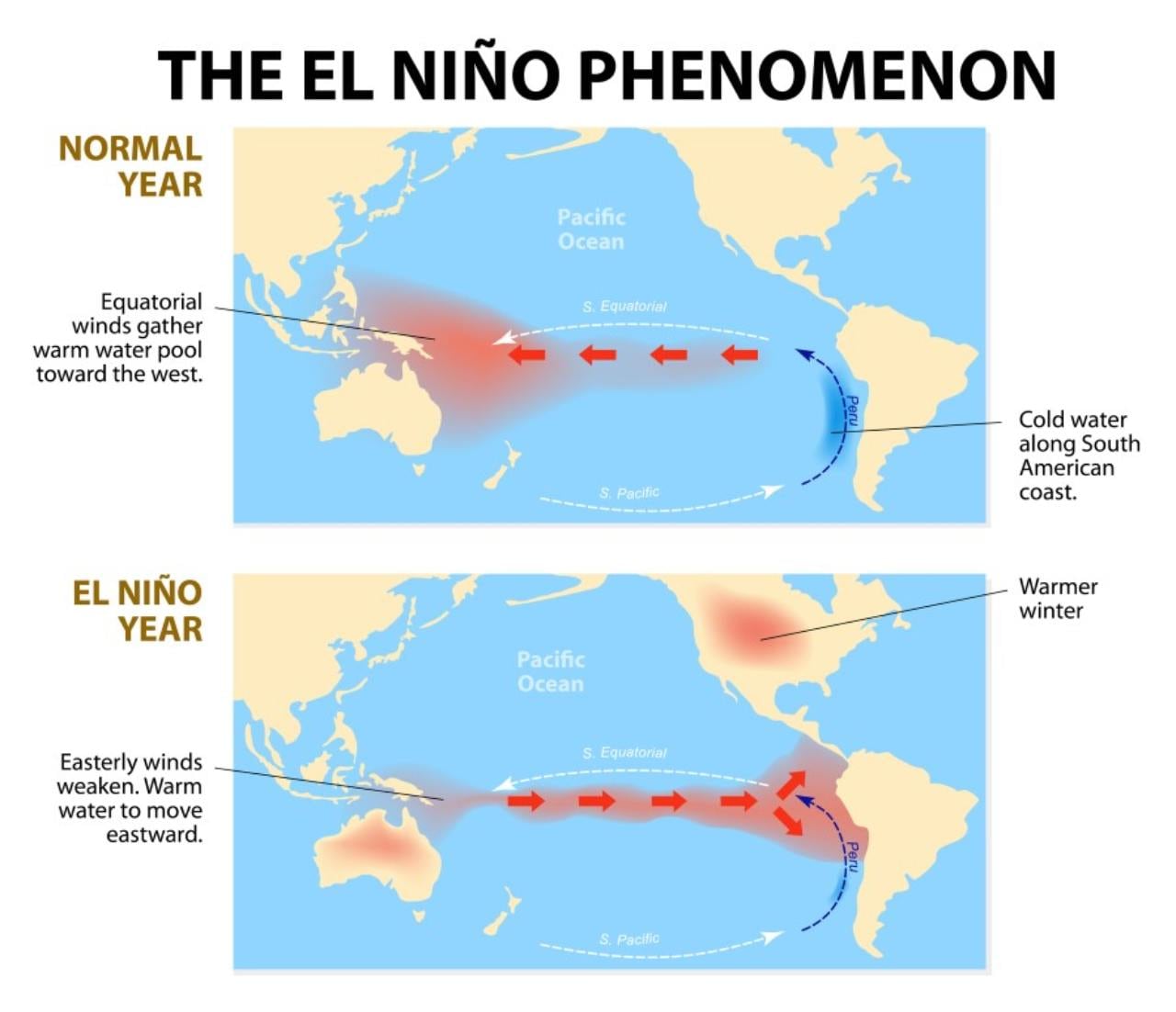
Predicted sea-level rise this century if warming reaches 2.6 degrees C, 4.5 degrees C or 8.5 degrees C by 2100. Image:[/caption]The El Niño is a large-scale climate interaction between the ocean and atmosphere, linked with a periodic rise in sea surface temperature rise in the central and east-central Pacific Ocean along the equator.[caption id="attachment_5927001" align="alignnone" width="1280"]![What happens in the Pacific Ocean during normal and El Nino years.]() What happens in the Pacific Ocean during normal and El Nino years.[/caption]Typically, phenomena like the El Niño are linked with the hottest year, since they boost the ocean temperatures world over and add plenty of heat to the atmosphere over the world's largest Ocean, the Pacific.
What happens in the Pacific Ocean during normal and El Nino years.[/caption]Typically, phenomena like the El Niño are linked with the hottest year, since they boost the ocean temperatures world over and add plenty of heat to the atmosphere over the world's largest Ocean, the Pacific.
 Researchers carrying out an arctic ice mapping experiment. Image: NASA Goddard[/caption]The report cites global yearly temperature rankings over the years and a host of data that indicate (strongly) that 2019 will end up among the top warmest years in the history of the Earth. We know with virtual certainty that 2019 won't be the warmest ever year on record, but it is poised to place second or third on the list.Also laid out in the report is the growing influence long-term, anthropogenic warming has had on the warming trends over time. This is an especially important trend to note because this year (unlike 2015), there was no influence of strong El Niño (periodic, warm ocean) currents in the tropical Pacific Ocean this year.
 Predicted sea-level rise this century if warming reaches 2.6 degrees C, 4.5 degrees C or 8.5 degrees C by 2100. Image:[/caption]The El Niño is a large-scale climate interaction between the ocean and atmosphere, linked with a periodic rise in sea surface temperature rise in the central and east-central Pacific Ocean along the equator.[caption id="attachment_5927001" align="alignnone" width="1280"]
 What happens in the Pacific Ocean during normal and El Nino years.[/caption]Typically, phenomena like the El Niño are linked with the hottest year, since they boost the ocean temperatures world over and add plenty of heat to the atmosphere over the world's largest Ocean, the Pacific.
Also Read
a statement released
Also Read
a statement released
First Published:Nov 20, 2019, 19:11:51 IST
Advertisement
Advertisement

Careless Whispers: Scientists discover that plants can 'talk' to each other using smells
Japanese scientists have recorded a video that shows plants, in certain conditions, communicate with each other using mists that carry smells. The discovery, reveals that plants release a fine mist of airborne compounds, to warn nearby plants of potential dangers
Life on Mars? European Space Agency’s Orbiter discovers ice water deposits at equator
European Space Agency's Mars Express Orbiter has identified massive ice and ice water deposits beneath the surface of Mars. The Mars Express orbiter was also the first to confirmed the presence of ice on Mars in 2004
Microsoft briefly overtakes Apple as the most valuable company, Apple back on top again
At its peak during the session, Microsoft's value reached $2.903 trillion, with a 2% surge. As of writing this article, Apple closed at $2.89 trillion, whereas Microsoft closed at $2.86 trillion
Even NASA is facing a tough time, starts layoffs following major budget cuts
NASA is facing some massive budget cuts, because of which, it has been forced to postpone some upcoming missions. NASA's Jet Propulsion Laboratory has been hit hard by recent federal budget cuts, resulting in the layoff of 100 contractors last week
ISRO, NASA's NISAR satellite to get ready by Jan-end, will monitor Earth's snow-covered regions
The NISAR satellite which has been developed jointly ISRO and NASA, should be ready for launch by the end of January 2024. The collaboration between NASA and ISRO on NISAR is the first time the two agencies have cooperated on hardware development for an Earth-observing mission
Advertisement
Advertisement