
Advertisement


Sections
'New kind' of explosion on Sun's surface charged by its magnetic field discovered by NASA's Parker probe
The Sun's magnetic field lines are in constant flux — snapping and realigning in an explosive, natural process researchers still don't understand all too well.

Astronomers have spotted the first conclusive evidence of a "new kind" of magnetic explosion on the sun's surface — unlike anything they've ever seen before. This comes roughly 15 years after the phenomenon was first theorised by physicists. With the new discovery, astronomers now have the first direct observation of this behaviour, which researchers have dubbed 'forced reconnection'.The data confirming the explosions was provided by the Solar Dynamics Observatory, a suite of instruments on NASA's Parker Probe. Researchers were witness to an eruption on the surface of the sun, where a hot loop of plasma whipping out of the sun's corona (upper atmosphere) was caught in action and given a keen, closer look. This erupted material, known as a "prominence", then fell right back into the sun. During its return to the surface, the prominence also collides with the sun's magnetic field lines, which sets off a never-before-seen kind of explosion (created by magnetism).[caption id="attachment_7801651" align="alignnone" width="1272"]![Parker's closest ever approach to the sun has shown us the origin of solar wind. Image: NASA]() Parker's closest-ever approach to the sun has shown us the origin of solar wind. Image: NASA[/caption]The Sun's magnetic field lines are in a constant state of flux — snapping and realigning in explosive natural processes that researchers still don't understand all too well. Based on observations made in the past, of this behavior, the phenomenon has been coined "magnetic reconnection". Yet, the new discovery is the first time astronomers have irrefutably seen such a reconnection sparked by an eruption at the corona.Findings like these go a long way in understanding the Sun's behavior, which is growing increasingly important as commercial space travel becomes a real possibility. The space race is at the advent of commercial spaceflight and plans to colonise other planets and distant moons in our solar system are all but mapped out.[caption id="attachment_7801671" align="alignnone" width="1280"]
Parker's closest-ever approach to the sun has shown us the origin of solar wind. Image: NASA[/caption]The Sun's magnetic field lines are in a constant state of flux — snapping and realigning in explosive natural processes that researchers still don't understand all too well. Based on observations made in the past, of this behavior, the phenomenon has been coined "magnetic reconnection". Yet, the new discovery is the first time astronomers have irrefutably seen such a reconnection sparked by an eruption at the corona.Findings like these go a long way in understanding the Sun's behavior, which is growing increasingly important as commercial space travel becomes a real possibility. The space race is at the advent of commercial spaceflight and plans to colonise other planets and distant moons in our solar system are all but mapped out.[caption id="attachment_7801671" align="alignnone" width="1280"]![Sunspots appear like dark markings on the surface of the sun. Image: NASA]() Sunspots appear like dark markings on the surface of the sun. Image: NASA[/caption]There's also an immense amount of interest in understanding what makes the Sun tick, and the many ways it influences space weather (a collection of physical processes that start at the Sun, ultimately affecting living things and technology on Earth as well as far-and-wide in our solar system.) One of the longest and most fascinating mysteries in the field of astrophysicists is the sun's atmosphere (specifically, the corona), which is millions of degrees hotter than the sun itself, for reasons that scientists don't fully understand.The Parker probe was designed by NASA to make several plunges into the Sun's corona, coming as close as 6.16 million kilometers of its surface over the course of its seven-year-long mission. The probe is protected by an ultra-powerful heat shield that can endure unprecedented levels of heat, and radiation 500 times that experienced on Earth. The car-sized probe and the Parker mission could give scientists an unprecedented opportunity to study the corona, solar wind, and geomagnetic storms, which risk wreaking chaos on Earth with their ability to knock out power grids far and wide in milliseconds.The study's findings were published this week in the Astrophysical Journal.
Sunspots appear like dark markings on the surface of the sun. Image: NASA[/caption]There's also an immense amount of interest in understanding what makes the Sun tick, and the many ways it influences space weather (a collection of physical processes that start at the Sun, ultimately affecting living things and technology on Earth as well as far-and-wide in our solar system.) One of the longest and most fascinating mysteries in the field of astrophysicists is the sun's atmosphere (specifically, the corona), which is millions of degrees hotter than the sun itself, for reasons that scientists don't fully understand.The Parker probe was designed by NASA to make several plunges into the Sun's corona, coming as close as 6.16 million kilometers of its surface over the course of its seven-year-long mission. The probe is protected by an ultra-powerful heat shield that can endure unprecedented levels of heat, and radiation 500 times that experienced on Earth. The car-sized probe and the Parker mission could give scientists an unprecedented opportunity to study the corona, solar wind, and geomagnetic storms, which risk wreaking chaos on Earth with their ability to knock out power grids far and wide in milliseconds.The study's findings were published this week in the Astrophysical Journal.
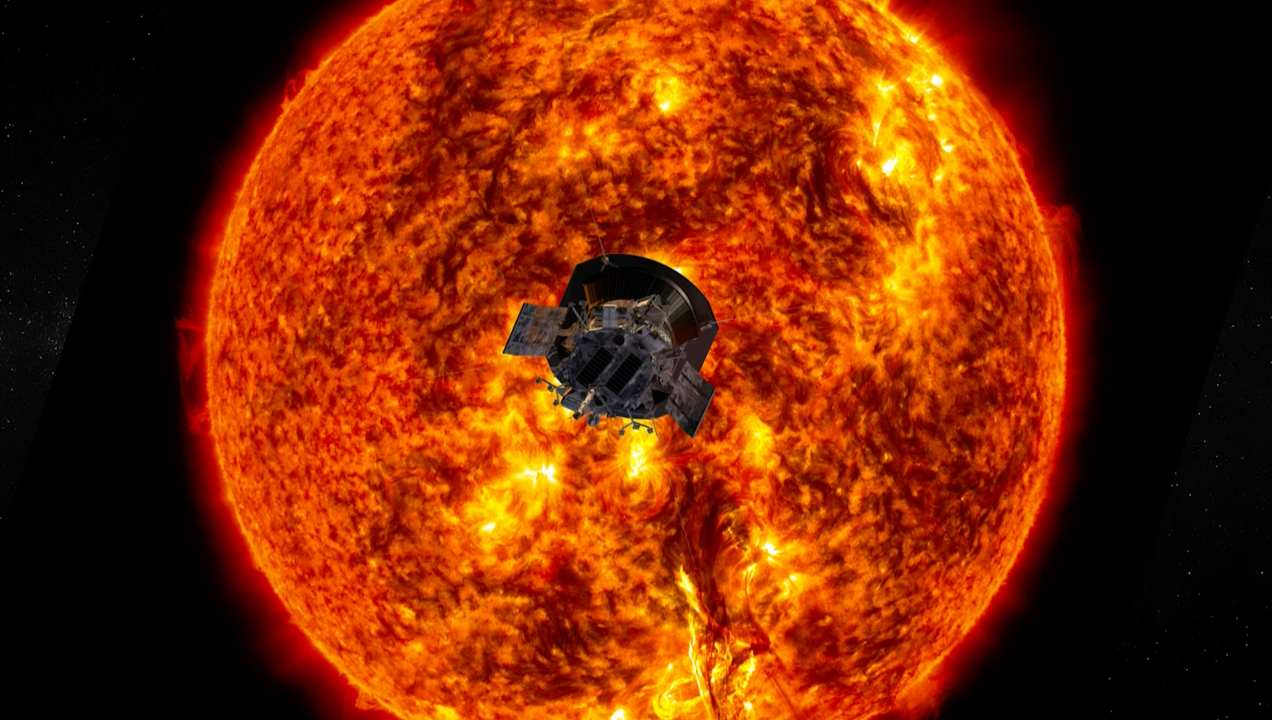 Parker's closest-ever approach to the sun has shown us the origin of solar wind. Image: NASA[/caption]The Sun's magnetic field lines are in a constant state of flux — snapping and realigning in explosive natural processes that researchers still don't understand all too well. Based on observations made in the past, of this behavior, the phenomenon has been coined "magnetic reconnection". Yet, the new discovery is the first time astronomers have irrefutably seen such a reconnection sparked by an eruption at the corona.Findings like these go a long way in understanding the Sun's behavior, which is growing increasingly important as commercial space travel becomes a real possibility. The space race is at the advent of commercial spaceflight and plans to colonise other planets and distant moons in our solar system are all but mapped out.[caption id="attachment_7801671" align="alignnone" width="1280"]
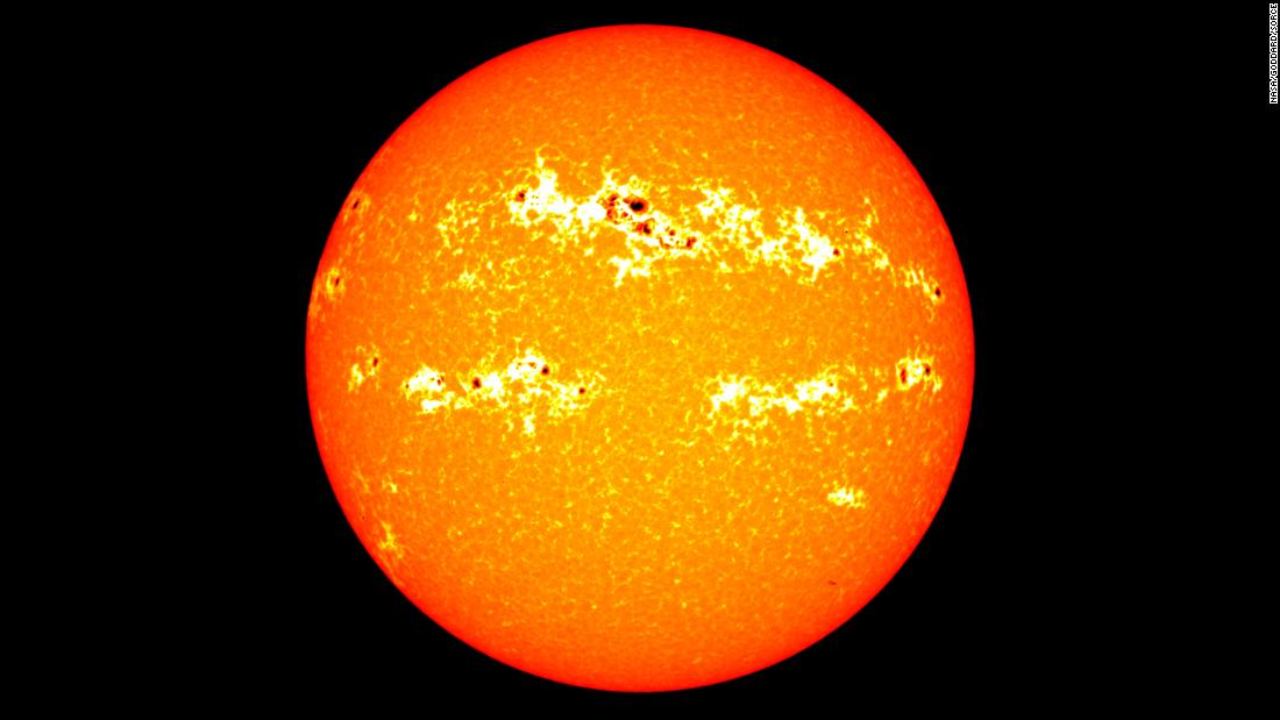 Sunspots appear like dark markings on the surface of the sun. Image: NASA[/caption]There's also an immense amount of interest in understanding what makes the Sun tick, and the many ways it influences space weather (a collection of physical processes that start at the Sun, ultimately affecting living things and technology on Earth as well as far-and-wide in our solar system.) One of the longest and most fascinating mysteries in the field of astrophysicists is the sun's atmosphere (specifically, the corona), which is millions of degrees hotter than the sun itself, for reasons that scientists don't fully understand.The Parker probe was designed by NASA to make several plunges into the Sun's corona, coming as close as 6.16 million kilometers of its surface over the course of its seven-year-long mission. The probe is protected by an ultra-powerful heat shield that can endure unprecedented levels of heat, and radiation 500 times that experienced on Earth. The car-sized probe and the Parker mission could give scientists an unprecedented opportunity to study the corona, solar wind, and geomagnetic storms, which risk wreaking chaos on Earth with their ability to knock out power grids far and wide in milliseconds.The study's findings were published this week in the Astrophysical Journal.
Also Read
15 years
First Published:Dec 19, 2019, 09:05:10 IST
Advertisement
Advertisement

Careless Whispers: Scientists discover that plants can 'talk' to each other using smells
Japanese scientists have recorded a video that shows plants, in certain conditions, communicate with each other using mists that carry smells. The discovery, reveals that plants release a fine mist of airborne compounds, to warn nearby plants of potential dangers
Life on Mars? European Space Agency’s Orbiter discovers ice water deposits at equator
European Space Agency's Mars Express Orbiter has identified massive ice and ice water deposits beneath the surface of Mars. The Mars Express orbiter was also the first to confirmed the presence of ice on Mars in 2004
Microsoft briefly overtakes Apple as the most valuable company, Apple back on top again
At its peak during the session, Microsoft's value reached $2.903 trillion, with a 2% surge. As of writing this article, Apple closed at $2.89 trillion, whereas Microsoft closed at $2.86 trillion
Even NASA is facing a tough time, starts layoffs following major budget cuts
NASA is facing some massive budget cuts, because of which, it has been forced to postpone some upcoming missions. NASA's Jet Propulsion Laboratory has been hit hard by recent federal budget cuts, resulting in the layoff of 100 contractors last week
ISRO, NASA's NISAR satellite to get ready by Jan-end, will monitor Earth's snow-covered regions
The NISAR satellite which has been developed jointly ISRO and NASA, should be ready for launch by the end of January 2024. The collaboration between NASA and ISRO on NISAR is the first time the two agencies have cooperated on hardware development for an Earth-observing mission
Advertisement
Advertisement