


NASA's TESS discovers a new planet orbiting a dwarf star 53 light years away
The surface of the new planet is likely around 300 degrees Fahrenheit — relatively cool.

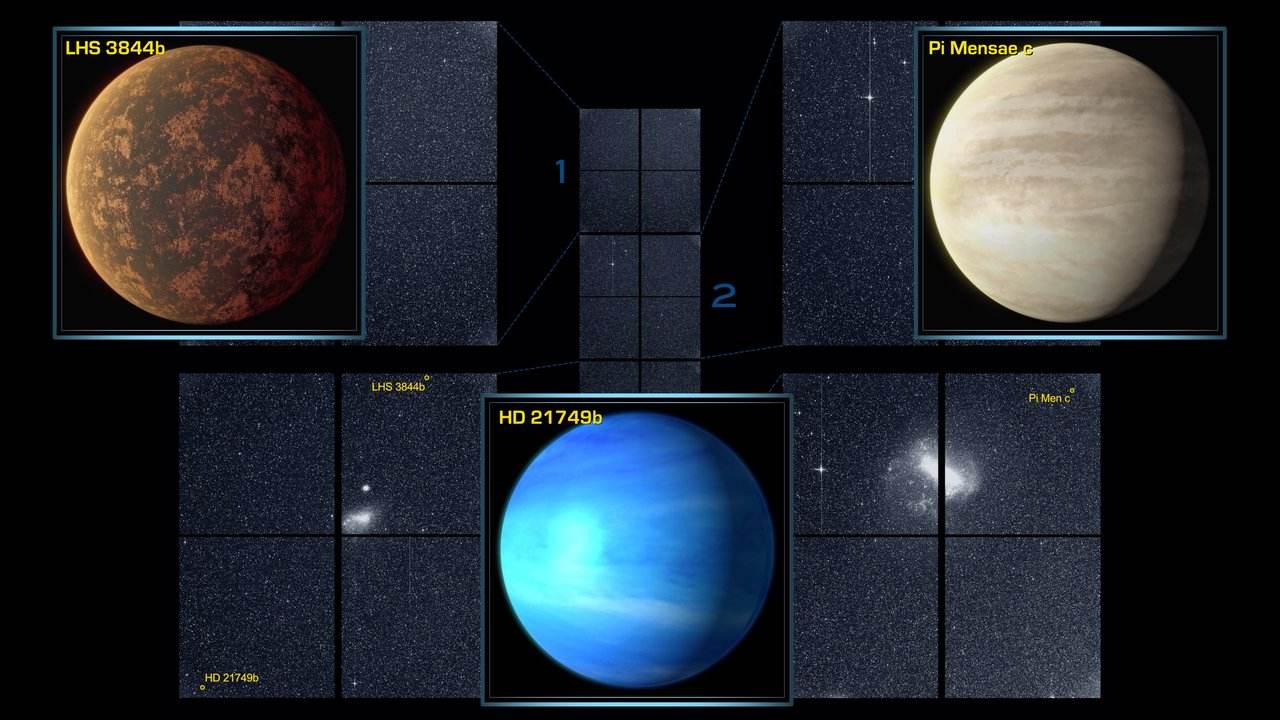
NASA’s Transiting Exoplanet Survey Satellite (TESS) has found three confirmed exoplanets in the data from the space telescope’s four cameras. Image: NASA[/caption]The surface of the new planet is likely around 300 degrees Fahrenheit — relatively cool, given its proximity to its star, which is almost as bright as the sun."It's the coolest small planet that we know of around a star this bright," said Diana Dragomir, a postdoc in Massachusetts Institute of Technology (MIT) in the US, who led the discovery."We know a lot about atmospheres of hot planets, but because it's very hard to find small planets that orbit farther from their stars, and are therefore cooler, we haven't been able to learn much about these smaller, cooler planets. But here we were lucky, and caught this one, and can now study it in more detail," Dragomir said.The planet is about three times the size of Earth, which puts it in the category of a "sub-Neptune." Surprisingly, it is also a whopping 23 times as massive as the Earth.However, it is unlikely that the planet is rocky and therefore habitable; it's more likely made of gas, of a kind that is much denser than the atmospheres of either Neptune or Uranus."We think this planet wouldn't be as gaseous as Neptune or Uranus, which are mostly hydrogen and really puffy. The planet likely has a density of water or a thick atmosphere," Dragomir said.Researchers have also detected evidence of a second planet, with a shorter, 7.8-day orbit in the same planetary system, though it is yet to be confirmed.If it is confirmed as a planet, it could be the first Earth-sized planet discovered by TESS.

Careless Whispers: Scientists discover that plants can 'talk' to each other using smells
Life on Mars? European Space Agency’s Orbiter discovers ice water deposits at equator
Microsoft briefly overtakes Apple as the most valuable company, Apple back on top again
Even NASA is facing a tough time, starts layoffs following major budget cuts
ISRO, NASA's NISAR satellite to get ready by Jan-end, will monitor Earth's snow-covered regions