


NASA's TESS completes its two year primary mission; begins extended journey
TESS had spotted 66 confirmed exoplanets during the primary mission and there are over 2100 celestial bodies.

The Transiting Exoplanet Survey Satellite or TESS is one of the most powerful and successful exoplanet detecting spacecrafts. After two years of wide detection, the craft has now reached the end of its primary mission.
But since TESS has enough fuel left it has already embarked upon its extended mission, revealed NASA in a statement on 11 August.
Patricia Boyd, the project scientist for TESS at NASA's Goddard Space Flight Center, mentioned that even before embarking on the extended duty, TESS has been a successful venture.
"TESS is producing a torrent of high-quality observations providing valuable data across a wide range of science topics", she said.[caption id="attachment_8707511" align="alignnone" width="1280"]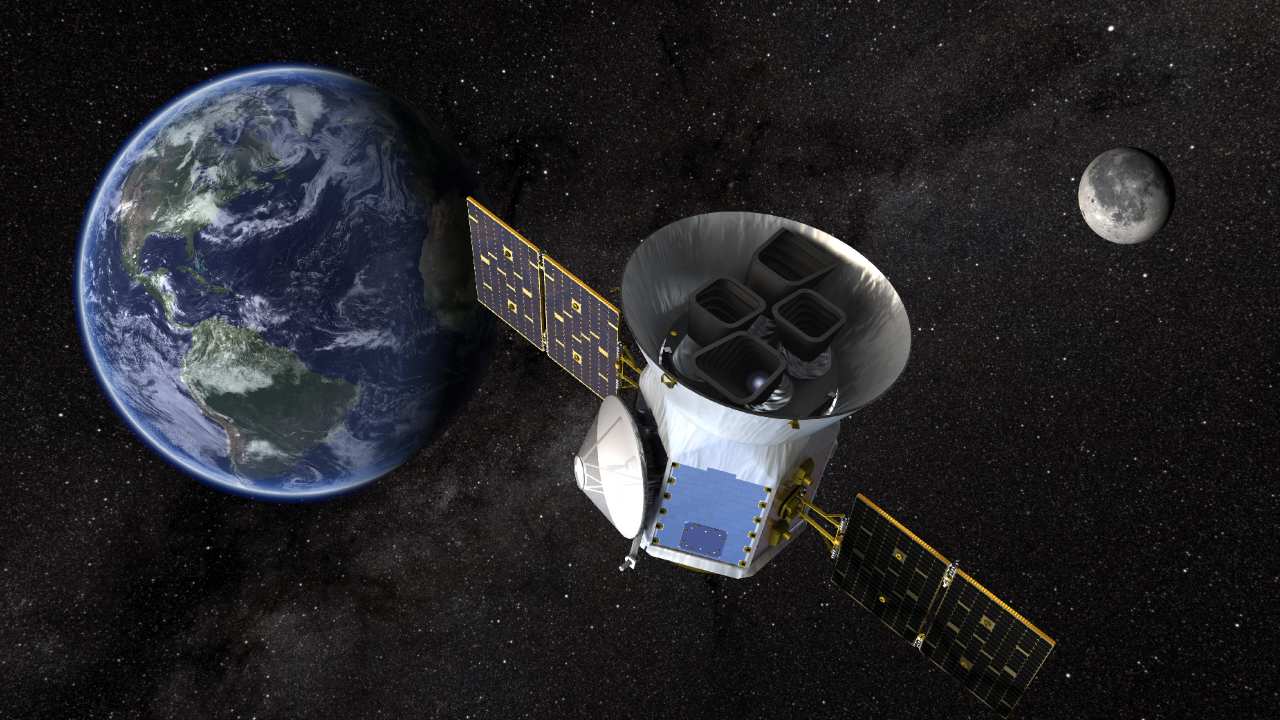
NASA’s Transiting Exoplanet Survey Satellite (TESS) has completed its two-year primary mission and is continuing its search for new worlds. Image credit: NASA[/caption] During its haul, the craft had managed to map about 75 percent of the sky as seen from the earth. TESS had spotted 66 confirmed exoplanets during the primary mission and there are over 2100 celestial bodies and is awaiting confirmation by astronomers.
The craft had spent its first year observing 13 sectors in the southern sky and then had spent another year imaging the northern sky. On its extended mission now, the craft has again focused on the southern sky.
 More from Science
Careless Whispers: Scientists discover that plants can 'talk' to each other using smells
Life on Mars? European Space Agency’s Orbiter discovers ice water deposits at equator
Microsoft briefly overtakes Apple as the most valuable company, Apple back on top again
Even NASA is facing a tough time, starts layoffs following major budget cuts
ISRO, NASA's NISAR satellite to get ready by Jan-end, will monitor Earth's snow-covered regions