
Advertisement


Sections
NASA's target for its next manned moon mission in 2024 is the lunar South pole
Robotic probes from the US, Japan & India have made the South pole the best-studied area on the moon.

What an ironic week for NASA's spaceflight media team. It was days ago that a NASA release announced that spaceflight has a bunch of unpleasant side-effects, some of which last six months (and counting). Days later, they've now gone ahead and announced their next big plan: sending humans to the frigid, icy expanse that is the lunar South Pole.[caption id="attachment_6462781" align="aligncenter" width="1280"]![A multi-temporal illumination map of the moon's South pole. The Shackleton crater (19 kilometers in diameter) is in the center, and the South pole is approximately at the 9 o'clock rim of the outer circle. The map was created from images captured by NASA's Lunar Reconnaissance Orbiter. Image: NASA]() A multi-temporal illumination map of the moon's South pole. The Shackleton crater (19 kilometers in diameter) is in the center, and the South pole is approximately at the 9 o'clock rim of the outer circle. The map was created from images captured by NASA's Lunar Reconnaissance Orbiter. Image: NASA[/caption]The last time NASA (or any humans, for that matter) flew to the Moon was in the 1970s, during the Apollo missions, all of which took place in and around the equator. However, all the probes that have sustained our interest in exploring the moon have come back saying the same thing: the South Pole could be a gold-mine for lunar research.The South Pole also has the only known surface that can reflect solar wind — a steady stream of charged particles released from the Sun's upper atmosphere that the Earth's magnetic field protects us from for the most part.Some areas near the Shackleton crater (see image) in the South pole also get plenty of sunlight — almost throughout the day, which is a promising prospect to harvest solar power.In addition to the number of "cold traps" of ice-water found by robotic probes, there are also regions of the South pole that have a magnetized crust. This is an anomaly, according to researchers, and exists on the surface because of metallic remnants that was dislodged from the core during the massive impact that formed the South pole-Aitken (SPA) basin.[caption id="attachment_5137661" align="aligncenter" width="1280"]
A multi-temporal illumination map of the moon's South pole. The Shackleton crater (19 kilometers in diameter) is in the center, and the South pole is approximately at the 9 o'clock rim of the outer circle. The map was created from images captured by NASA's Lunar Reconnaissance Orbiter. Image: NASA[/caption]The last time NASA (or any humans, for that matter) flew to the Moon was in the 1970s, during the Apollo missions, all of which took place in and around the equator. However, all the probes that have sustained our interest in exploring the moon have come back saying the same thing: the South Pole could be a gold-mine for lunar research.The South Pole also has the only known surface that can reflect solar wind — a steady stream of charged particles released from the Sun's upper atmosphere that the Earth's magnetic field protects us from for the most part.Some areas near the Shackleton crater (see image) in the South pole also get plenty of sunlight — almost throughout the day, which is a promising prospect to harvest solar power.In addition to the number of "cold traps" of ice-water found by robotic probes, there are also regions of the South pole that have a magnetized crust. This is an anomaly, according to researchers, and exists on the surface because of metallic remnants that was dislodged from the core during the massive impact that formed the South pole-Aitken (SPA) basin.[caption id="attachment_5137661" align="aligncenter" width="1280"]![Research using data from NASA's ARTEMIS mission suggests that lunar swirls, like the Reiner Gamma lunar swirl imaged here by NASA's Lunar Reconnaissance Orbiter, could be the result of solar wind interactions with the Moon's isolated pockets of magnetic field. Image courtesy: NASA/Lunar Reconnaissance Orbiter]() Research using data from NASA's ARTEMIS mission suggests that lunar swirls, like the Reiner Gamma lunar swirl imaged here by NASA's Lunar Reconnaissance Orbiter, could be the result of solar wind interactions with the Moon's isolated pockets of magnetic field. Image courtesy: NASA/Lunar Reconnaissance Orbiter[/caption]"We know the South Pole region contains ice and may be rich in other resources based on our observations from orbit, but, otherwise, it’s a completely unexplored world," Steven Clarke, deputy associate administrator of NASA's Science Mission Directorate, said in a statement.
Research using data from NASA's ARTEMIS mission suggests that lunar swirls, like the Reiner Gamma lunar swirl imaged here by NASA's Lunar Reconnaissance Orbiter, could be the result of solar wind interactions with the Moon's isolated pockets of magnetic field. Image courtesy: NASA/Lunar Reconnaissance Orbiter[/caption]"We know the South Pole region contains ice and may be rich in other resources based on our observations from orbit, but, otherwise, it’s a completely unexplored world," Steven Clarke, deputy associate administrator of NASA's Science Mission Directorate, said in a statement.![A rendition of the Deep Space Gateway that will orbit the moon, if successful. Image courtesy: NASA]() A rendition of the Deep Space Gateway that will orbit the moon, if built and launched as planned. Image courtesy: NASA[/caption]NASA intends to send the first installments of the Lunar Orbital Gateway ahead of the 2024 moon mission, but we're yet to hear how they plan to execute their planned polar first.All said and done, their decision to send astronauts trekking to the South pole is in line with their main objective: to enable long-term human exploration of the Moon — and Mars by extension. Water is a critical resource to make that objective happen, and that's exactly what NASA's choice of landing site has in abundance.But well before that, ISRO may have sent its second lunar probe Chandrayaan-2 to the South pole later this year. It will attempt to make a soft-landing and explore resources including water, mineral composition and magnetism in the South Pole.
A rendition of the Deep Space Gateway that will orbit the moon, if built and launched as planned. Image courtesy: NASA[/caption]NASA intends to send the first installments of the Lunar Orbital Gateway ahead of the 2024 moon mission, but we're yet to hear how they plan to execute their planned polar first.All said and done, their decision to send astronauts trekking to the South pole is in line with their main objective: to enable long-term human exploration of the Moon — and Mars by extension. Water is a critical resource to make that objective happen, and that's exactly what NASA's choice of landing site has in abundance.But well before that, ISRO may have sent its second lunar probe Chandrayaan-2 to the South pole later this year. It will attempt to make a soft-landing and explore resources including water, mineral composition and magnetism in the South Pole.
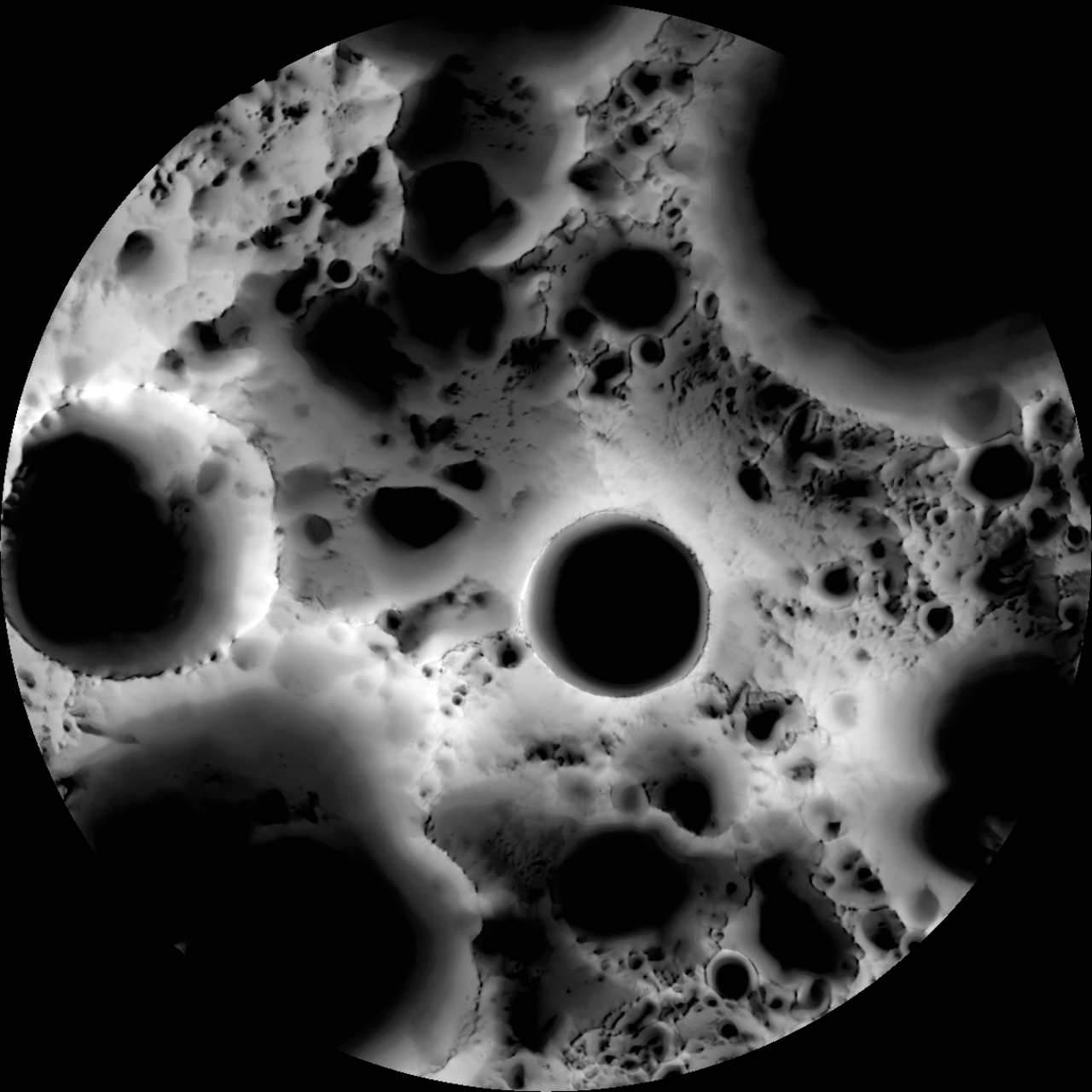 A multi-temporal illumination map of the moon's South pole. The Shackleton crater (19 kilometers in diameter) is in the center, and the South pole is approximately at the 9 o'clock rim of the outer circle. The map was created from images captured by NASA's Lunar Reconnaissance Orbiter. Image: NASA[/caption]The last time NASA (or any humans, for that matter) flew to the Moon was in the 1970s, during the Apollo missions, all of which took place in and around the equator. However, all the probes that have sustained our interest in exploring the moon have come back saying the same thing: the South Pole could be a gold-mine for lunar research.
Why bother with the South Pole?
After ISRO's Chandrayaan-1 probe confirmed the presence of water on the Moon, NASA's Lunar Reconnaissance Orbiter (LRO) and Chinese probes have located the densest collection of water deposits in the South pole in the form of ice.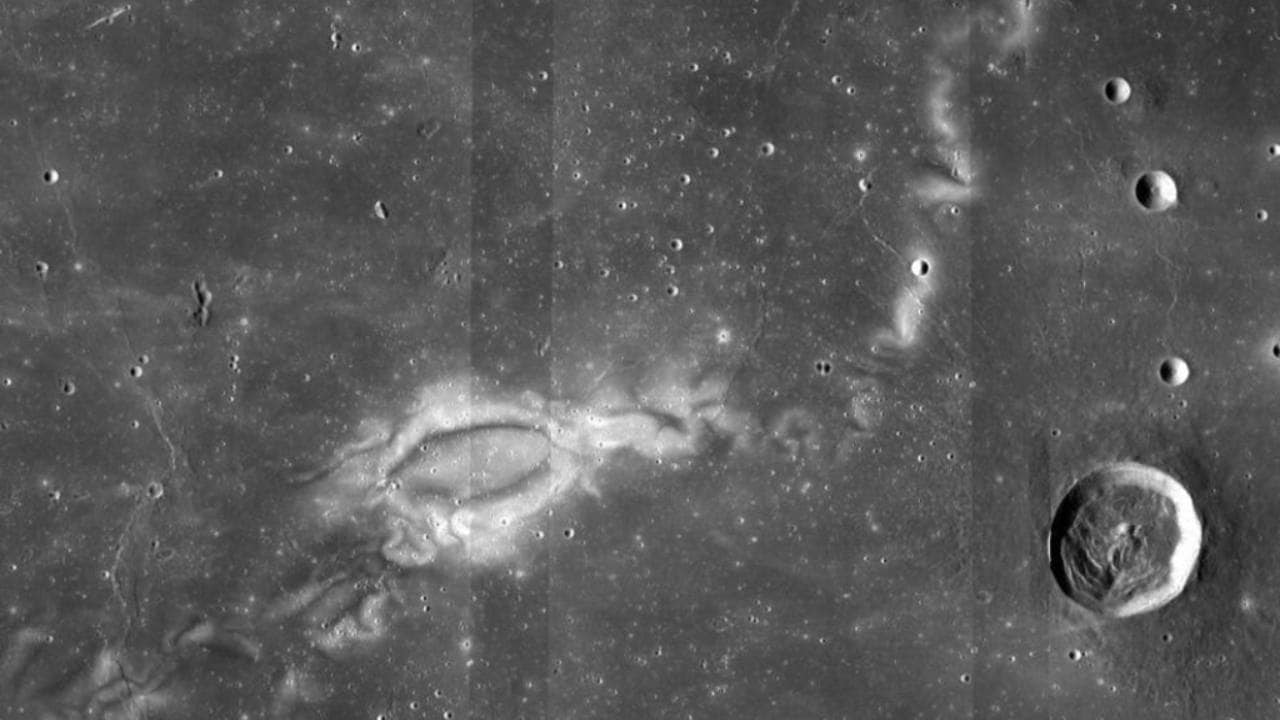 Research using data from NASA's ARTEMIS mission suggests that lunar swirls, like the Reiner Gamma lunar swirl imaged here by NASA's Lunar Reconnaissance Orbiter, could be the result of solar wind interactions with the Moon's isolated pockets of magnetic field. Image courtesy: NASA/Lunar Reconnaissance Orbiter[/caption]"We know the South Pole region contains ice and may be rich in other resources based on our observations from orbit, but, otherwise, it’s a completely unexplored world," Steven Clarke, deputy associate administrator of NASA's Science Mission Directorate, said in a statement.
A new challenge for NASA
A manned mission to the lunar South pole also offers NASA a new challenge — an environment largely unexplored by astronauts. Robotic probes from the US, Japan, India and most recently, China, have collectively made it the most well-studied region on the moon, according to the statement. The challenge, if any, has been the region's rugged terrain and relatively weak communication infrastructure. Though, the 'dark side', which is tidally-locked away from our view on Earth, is far more tricky where communication is concerned.[caption id="attachment_5049411" align="aligncenter" width="1280"]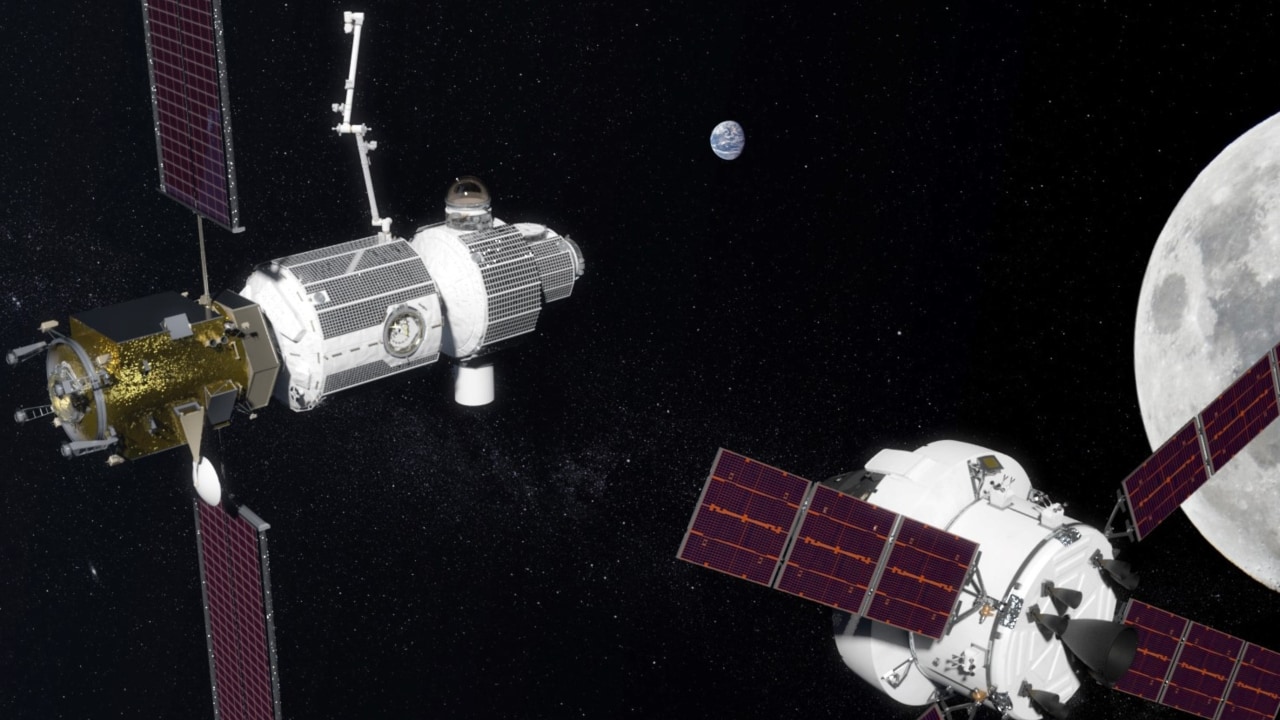 A rendition of the Deep Space Gateway that will orbit the moon, if built and launched as planned. Image courtesy: NASA[/caption]NASA intends to send the first installments of the Lunar Orbital Gateway ahead of the 2024 moon mission, but we're yet to hear how they plan to execute their planned polar first.All said and done, their decision to send astronauts trekking to the South pole is in line with their main objective: to enable long-term human exploration of the Moon — and Mars by extension. Water is a critical resource to make that objective happen, and that's exactly what NASA's choice of landing site has in abundance.But well before that, ISRO may have sent its second lunar probe Chandrayaan-2 to the South pole later this year. It will attempt to make a soft-landing and explore resources including water, mineral composition and magnetism in the South Pole.
First Published:Apr 17, 2019, 11:32:56 IST
Advertisement
Advertisement

Careless Whispers: Scientists discover that plants can 'talk' to each other using smells
Japanese scientists have recorded a video that shows plants, in certain conditions, communicate with each other using mists that carry smells. The discovery, reveals that plants release a fine mist of airborne compounds, to warn nearby plants of potential dangers
Life on Mars? European Space Agency’s Orbiter discovers ice water deposits at equator
European Space Agency's Mars Express Orbiter has identified massive ice and ice water deposits beneath the surface of Mars. The Mars Express orbiter was also the first to confirmed the presence of ice on Mars in 2004
Microsoft briefly overtakes Apple as the most valuable company, Apple back on top again
At its peak during the session, Microsoft's value reached $2.903 trillion, with a 2% surge. As of writing this article, Apple closed at $2.89 trillion, whereas Microsoft closed at $2.86 trillion
Even NASA is facing a tough time, starts layoffs following major budget cuts
NASA is facing some massive budget cuts, because of which, it has been forced to postpone some upcoming missions. NASA's Jet Propulsion Laboratory has been hit hard by recent federal budget cuts, resulting in the layoff of 100 contractors last week
ISRO, NASA's NISAR satellite to get ready by Jan-end, will monitor Earth's snow-covered regions
The NISAR satellite which has been developed jointly ISRO and NASA, should be ready for launch by the end of January 2024. The collaboration between NASA and ISRO on NISAR is the first time the two agencies have cooperated on hardware development for an Earth-observing mission
Advertisement
Advertisement