


NASA's Parker solar probe returns first images from its journey to the Sun
The probe has beamed back first-light data from each of its four instruments: NASA

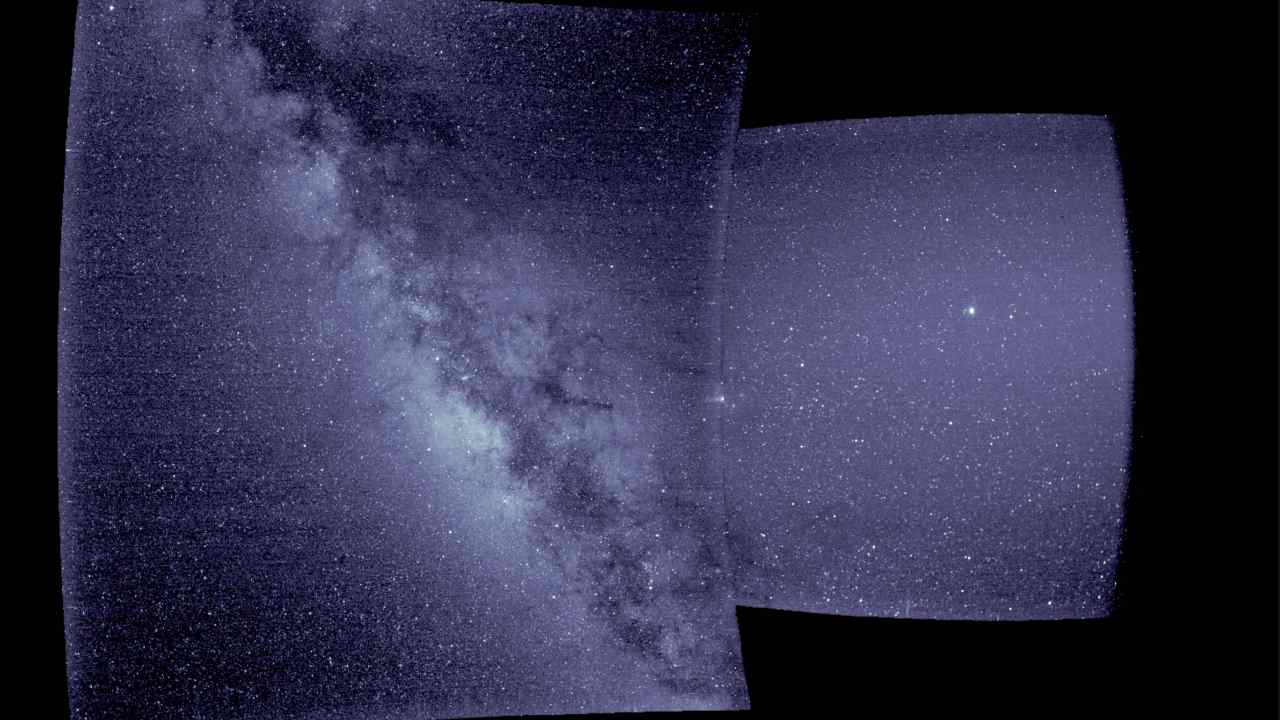
Parker's first-light images from space include a sighting of Jupiter in the distance. Image courtesy: NASA[/caption]The probe also sent data back from its three other instruments on board: ISoIS, FIELDS and SWEAP which are all dedicated to unravelling the mysteries of the Sun.ISoIS's (pronounced "ee-sis" and includes the symbol for the Sun in its acronym) two Energetic Particle Instruments – EPI-Lo and EPI-Hi – cover a range of energies for these activity-driven particles.EPI-Lo's initial data shows background cosmic rays, particles that were energised and came rocketing into our solar system from elsewhere in the galaxy.Data from EPI-Hi shows detections of both hydrogen and helium particles from its lower-energy telescopes.The FIELDS' four electric field antennas on the front of the probe observed the signatures of a solar flare, while the SWEAP's (Solar Wind Electrons Alphas and Protons), three instruments caught glimpses of the solar wind.The Parker Solar Probe's first close approach to the Sun will be in November.Over the next two months, it will fly towards Venus, performing its first Venus gravity assist in early October.Throughout its mission, the probe will make six more Venus flybys and 24 total passes by the Sun.The probe is named after Eugene Parker, a solar physicist, who in 1958 first predicted the existence of the solar wind, a stream of charged particles and magnetic fields that flow continuously from the Sun.

Careless Whispers: Scientists discover that plants can 'talk' to each other using smells
Life on Mars? European Space Agency’s Orbiter discovers ice water deposits at equator
Microsoft briefly overtakes Apple as the most valuable company, Apple back on top again
Even NASA is facing a tough time, starts layoffs following major budget cuts
ISRO, NASA's NISAR satellite to get ready by Jan-end, will monitor Earth's snow-covered regions