


NASA's new space telescope, James Webb, can be used to identify planets with oxygen
Scientists cannot go, visit other planets to find signs of life and can use this telescope to do so.

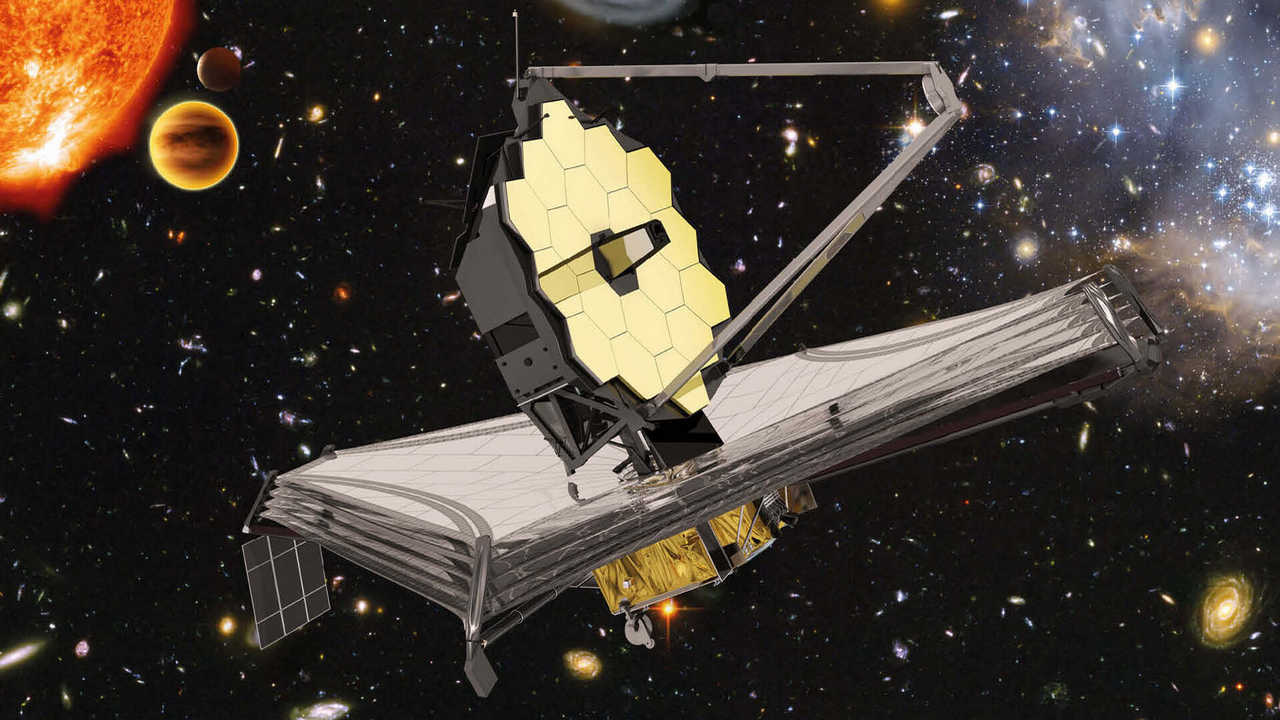
The James Webb Space Telescope can be used to find if a planet is habitable.Image credit: ESA[/caption]"Before our work, oxygen at similar levels as on Earth was thought to be undetectable with Webb, but we identify a promising way to detect it in nearby planetary systems," said senior researcher Thomas Fauchez."This oxygen signal is known since the early 80's from Earth's atmospheric studies, but has never been studied for exoplanet research," added Fauchez.The study is published in the journal — Nature Astronomy.Scientists conducted the research using a computer model for simulating this oxygen signature, by modelling the atmosphere of an exoplanet present near an M dwarf which is the most common type of star present in the universe.The team of the researchers modelled the impact of enhanced radiation that arises from M dwarf stars on the atmospheric chemistry and further used the same to simulate how component colours from star's light will change when the planet will pass in front of it.When starlight passes through the atmosphere of exoplanet's, oxygen generally tends to absorb certain wavelengths of light and in this case, oxygen absorbed infrared light having a wavelength of 6.4 micrometres.When oxygen molecules collide with each other or with other molecules in the exoplanet's atmosphere, energy from the collision puts the oxygen molecule in a special state that temporarily allows it to absorb the infrared light. Infrared light is invisible to the human eye, but detectable using instruments attached to telescopes."Similar oxygen signals exist at 1.06 and 1.27 micrometres and have been discussed in previous studies but these are less strong and much more mitigated by the presence of clouds than the 6.4-micrometre signal," co-researcher said Geronimo Villanueva.Intriguingly, oxygen can also make an exoplanet appear to host life when it does not, because it can accumulate in a planet's atmosphere without any life activity at all. For example, if the exoplanet is too close to its host star or receives too much starlight, the atmosphere becomes very warm and saturated with water vapour from evaporating oceans. This water could be then broken down by the strong ultraviolet radiation into atomic hydrogen and oxygen. Hydrogen, which is a light atom, escapes to space very easily, leaving the oxygen behind.

Careless Whispers: Scientists discover that plants can 'talk' to each other using smells
Life on Mars? European Space Agency’s Orbiter discovers ice water deposits at equator
Microsoft briefly overtakes Apple as the most valuable company, Apple back on top again
Even NASA is facing a tough time, starts layoffs following major budget cuts
ISRO, NASA's NISAR satellite to get ready by Jan-end, will monitor Earth's snow-covered regions