


NASA's Mars helicopter cleared to take first ever flight on the Red planet in 2020
The helicopter is meant to test whether air travel is possible on Mars if controlled by people from Earth.

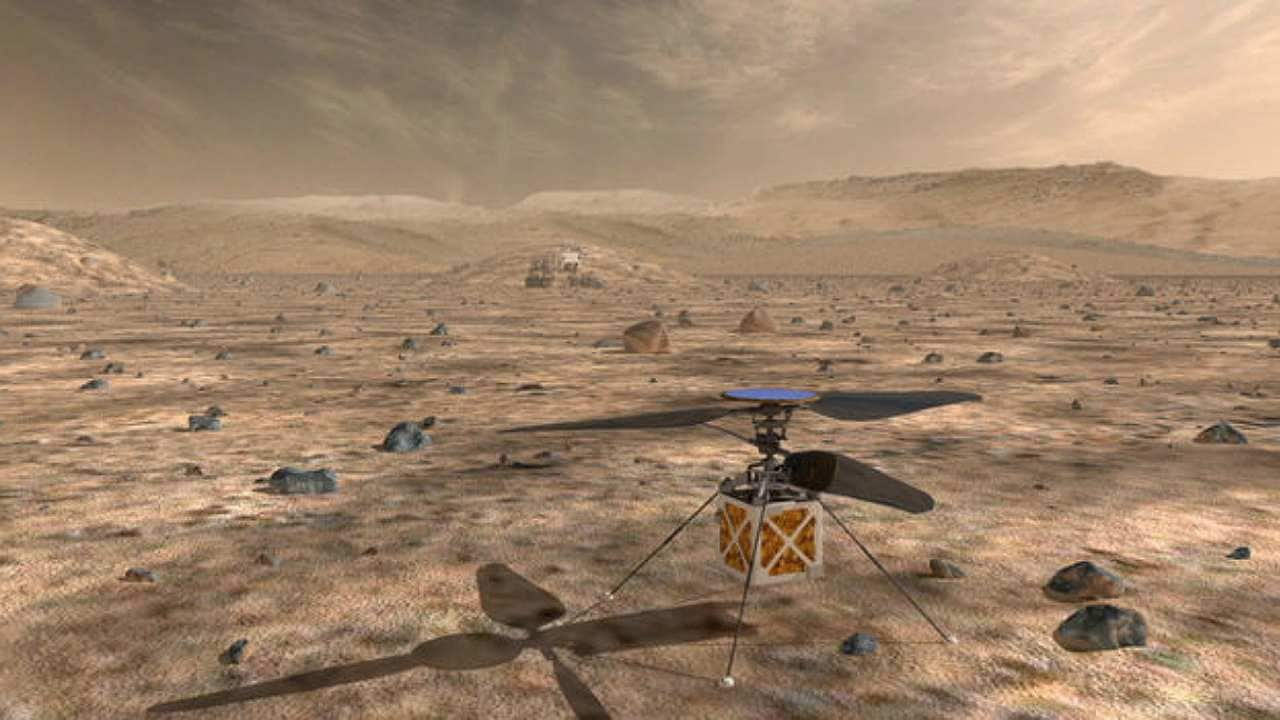
NASA's Mars Helicopter — a small, autonomous rotorcraft — will travel with the agency's Mars 2020 rover, currently scheduled to launch in July 2020, to demonstrate the viability and potential of heavier-than-air vehicles on the Red Planet. Image courtesy: NASA[/caption]As a technology demonstrator, the Mars Helicopter carries no science instruments, NASA said in a statement. Its purpose is to confirm that powered flight in the tenuous Martian atmosphere (which has one percent the density of Earth's) is possible and that it can be controlled from Earth over large interplanetary distances.However, the helicopter also carries a camera capable of providing high-resolution colour images to further demonstrate the vehicle's potential for documenting the Red Planet. Future Mars missions could enlist second-generation helicopters to add an aerial dimension to their explorations.They could investigate previously unvisited or difficult-to-reach destinations such as cliffs, caves and deep craters, act as scouts for human crews or carry small payloads from one location to another. The Mars Helicopter and its delivery system were checked to make sure that the electrical connections and mechanisms that linked the flight vehicle with its cradle fit snuggly.The duo was subjected to vibrations they will experience during launch and in-flight operations. The thermal vacuum portion of the testing introduced them to the kinds of extreme temperatures (down to -129 degrees Celsius) that they will encounter in space and on Mars and that could cause components to malfunction or fail.

Careless Whispers: Scientists discover that plants can 'talk' to each other using smells
Life on Mars? European Space Agency’s Orbiter discovers ice water deposits at equator
Microsoft briefly overtakes Apple as the most valuable company, Apple back on top again
Even NASA is facing a tough time, starts layoffs following major budget cuts
ISRO, NASA's NISAR satellite to get ready by Jan-end, will monitor Earth's snow-covered regions