
Advertisement


Sections
NASA's Cassini observes volcano-like features near the poles of Saturn’s moon Titan
Researchers think these cryovolcanoes are created as water-ice crust melts into liquid water, which then erupts onto Titan's surface.

In April, analysis of data from NASA's Cassini spacecraft found a viable explanation for what's keeping the upper layers of Saturn so very hot. The answer: auroras – similar to those we see near Earth's poles – at the north and south poles of Saturn. Not long ago, another revelation regarding Saturn came to surface.NASA's Cassini spacecraft managed to see volcano-like features in the polar regions of Saturn's moon Titan. Scientists say this could be evidence of active, explosive eruptions, Phys.org reported.[caption id="attachment_8494161" align="alignnone" width="1280"]![Could Titan be home to erupting cryovolcanoes and methane-powered explosions? Scientists aren't ruling out the possibility, based on NASA's Cassini data. Image: Pixabay]() Could Titan be home to erupting cryovolcanoes and methane-powered explosions? Scientists aren't ruling out the possibility, based on NASA's Cassini data. Image: Pixabay[/caption]According to a recent paper authored by Senior Scientist Charles A Wood at the Planetary Science Institute and coauthor Jani Radebaugh of Brigham Young University, morphological features like nested collapses, elevated ramparts, halos and islands suggest small depressions on Titan, and correspond to craters made from volcanic collapses.The study, published in the Journal of Geophysical Research: Planets, also revealed that a few similar depressions occur near the south pole of the Saturn's moon."The close association of the proposed volcanic craters with polar lakes is consistent with a volcanic origin through explosive eruptions followed by collapse, as either maars or calderas," Wood said.He added that the freshness of some craters indicate that volcanism has been relatively recently active on the planet’s moon or even continues today."We demonstrate that there is also evidence for internal heat, manifest at the surface as cryovolcanoes, made from melting the water ice crust into liquid water that erupts onto Titan's surface," he said.
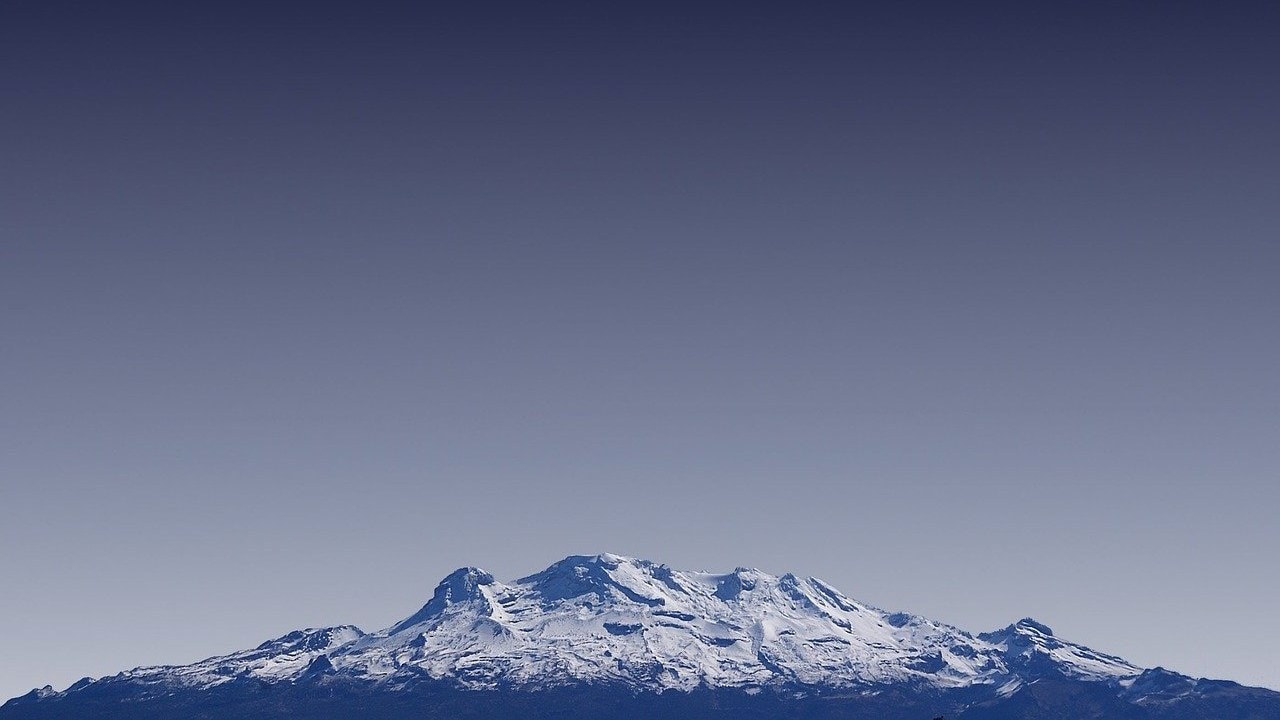
Could Titan be home to erupting cryovolcanoes and methane-powered explosions? Scientists aren't ruling out the possibility, based on NASA's Cassini data. Image: Pixabay[/caption]According to a recent paper authored by Senior Scientist Charles A Wood at the Planetary Science Institute and coauthor Jani Radebaugh of Brigham Young University, morphological features like nested collapses, elevated ramparts, halos and islands suggest small depressions on Titan, and correspond to craters made from volcanic collapses.The study, published in the Journal of Geophysical Research: Planets, also revealed that a few similar depressions occur near the south pole of the Saturn's moon."The close association of the proposed volcanic craters with polar lakes is consistent with a volcanic origin through explosive eruptions followed by collapse, as either maars or calderas," Wood said.He added that the freshness of some craters indicate that volcanism has been relatively recently active on the planet’s moon or even continues today."We demonstrate that there is also evidence for internal heat, manifest at the surface as cryovolcanoes, made from melting the water ice crust into liquid water that erupts onto Titan's surface," he said.That these features are at the polar regions, near the lakes of methane, could indicate that methane or another volatile agent can power these explosions, the researchers explain in their paper. These features also appear to be fresh, meaning they could still be forming on Titan today. [caption id="attachment_7527681" align="alignnone" width="1280"]![Cassini spacecraft catches a glimpse of bright sunlight reflecting off the hydrocarbon seas of Saturn's large moon Titan. Image: NASA]() Cassini spacecraft catches a glimpse of bright sunlight reflecting off the hydrocarbon seas of Saturn's large moon Titan. Image: NASA[/caption]
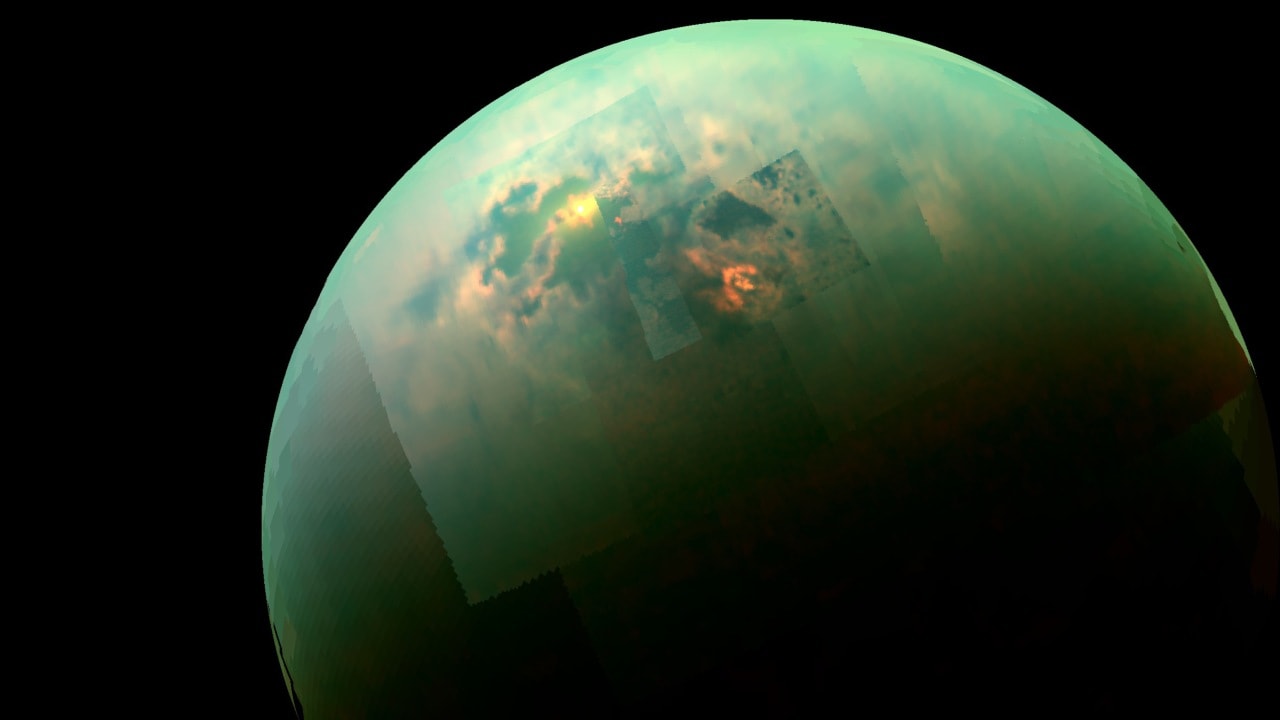
Cassini spacecraft catches a glimpse of bright sunlight reflecting off the hydrocarbon seas of Saturn's large moon Titan. Image: NASA[/caption]A report published in Nature Communications, and detailed by Science News, suggests that peculiar flat regions on Titan could be the dry floors of ancient lakes and seas. Titan is still currently the only other place in the universe that has liquid on its surface, just like Earth. When NASA’s Cassini spacecraft arrived at Saturn in 2004, it showed that Titan is speckled with lakes and seas. The liquid in them was not water, but ethane and methane.
 Could Titan be home to erupting cryovolcanoes and methane-powered explosions? Scientists aren't ruling out the possibility, based on NASA's Cassini data. Image: Pixabay[/caption]According to a recent paper authored by Senior Scientist Charles A Wood at the Planetary Science Institute and coauthor Jani Radebaugh of Brigham Young University, morphological features like nested collapses, elevated ramparts, halos and islands suggest small depressions on Titan, and correspond to craters made from volcanic collapses.The study, published in the Journal of Geophysical Research: Planets, also revealed that a few similar depressions occur near the south pole of the Saturn's moon.
 Cassini spacecraft catches a glimpse of bright sunlight reflecting off the hydrocarbon seas of Saturn's large moon Titan. Image: NASA[/caption]
First Published:Jun 17, 2020, 17:54:58 IST
Advertisement
Advertisement

Careless Whispers: Scientists discover that plants can 'talk' to each other using smells
Japanese scientists have recorded a video that shows plants, in certain conditions, communicate with each other using mists that carry smells. The discovery, reveals that plants release a fine mist of airborne compounds, to warn nearby plants of potential dangers
Life on Mars? European Space Agency’s Orbiter discovers ice water deposits at equator
European Space Agency's Mars Express Orbiter has identified massive ice and ice water deposits beneath the surface of Mars. The Mars Express orbiter was also the first to confirmed the presence of ice on Mars in 2004
Microsoft briefly overtakes Apple as the most valuable company, Apple back on top again
At its peak during the session, Microsoft's value reached $2.903 trillion, with a 2% surge. As of writing this article, Apple closed at $2.89 trillion, whereas Microsoft closed at $2.86 trillion
Even NASA is facing a tough time, starts layoffs following major budget cuts
NASA is facing some massive budget cuts, because of which, it has been forced to postpone some upcoming missions. NASA's Jet Propulsion Laboratory has been hit hard by recent federal budget cuts, resulting in the layoff of 100 contractors last week
ISRO, NASA's NISAR satellite to get ready by Jan-end, will monitor Earth's snow-covered regions
The NISAR satellite which has been developed jointly ISRO and NASA, should be ready for launch by the end of January 2024. The collaboration between NASA and ISRO on NISAR is the first time the two agencies have cooperated on hardware development for an Earth-observing mission
Advertisement
Advertisement