


NASA retires Kepler telescope after nine years of exoplanet hunts and discoveries
Kepler's findings have given a glimpse into roughly 200,000 potentially habitable world in Earth's sky.

NASA has retired its planet-hunting Kepler after the space telescope ran out of fuel. In its nine years spent in deep space, Kepler peered beyond the edges of our solar system in search of exoplanets.The telescope's findings over the years have given scientists a glimpse of the sheer number of planets — well higher than the number of stars — that fill our skies.Kepler was known to be running low on fuel for months, and was retired from further science operations this week. NASA will now be retiring the telescope in its current orbit around the Sun, and fall into eternal sleep 94 million miles from Earth.NASA officials will send the final commands to turn off its transmitter and disable its default protections within the next week, the space agency announced 31 October, Tuesday.
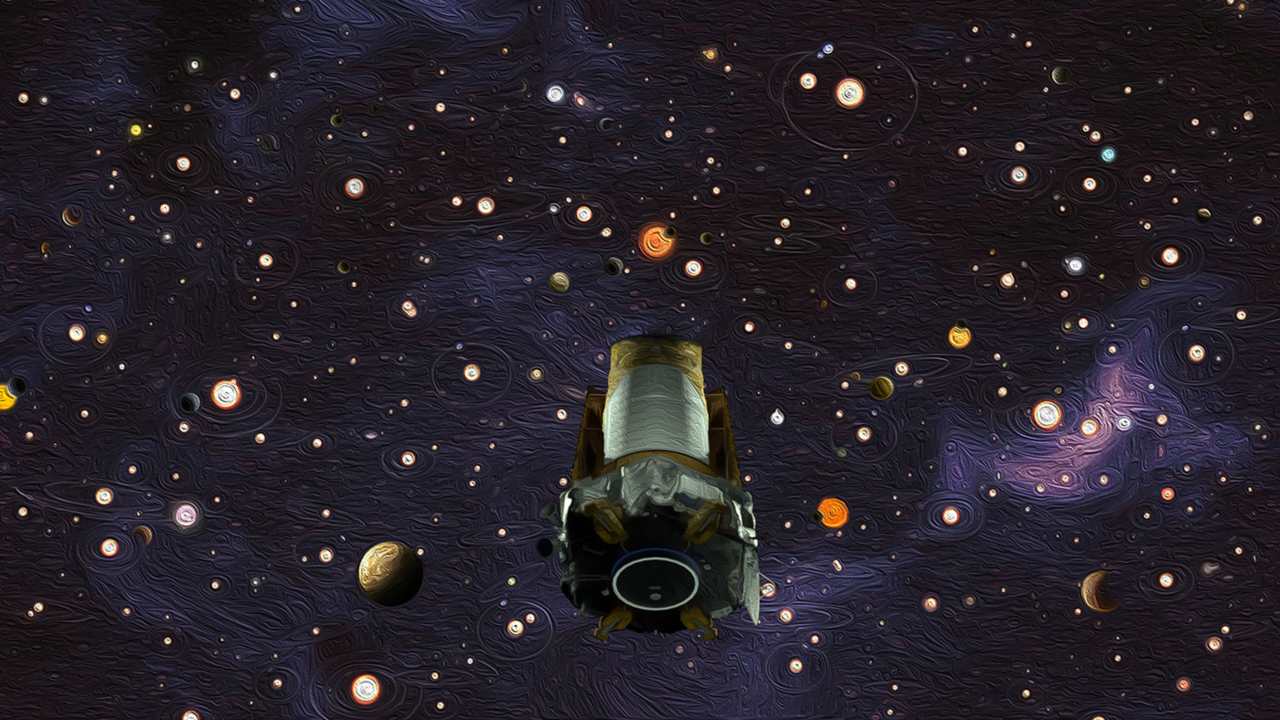
An artistic rendition of the Kepler planet-hunting space telescope. Image courtesy: NASA[/caption]"Not only did it show us how many planets could be out there, it sparked an entirely new and robust field of research that has taken the science community by storm. Its discoveries have shed a new light on our place in the universe, and illuminated the tantalizing mysteries and possibilities among the stars."Through some of Kepler's more recent findings, scientists have concluded that 20 - 50 percent of the stars visible in Earth's night sky are likely to have small and rocky planets like Earth. These explanets all fall in the "habitable zone" of their parent stars — where the liquid water could exist as pools on the planet's surface."When we started conceiving this mission 35 years ago, we didn't know of a single planet outside our solar system," William Borucki, Kepler mission's founding principal investigator, said in a statement."Now that we know planets are everywhere, Kepler has set us on a new course that's full of promise for future generations to explore our galaxy.""We know the spacecraft's retirement isn't the end of Kepler's discoveries," Jessie Dotson, Kepler's project scientist at NASA's Ames Research Center said. "I'm excited about the diverse discoveries that are yet to come from our data... and how future missions will build on Kepler's results."Before retiring the spacecraft, NASA scientists pushed the telescope to its limits, making some important observations that would complement data from its successor — the Transiting Exoplanet Survey Satellite (TESS), launched in April 2018.TESS takes over form Kepler with new data about nearly 200,000 stars in viewing range of Earth — stars that can be explored for signs of life by NASA's other missions, like the James Webb Space Telescope.

Careless Whispers: Scientists discover that plants can 'talk' to each other using smells
Life on Mars? European Space Agency’s Orbiter discovers ice water deposits at equator
Microsoft briefly overtakes Apple as the most valuable company, Apple back on top again
Even NASA is facing a tough time, starts layoffs following major budget cuts
ISRO, NASA's NISAR satellite to get ready by Jan-end, will monitor Earth's snow-covered regions