


NASA postpones Ingenuity helicopter's first flight due to tech issues with its rotor
Flight is a true challenge on Mar because the air is so thin and it has to spin its rotor blades much faster than it does on Earth

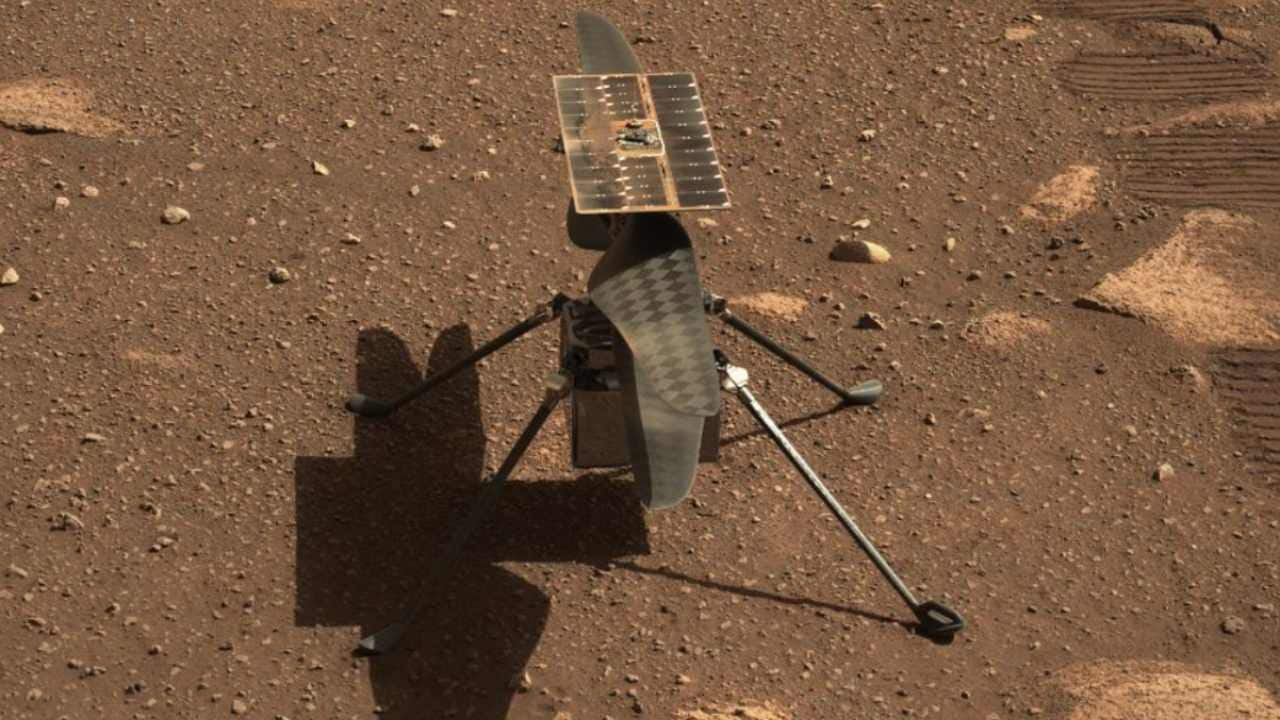
If the first flight is a success, NASA will plan another one no more than four days later. Image credit: Twitter @NASA[/caption]"The helicopter team is reviewing telemetry to diagnose and understand the issue," NASA said in a statement. "Following that, they will reschedule the full-speed test."NASA noted the copter is "safe and healthy" and had sent information back to Earth.Initially, the plan for Sunday was to have Ingenuity fly for 30 seconds to take a picture of the Perseverance rover, which touched down on Mars on 18 February with the helicopter attached to its underside.NASA calls the unprecedented helicopter operation highly risky but says it could reap invaluable data about the conditions on Mars.
The flight is a true challenge because the air on Mars is so thin — less than one percent of the pressure of Earth's atmosphere.This means Ingenuity must spin its rotor blades much faster than a helicopter needs to do on Earth in order to fly.After the flight, Ingenuity will send Perseverance technical data on what it has done, and that information will be transmitted back to Earth.This will include a black and white photo of the Martian surface that Ingenuity is programmed to snap while flying.A day later, once its batteries have charged up again, Ingenuity is to transmit another photo -- in color, of the Martian horizon, taken with a different camera.If the flight is a success, NASA plans another no more than four days later. It plans as many as five altogether, each successively more difficult, over the course of a month.NASA hopes to make the helicopter rise five meters (16 feet) and then move laterally.The mission is be the equivalent on Mars of the first powered flight on Earth -- by the Wright brothers in 1903 in Kitty Hawk, North Carolina. A piece of fabric from that plane has been tucked inside Ingenuity in honor of that feat.
Careless Whispers: Scientists discover that plants can 'talk' to each other using smells
Life on Mars? European Space Agency’s Orbiter discovers ice water deposits at equator
Microsoft briefly overtakes Apple as the most valuable company, Apple back on top again
Even NASA is facing a tough time, starts layoffs following major budget cuts
ISRO, NASA's NISAR satellite to get ready by Jan-end, will monitor Earth's snow-covered regions