
Advertisement


Sections
NASA once again puts Hubble Telescope in safe mode due to mysterious bug
This isn’t the first time that the telescope has been put in safe mode as some technical glitch in 2018 forced the agencies to do the same.

One of NASA’s most important assets, the Hubble Space Telescope, had to be temporarily shut down and put in “safe mode” on 8 March. The shuttle that was launched into orbit in 1990 in a joint venture of NASA and ESA (European Space Agency) has been functioning and serving scientists across the world for nearly two decades. But the functions have now been put on hold. NASA announced the news via their official Twitter handle stating Hubble Space Telescope (HST) went into safe mode due to an onboard software error around 4:00 a.m. EST on Sunday. The agency has assured that “All science systems appear normal and Hubble is safe and stable”. The hold will be in place until further notice.[caption id="attachment_5432261" align="alignnone" width="1280"]![The Hubble Space Telescope has completed 30 years in space. Image courtesy: NASA]()
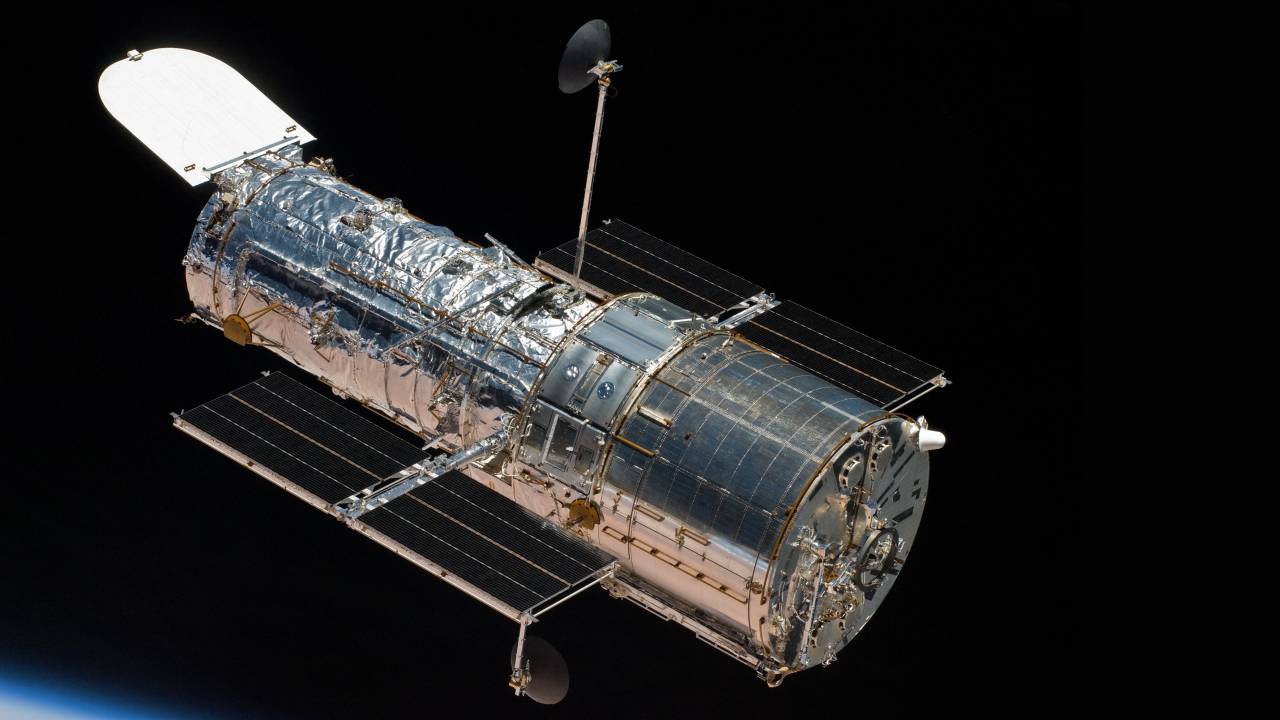
The Hubble Space Telescope has completed 30 years in space. Image courtesy: NASA[/caption]Speaking to Fox News, NASA informed the media their team is working to make sure they return Hubble back to science operations as soon as possible. “The Hubble Space Telescope is in good condition but remains in safe mode as a precaution while the team works to fully understand the error encountered on Sunday and the associated safe mode response,” they said.
This isn’t the first time that the HST has been put in safe mode. Some technical glitch in 2018 forced the agencies involved to put the telescope in safe mode for a brief period of time. Then agency had then explained what safe mode actually is. It is a setting that helps put the telescope in a “stable configuration that suspends science observations”. It also positions the HST’s solar panels toward the sun, as it functions on solar energy, to get refuelled. It will soon be working as before.HST has been key in multiple astronomical discoveries since its launch into orbit. It is the first major optical telescope functioning directly from space—offering it an obstructed view of the vast cosmos. It helps us study not only our own solar system but galaxies far, far away.According to Mashable, “Hubble has made over 1.3 million observations since its mission began in 1990”.First Published:Mar 12, 2021, 15:01:07 IST
Advertisement
Advertisement

Careless Whispers: Scientists discover that plants can 'talk' to each other using smells
Japanese scientists have recorded a video that shows plants, in certain conditions, communicate with each other using mists that carry smells. The discovery, reveals that plants release a fine mist of airborne compounds, to warn nearby plants of potential dangers
Life on Mars? European Space Agency’s Orbiter discovers ice water deposits at equator
European Space Agency's Mars Express Orbiter has identified massive ice and ice water deposits beneath the surface of Mars. The Mars Express orbiter was also the first to confirmed the presence of ice on Mars in 2004
Microsoft briefly overtakes Apple as the most valuable company, Apple back on top again
At its peak during the session, Microsoft's value reached $2.903 trillion, with a 2% surge. As of writing this article, Apple closed at $2.89 trillion, whereas Microsoft closed at $2.86 trillion
Even NASA is facing a tough time, starts layoffs following major budget cuts
NASA is facing some massive budget cuts, because of which, it has been forced to postpone some upcoming missions. NASA's Jet Propulsion Laboratory has been hit hard by recent federal budget cuts, resulting in the layoff of 100 contractors last week
ISRO, NASA's NISAR satellite to get ready by Jan-end, will monitor Earth's snow-covered regions
The NISAR satellite which has been developed jointly ISRO and NASA, should be ready for launch by the end of January 2024. The collaboration between NASA and ISRO on NISAR is the first time the two agencies have cooperated on hardware development for an Earth-observing mission
Advertisement
Advertisement