


NASA, ESA Hubble telescope captures image of spiral galaxy 60 million light-years away
The spiral galaxy, NGC 3717, is located in the Hydra constellation that is commonly represented as a water snake.

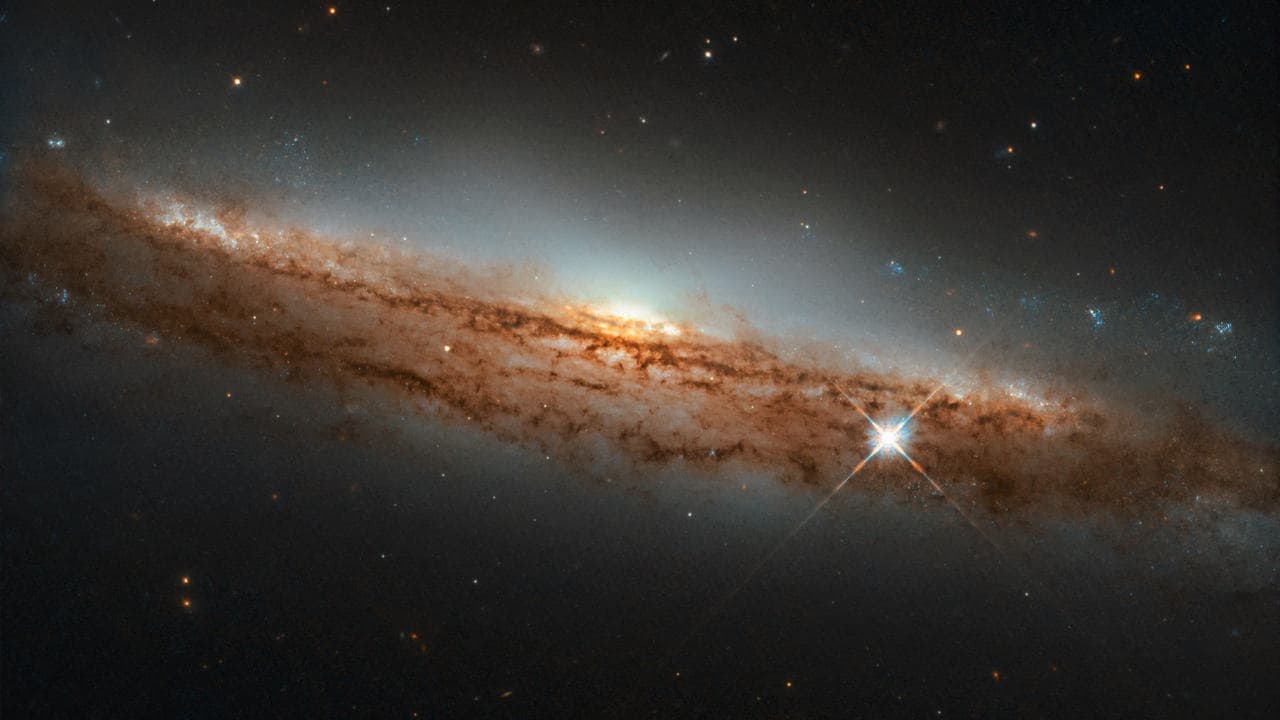
Hubble telescope captures a spiral galaxy 60 million light-years away. image credit: NASA[/caption]The Hubble telescope is the first major optical telescope to be placed in space where it has an unobstructed view of the universe. It was launched in 1990 and has been in service for 29 years after being serviced five times.Sometimes, Hubble looks at things at an angle like it has done this time. This helps us see the spiral galaxy across the disk, while also viewing the bulge at the centre.Our Milky Way is another example of a spiral galaxy, which is a class of galaxies originally described by the Edwin Hubble (after whom the telescope is named) as such in his 1936 work The Realm of the Nebulae. Most spiral galaxies consist of a flat, rotating disk containing stars, gas and dust. At their centres, they have a bright, spherical concentration of stars known as the bulge. It extends above and below the disk (the bottom bulge, in this picture, is not visible).These galaxies look like the stereotypical flying saucers or UFOs.
Last Friday, Hubble captured an image of the Medusa merger (aka NGC 4194). About 130 million light-years away, an early galaxy consumed a smaller gas-rich system, throwing out streams of stars and dust into space.
Careless Whispers: Scientists discover that plants can 'talk' to each other using smells
Life on Mars? European Space Agency’s Orbiter discovers ice water deposits at equator
Microsoft briefly overtakes Apple as the most valuable company, Apple back on top again
Even NASA is facing a tough time, starts layoffs following major budget cuts
ISRO, NASA's NISAR satellite to get ready by Jan-end, will monitor Earth's snow-covered regions