


Meteorite 'older than Earth itself' could shed light on how protoplanets form
The crusts of some of the oldest protoplanets are virtually unknown, owing to a scarcity of samples to study.

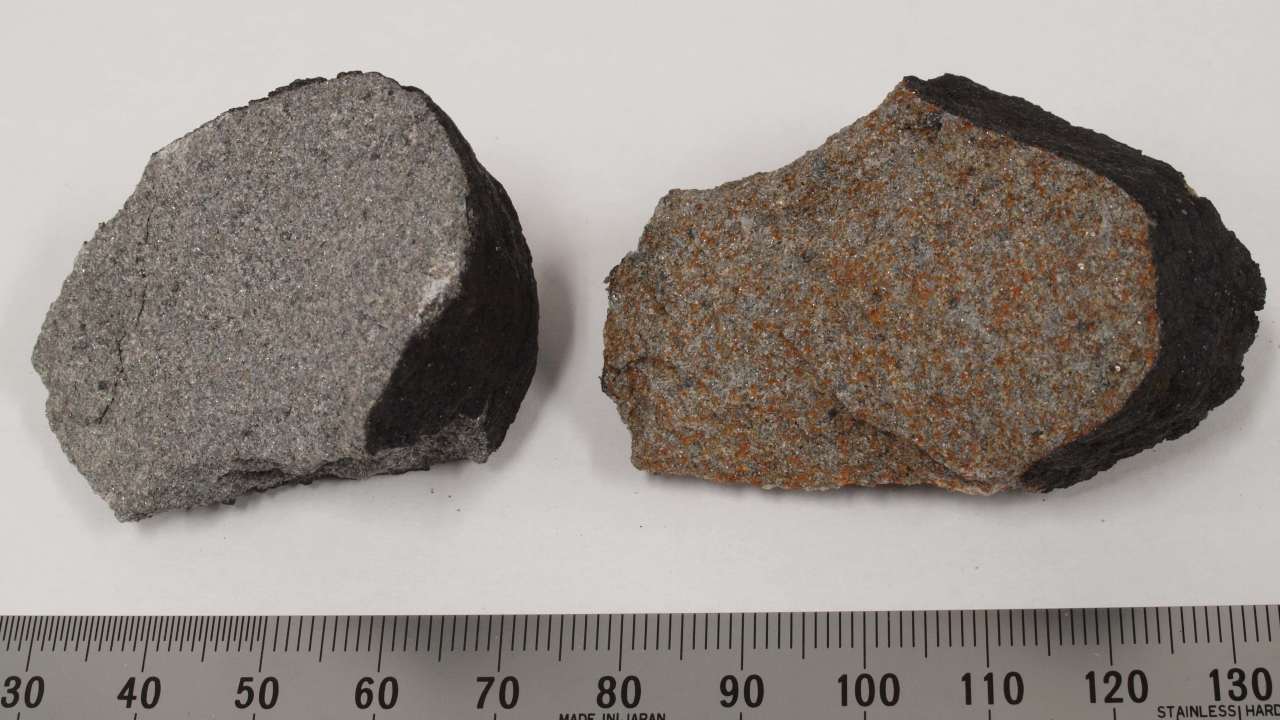
Fragments of a fallen meteorite. Image: Museum Kahaku/Twitter[/caption]Most recovered meteorites on our planet are classified as chondrites (when bits of dust and rock stick together). But this meteor is achondrite, igneous and pyroxene material i.e. volcanic rock material. Such rocks form around molten magma or lava which suggests this rock once formed the crust of the planet before breaking apart. The rock in the meteor is andesite. On Earth, such rocks are formed by the collision of tectonic plates.The team studying the rock have dubbed it as “ancient” on account of its age. It is extremely rare to encounter an object that was present during the formation of our solar system.Another rock discovered in Sahara, nearly 4.4 billion years old, was formerly the oldest known meteorite. According to Physics World, the rock was analysed in 2013 and was crucial in helping scientists understand how the Martian crust formed during its infancy.Similarly, the new meteorite could help understand how the ancient protoplanets formed and what must have happened to them.

Careless Whispers: Scientists discover that plants can 'talk' to each other using smells
Life on Mars? European Space Agency’s Orbiter discovers ice water deposits at equator
Microsoft briefly overtakes Apple as the most valuable company, Apple back on top again
Even NASA is facing a tough time, starts layoffs following major budget cuts
ISRO, NASA's NISAR satellite to get ready by Jan-end, will monitor Earth's snow-covered regions