


Mars' landscape was shaped by flooded crater lakes which was a common occurrence: Study
Mars has more craters on its surface compared to Earth, meaning that billions of years ago, when the planet was very wet, crater lakes were common.

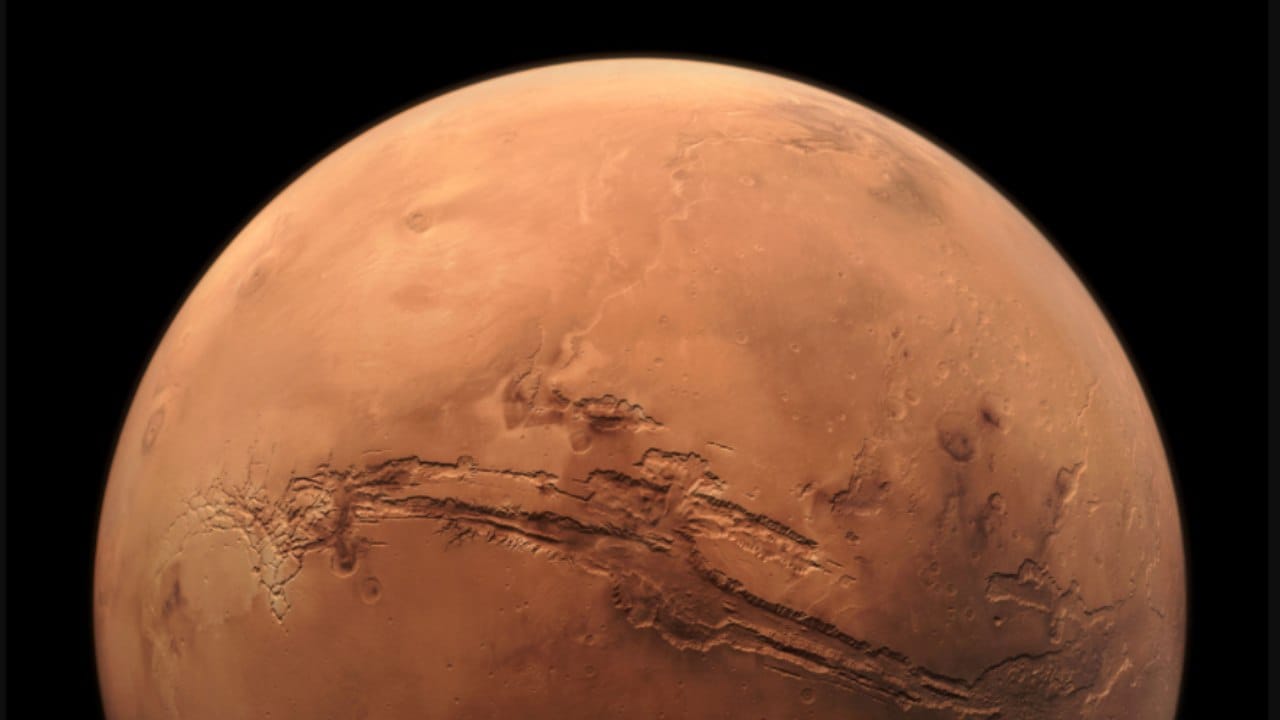
In 1609 Italian Galileo Galilei observed Mars with a primitive telescope and in doing so became the first person to use the new technology for astronomical purposes. Imagte credit: NASA[/caption]Mars has more craters on its surface compared to Earth, meaning that billions of years ago, when the planet was very wet, crater lakes were common.Lead author of the study and assistant professor at the UT Jackson School of Geosciences, Tim Goudge, said that “lake breach floods were a really important process globally," while talking about the process of landscape change on the Red Planet.The lakes would breach the crater walls when they became too full, leading to devastating floods in the surrounding landscapes.Goudge and his team included 262 breached craters lakes in their study, rather than examining individual craters and their surrounding landscape, to study how their shaped the surface of Mars.The research reviewed a pre-existing catalogue of river valleys on the planet, placing them into two categories: those valleys connected to a crater breach, indicating they were formed during a lake breach flood, and valleys formed away from craters, which suggest a more gradual formation process.Calculating the volumes of the eroded valleys based on width and depth measurements from satellite instruments, researchers found that while valley systems gouged out by crater breach floods accounted for only three percent of the length of the valleys eroded, they were much deeper than the other valleys.Crater flood valleys had a median depth of 170.5 meters (559 feet), nearly twice the median depth of gradual valleys, which was at about 77.5-meter (254 foot). The crater flood valleys were also responsible for at least 24 percent of the volume of river valleys on the Martian surface.Goudge said that the new research is also a lesson in expectations, adding that the Earth’s geology has erased a lot of the impact craters from the planet’s surface, making river erosion a slow and steady process mostly. But it does not mean that the same will happen on other planets as well.He added that “it makes sense that Mars might tip, in this case, toward being shaped by catastrophism more than the Earth".

Careless Whispers: Scientists discover that plants can 'talk' to each other using smells
Life on Mars? European Space Agency’s Orbiter discovers ice water deposits at equator
Microsoft briefly overtakes Apple as the most valuable company, Apple back on top again
Even NASA is facing a tough time, starts layoffs following major budget cuts
ISRO, NASA's NISAR satellite to get ready by Jan-end, will monitor Earth's snow-covered regions