


Jupiter's moon Europa detailed in a thermal and geologic map of its icy surface
Among the key findings from the map was a cold spot in Europa's Northern Hemisphere.

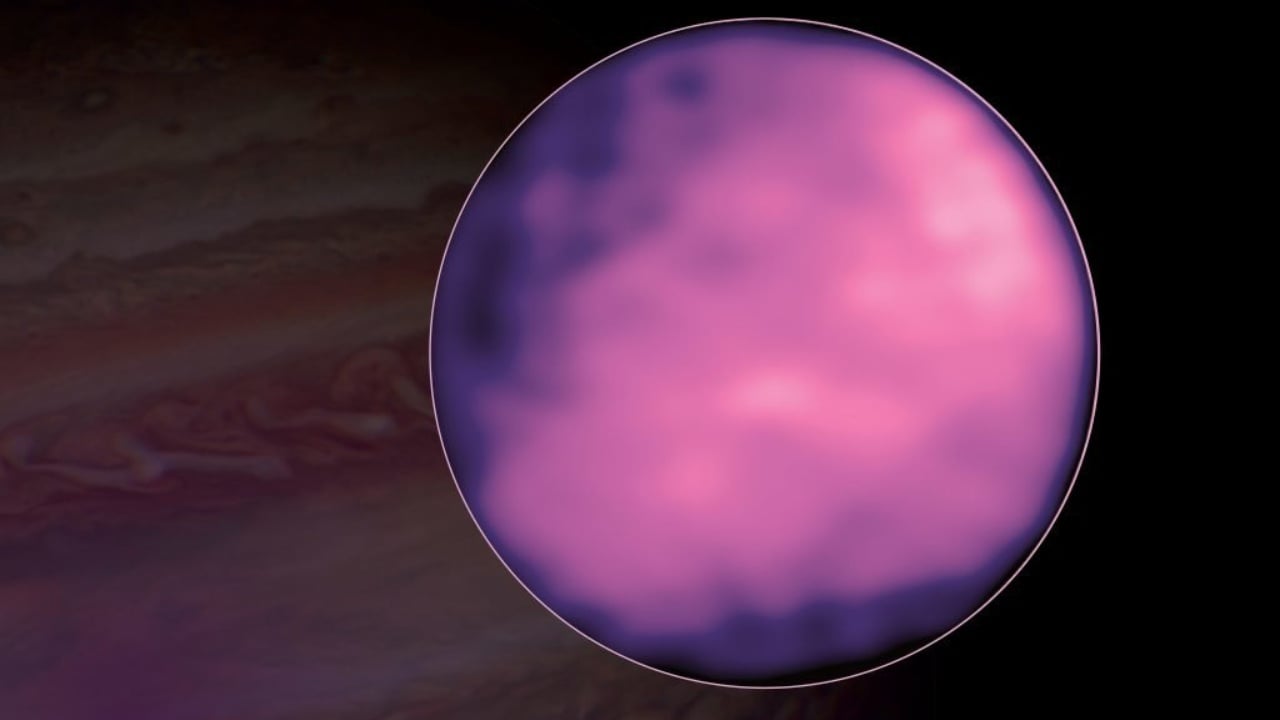
A thermal map of Europa. Image courtesy: ALMA/NASA[/caption]"These ALMA images are really interesting… they provide the first global map of Europa's thermal emissions," Samantha Trumbo, lead author of the study from CalTech was quoted to have said in a National Radio Astronomy Observatory report."Since Europa is an ocean world with potential geologic activity, its surface temperatures are of great interest because they may constrain the locations and extents of any such activity."Past findings about Europa has suggested that Europa has a large reservoir of brine (salt water) under its thin icy surface and above a rocky core.Consider the relatively young of Europa’s surface — 20 to 180 million years old — it is highly likely that there are still many thermal and geological forces at work in that region.Radio and millimeter-wave telescopes like ALMA (unlike optical telescopes like Hubble) can see a thermal “glow” from even cold objects like asteroids, comets and moons."Studying Europa's thermal properties provides a unique means of understanding its surface," Bryan Butler, astronomer at the National Radio Astronomy Observatory and coauthor on the paper, was quoted to have said in the report.The findings from the study were published in the Astronomical Journal.

Careless Whispers: Scientists discover that plants can 'talk' to each other using smells
Life on Mars? European Space Agency’s Orbiter discovers ice water deposits at equator
Microsoft briefly overtakes Apple as the most valuable company, Apple back on top again
Even NASA is facing a tough time, starts layoffs following major budget cuts
ISRO, NASA's NISAR satellite to get ready by Jan-end, will monitor Earth's snow-covered regions