


ISRO's Chandrayaan-2 mission to take place between 9 July and 16 July
The rocket used for the Chandrayaan-2 mission towards the moon will be the GSLV Mk-III rocket.

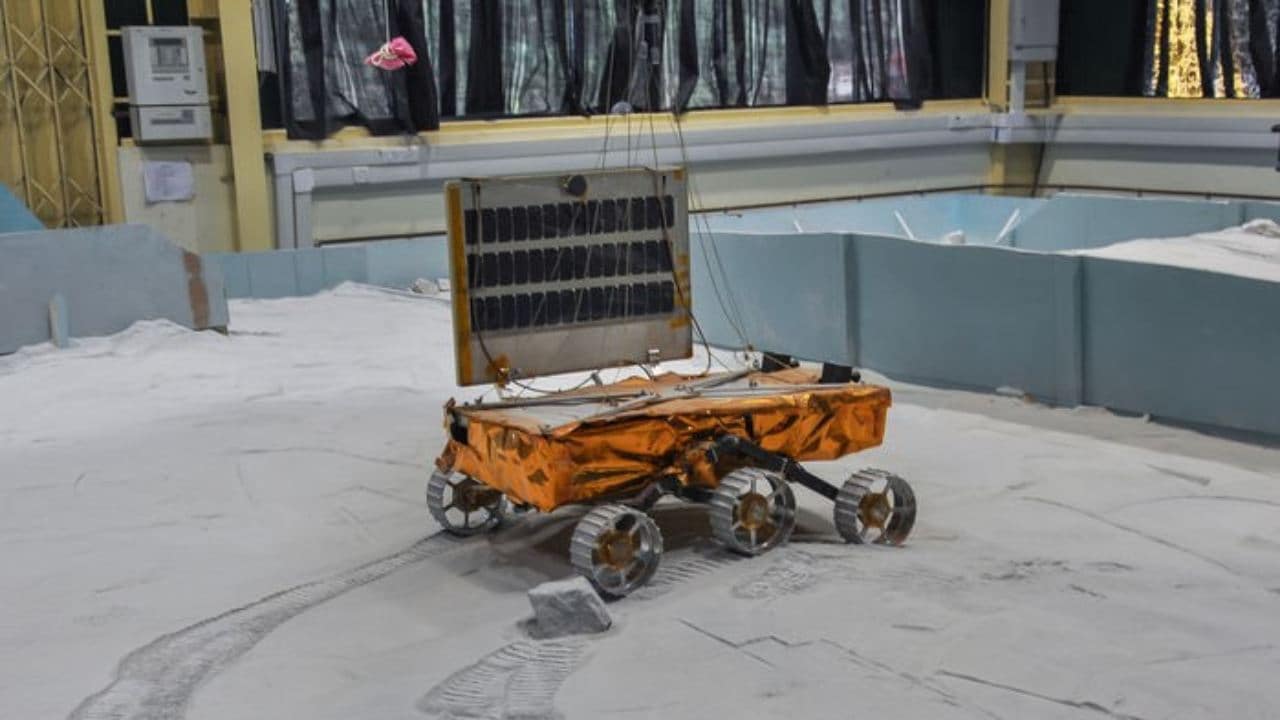
The Chandrayaan-2 Rover during a mobility test. Image courtesy: ISRO[/caption]The Indian space agency has said in a statement that all the modules necessary for the mission are getting ready. The landing on the lunar surface is expected to be by 6 September and ISRO plans to include a lander, an orbiter and a rover to land. It is targetted to land on the south pole of the moon.The rocket which will launch the mission towards the moon will be the GSLV Mk-III rocket wherein the lunar craft will be propelled into the moon's orbit via the orbiter. As soon as the lunar craft has landed a rover will roll-out and carry out experiments on the moon.Chandrayaan-1 was India’s first lunar mission and it was a successful one. The mission consisted of an orbiting spacecraft and a lunar impactor. The mission was designed to last two years, but the Indian Space Research Organisation lost contact with the orbiter after almost a year in operation. It has since been found.Scientists from Brown University in the US used a new calibration of data taken from NASA's Moon Mineralogy Mapper, which flew aboard Chandrayaan-1 spacecraft, to quantify how much water is present on a global scale.With inputs from PTI

Careless Whispers: Scientists discover that plants can 'talk' to each other using smells
Life on Mars? European Space Agency’s Orbiter discovers ice water deposits at equator
Microsoft briefly overtakes Apple as the most valuable company, Apple back on top again
Even NASA is facing a tough time, starts layoffs following major budget cuts
ISRO, NASA's NISAR satellite to get ready by Jan-end, will monitor Earth's snow-covered regions