
Advertisement


Sections
ISRO's Chandrayaan-2 mission to carry three more payloads than Chandrayaan-1
The mission builds on discoveries made near the south pole, where Chandrayaan-1 found ice-water.

Indian Space Research Organisation released an update ahead of its second mission to the Moon, Chandrayaan-2, due to launch in July 2019. ISRO shared the various key components in the Chandrayaan-2 mission, a sequel to the mighty-successful Chandrayaan-1, in a graphic.The Chandrayaan-2 spacecraft — which consists of an orbiter, lander and rover — will be launched on a Geosynchronous Satellite Launch Vehicle-MkIII rocket between 9-16 July 2019, ISRO Chairman K Sivan said in a statement in April.[caption id="attachment_6608761" align="alignnone" width="1024"]![The complexity and challenges of Chandrayaan-2 vs Chandrayaan-1. Image credit: ISRO]() The complexity and challenges of Chandrayaan-2 vs Chandrayaan-1. Image credit: ISRO[/caption]ISRO has set a launch date for Chandrayaan-2 after already having seen multiple delays. Originally, the mission was meant to launch in 2013 but hit technical snags from the lander, which was being built in Russia. ISRO decided to rip up the contract in 2015 and build the lander on their own. Vikram, the new lander, gets its name from the father of ISRO and the Indian space program, Vikram Sarabhai.Vikram will be accompanied by a moon rover, Pragyan. Between them, the mission will carry a total of 13 instruments to the moon — three on the rover Pragyan and ten on the Vikram lander. The first of these instruments will go live if and when Vikram makes a soft landing on the Moon on 6 September, as planned."Once Vikram lands on the lunar surface on September 6, rover Prayan will come out of it and roll out on the lunar surface for 300 to 400 meters (984 feet to 1312 feet)," Sivan told the Times of India. "It will spend 14 Earth days on the moon carrying out different scientific experiments."[caption id="attachment_6555351" align="alignnone" width="1024"]
The complexity and challenges of Chandrayaan-2 vs Chandrayaan-1. Image credit: ISRO[/caption]ISRO has set a launch date for Chandrayaan-2 after already having seen multiple delays. Originally, the mission was meant to launch in 2013 but hit technical snags from the lander, which was being built in Russia. ISRO decided to rip up the contract in 2015 and build the lander on their own. Vikram, the new lander, gets its name from the father of ISRO and the Indian space program, Vikram Sarabhai.Vikram will be accompanied by a moon rover, Pragyan. Between them, the mission will carry a total of 13 instruments to the moon — three on the rover Pragyan and ten on the Vikram lander. The first of these instruments will go live if and when Vikram makes a soft landing on the Moon on 6 September, as planned."Once Vikram lands on the lunar surface on September 6, rover Prayan will come out of it and roll out on the lunar surface for 300 to 400 meters (984 feet to 1312 feet)," Sivan told the Times of India. "It will spend 14 Earth days on the moon carrying out different scientific experiments."[caption id="attachment_6555351" align="alignnone" width="1024"]![Configuration of the Chandrayaan-2 mission rover, lander and orbiter. Image: ISRO]() Configuration of the Chandrayaan-2 mission rover, lander and orbiter. Image: ISRO[/caption]The mission will try and build on the work of Chandrayaan-1's discoveries — the mission is designed to making a landing near the moon's south pole, home to the body of ice water Chandrayaan-1 confirmed.So far, only one of the three modules of the mission is mission-ready, with plenty more to do before ISRO's launch window opens in under 60-days' time. However, ISRO's chief shared that the delays are only to minimise the risk of the mission by as much as possible."We saw Israel's example and we don’t want to take any risk," an ISRO official told The Hindu. "Despite Israel being such a technologically advanced country, the mission failed. We want the mission to be a success."
Configuration of the Chandrayaan-2 mission rover, lander and orbiter. Image: ISRO[/caption]The mission will try and build on the work of Chandrayaan-1's discoveries — the mission is designed to making a landing near the moon's south pole, home to the body of ice water Chandrayaan-1 confirmed.So far, only one of the three modules of the mission is mission-ready, with plenty more to do before ISRO's launch window opens in under 60-days' time. However, ISRO's chief shared that the delays are only to minimise the risk of the mission by as much as possible."We saw Israel's example and we don’t want to take any risk," an ISRO official told The Hindu. "Despite Israel being such a technologically advanced country, the mission failed. We want the mission to be a success."
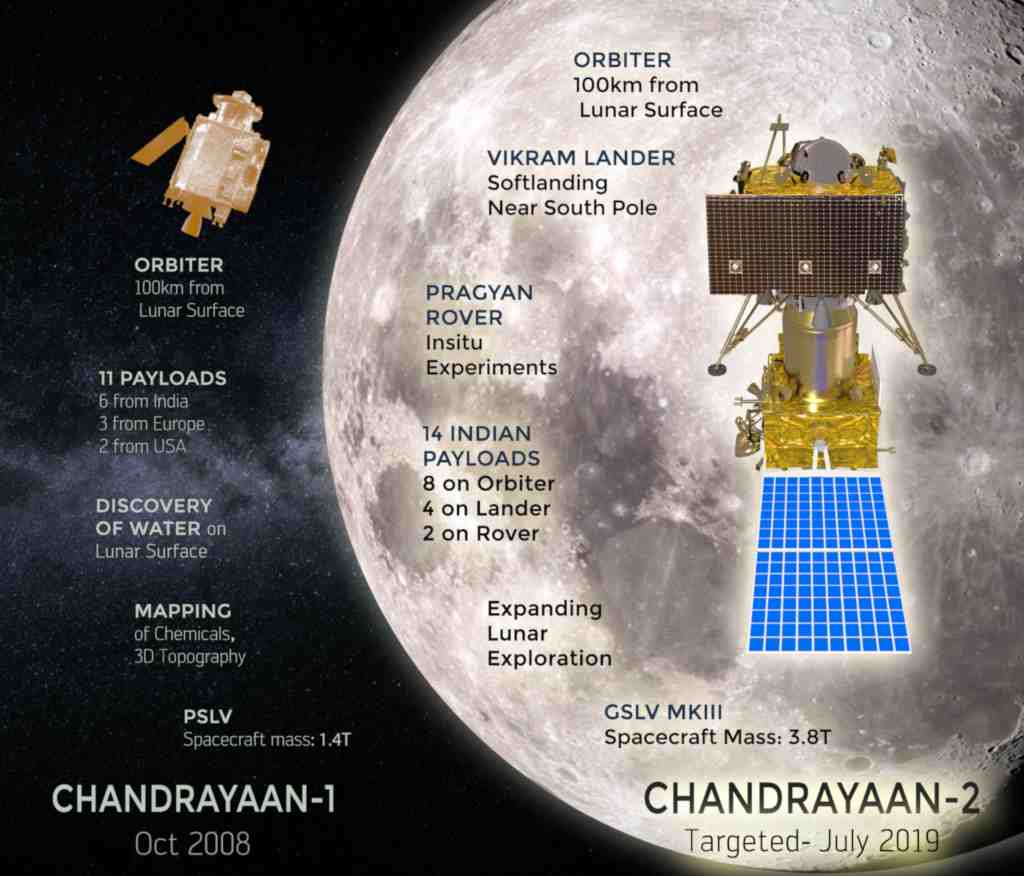 The complexity and challenges of Chandrayaan-2 vs Chandrayaan-1. Image credit: ISRO[/caption]ISRO has set a launch date for Chandrayaan-2 after already having seen multiple delays. Originally, the mission was meant to launch in 2013 but hit technical snags from the lander, which was being built in Russia. ISRO decided to rip up the contract in 2015 and build the lander on their own. Vikram, the new lander, gets its name from the father of ISRO and the Indian space program, Vikram Sarabhai.Vikram will be accompanied by a moon rover, Pragyan. Between them, the mission will carry a total of 13 instruments to the moon — three on the rover Pragyan and ten on the Vikram lander. The first of these instruments will go live if and when Vikram makes a soft landing on the Moon on 6 September, as planned."Once Vikram lands on the lunar surface on September 6, rover Prayan will come out of it and roll out on the lunar surface for 300 to 400 meters (984 feet to 1312 feet)," Sivan told the Times of India. "It will spend 14 Earth days on the moon carrying out different scientific experiments."[caption id="attachment_6555351" align="alignnone" width="1024"]
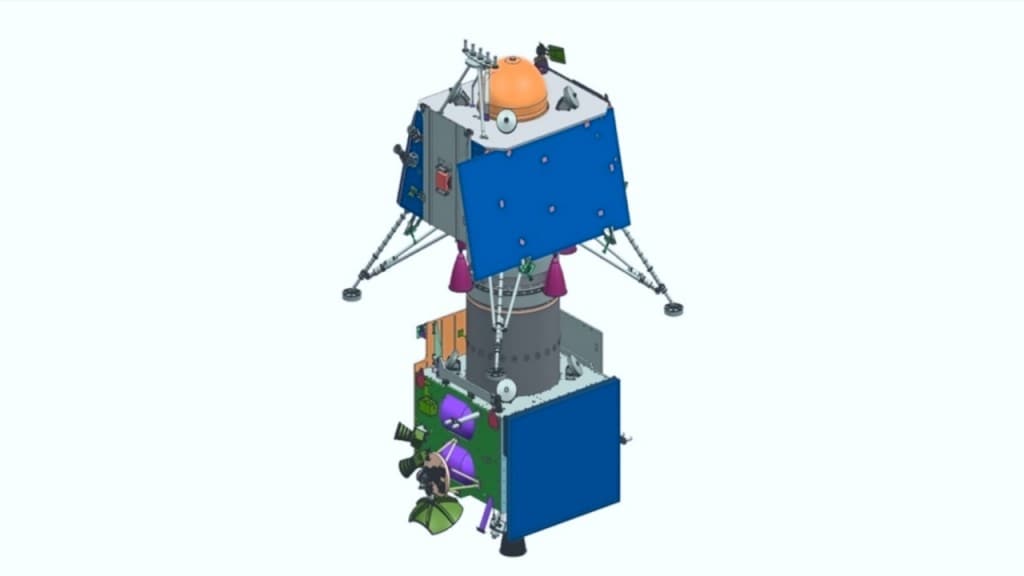 Configuration of the Chandrayaan-2 mission rover, lander and orbiter. Image: ISRO[/caption]The mission will try and build on the work of Chandrayaan-1's discoveries — the mission is designed to making a landing near the moon's south pole, home to the body of ice water Chandrayaan-1 confirmed.So far, only one of the three modules of the mission is mission-ready, with plenty more to do before ISRO's launch window opens in under 60-days' time. However, ISRO's chief shared that the delays are only to minimise the risk of the mission by as much as possible."We saw Israel's example and we don’t want to take any risk," an ISRO official told The Hindu. "Despite Israel being such a technologically advanced country, the mission failed. We want the mission to be a success."
First Published:May 10, 2019, 14:03:00 IST
Advertisement
Advertisement

Careless Whispers: Scientists discover that plants can 'talk' to each other using smells
Japanese scientists have recorded a video that shows plants, in certain conditions, communicate with each other using mists that carry smells. The discovery, reveals that plants release a fine mist of airborne compounds, to warn nearby plants of potential dangers
Life on Mars? European Space Agency’s Orbiter discovers ice water deposits at equator
European Space Agency's Mars Express Orbiter has identified massive ice and ice water deposits beneath the surface of Mars. The Mars Express orbiter was also the first to confirmed the presence of ice on Mars in 2004
Microsoft briefly overtakes Apple as the most valuable company, Apple back on top again
At its peak during the session, Microsoft's value reached $2.903 trillion, with a 2% surge. As of writing this article, Apple closed at $2.89 trillion, whereas Microsoft closed at $2.86 trillion
Even NASA is facing a tough time, starts layoffs following major budget cuts
NASA is facing some massive budget cuts, because of which, it has been forced to postpone some upcoming missions. NASA's Jet Propulsion Laboratory has been hit hard by recent federal budget cuts, resulting in the layoff of 100 contractors last week
ISRO, NASA's NISAR satellite to get ready by Jan-end, will monitor Earth's snow-covered regions
The NISAR satellite which has been developed jointly ISRO and NASA, should be ready for launch by the end of January 2024. The collaboration between NASA and ISRO on NISAR is the first time the two agencies have cooperated on hardware development for an Earth-observing mission
Advertisement
Advertisement