


ISRO to increase production of solid booster engines to make more powerful rockets
According to ISRO, its Solid Propellant Space Booster Plant is setting up 29 additional facilities.

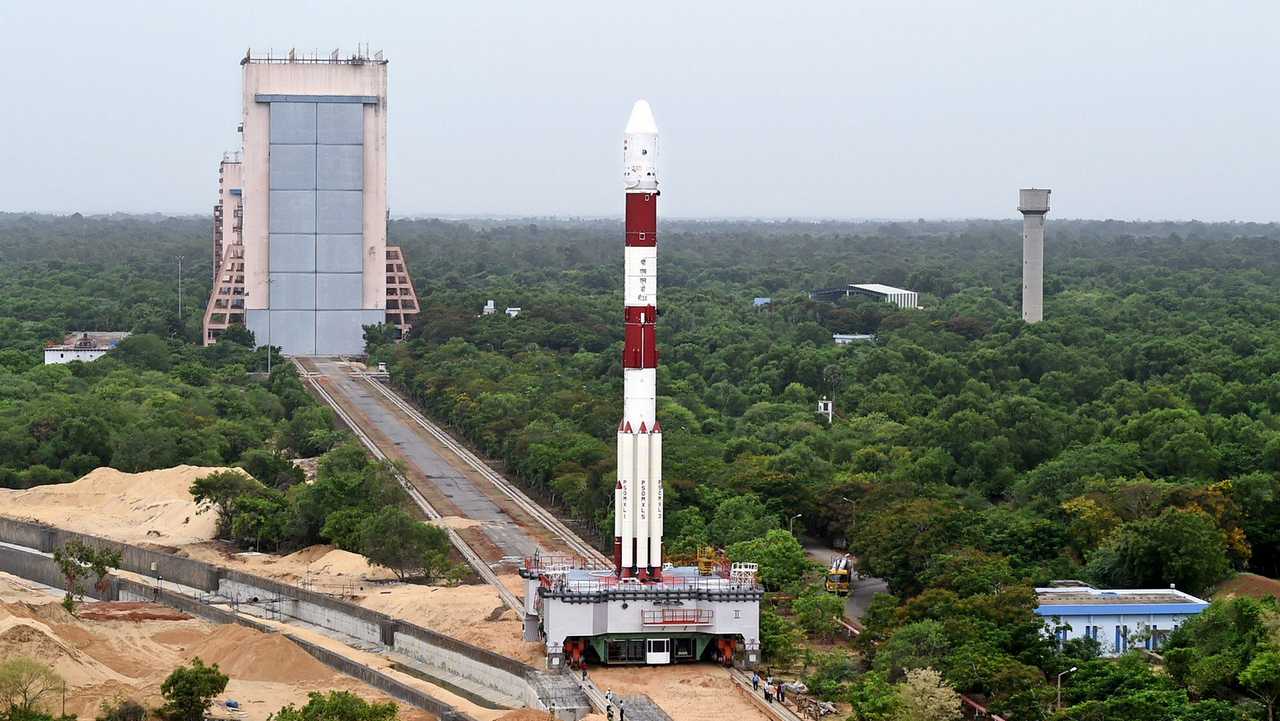
A panoramic view of the fully-integrated PSLV-C34. Image: ISRO[/caption]The space agency said SPROB is now carrying out a challenging task to deliver 12 numbers of S139 motors by 2019 end, which is double the present capacity. The S139 motors powers the first stage of Indian rocket Polar Satellite Launch Vehicle (PSLV).The plant is located at Satish Dhawan Space Centre (SDSC) here where the Indian rocketport is also located.On Wednesday, ISRO celebrated the completion of 1,000th sold motor casting by SPROB.For developing the essential expertise in large Solid Rocket Motors, SPROB was established at Sriharikota and commissioned in 1977 with the realisation of a one-metre diameter monolithic motor for SLV-3 (Space Launch Vehicle-3).According to ISRO, in the 1980s, the requirement of the operational PSLV called for a major expansion of the scope and capacity of the facilities at SPROB.This necessitated quantum shift in propellant formulation technology using the indigenously developed HTPB binder and vertical propellant mixers.Self-reliance in solid propellant production was achieved by indigenous development and realisation of several specialised equipments.For manufacturing the massive S200 solid rocket motors of GSLV MkIII (Geosynchronous Satellite Launch Vehicle Mk III), a new plant was built at SPROB.Successful commissioning of this vast with state of the art plant in 2008 has enabled the Indian space programme to evolve complex missions like Chandrayaan-2 and Gaganyaan.

Careless Whispers: Scientists discover that plants can 'talk' to each other using smells
Life on Mars? European Space Agency’s Orbiter discovers ice water deposits at equator
Microsoft briefly overtakes Apple as the most valuable company, Apple back on top again
Even NASA is facing a tough time, starts layoffs following major budget cuts
ISRO, NASA's NISAR satellite to get ready by Jan-end, will monitor Earth's snow-covered regions