


Intensive agriculture raises future pandemic risk, with animals and people in close contact: Study
COVID-19 is almost certain to have originated in animals before passing to and spreading among humans.


Woman farmer in Nedumangad, Thiruvananthapuram in Kerala.[/caption]"The way humans change landscapes across the world, from natural forest to farmland, has consistent impacts on many wild animal species, causing some to decline while others persist or increase," said Rory Gibb, from UCL's Centre for Biodiversity and Environment Research."Our findings show that the animals that remain in more human-dominated environments are those that are more likely to carry infectious diseases that can make people sick."
Disease reservoir
More than half of agricultural land increase is being carved out of Earth's forests, according to the UN's biodiversity panel.COVID-19, which has infected more than 18 million people and killed more than 7,00,000, is almost certain to have originated in animals before passing to and spreading among humans.[caption id="attachment_5938081" align="alignnone" width="1280"]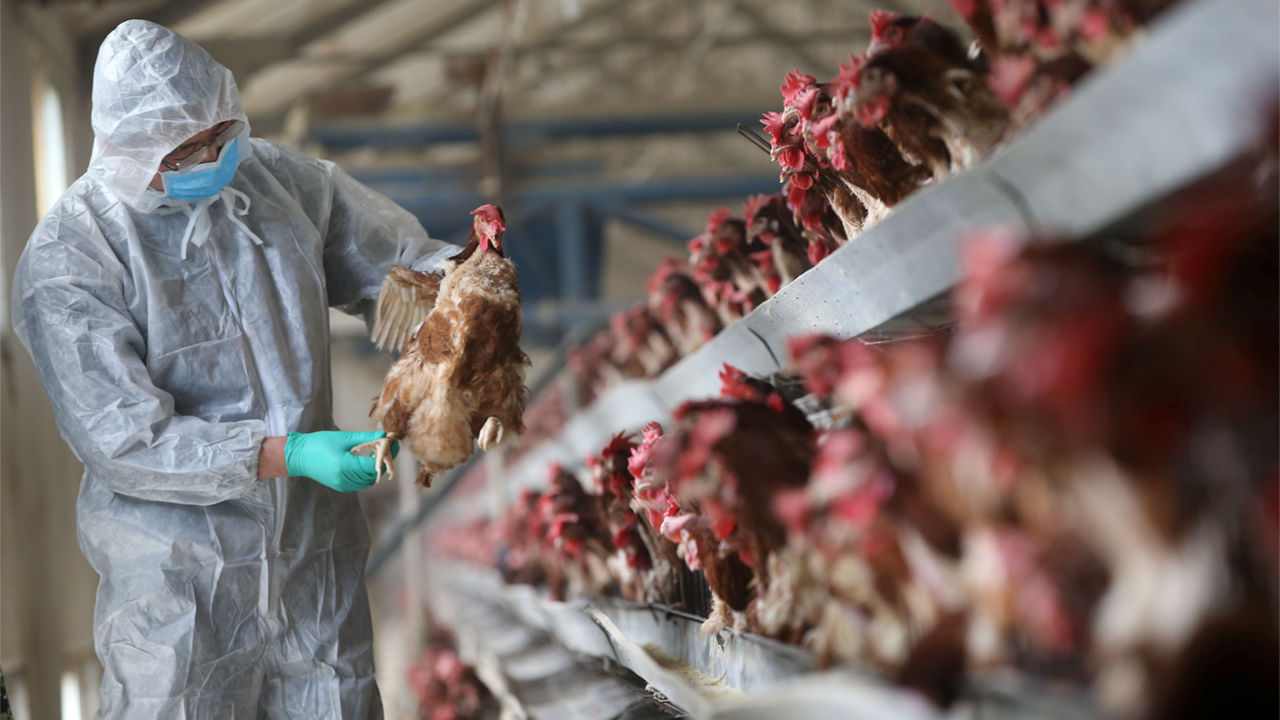
A veterinarian checks on chickens for symptoms of avian flu. Image: Science[/caption]The novel coronavirus is just one of several deadly viruses that have made the leap from animals, which carry thousands of types of microbes that may be harmful to humans.And as the disease reservoir gets squeezed ever tighter, the risk of leaks rises.Research co-author Kate Jones said the findings showed how governments should view agriculture and food supply as intrinsically linked to human health."As agricultural and urban lands are predicted to continue expanding, we should be strengthening disease surveillance and healthcare provision in those areas that are undergoing a lot of land disturbance," she said.David Redding, also a UCL co-author, said he hoped the research would change the way people think about sacrificing nature for food."I think it is important that we make a strong and persistent link between economically driven [often from Western markets] land-use change and indirect costs to local and global human populations, such as zoonotic disease outbreaks," he told AFP.

Careless Whispers: Scientists discover that plants can 'talk' to each other using smells
Life on Mars? European Space Agency’s Orbiter discovers ice water deposits at equator
Microsoft briefly overtakes Apple as the most valuable company, Apple back on top again
Even NASA is facing a tough time, starts layoffs following major budget cuts
ISRO, NASA's NISAR satellite to get ready by Jan-end, will monitor Earth's snow-covered regions