
Advertisement


Sections
India's Gangetic dolphins are thriving in murky waters, new census suggests
Water quality is relatively better in this region that upstream, but pollution dangers remain: Researcher.

A census of wildlife in a 1,000-kilometre stretch of the Ganga and its two tributaries in Bihar indicates a "thriving" population of Gangetic river dolphins in the region.Some experts have called it a sign of a "healthy river ecosystem" since the threatened dolphin species is known to survive in a clean, freshwater environment. Their numbers have increased significantly since 2009, when the Gangetic dolphin was declared India's National Aquatic Animal.Gangetic dolphins along a 1000-km stretch of the Ganga were surveyed by a team of researchers from the Zoological Survey of India (ZSI), Wildlife Trust of India (WTI) and Tilka Manjhi University in Bhagalapur, Orissa. ZSI described what they found over the three-week study as a "thriving" population of Gangetic dolphins along that particular stretch of river in Bihar, Hindustan Times reported."We have found about 1,150 dolphins in these rivers during our extensive survey which lasted about a month and we think the population is stable," Gopal Sharma, Deputy Director of the Zoological Survey of India (ZSI) told Down to Earth.[caption id="attachment_6121531" align="alignnone" width="1280"]![A Gangetic River Dolphin bobs its head above the water for some air. Image credit: WCS]() A Gangetic River Dolphin bobs its head above the water for some air. Image credit: WCS[/caption]The "extensive" survey lasted 23 days, during which time a large number of threatened Gangetic dolphins were counted along simultaneous, 300-kilometre segments of the Ganga. The stretches included two tributaries of the Ganga — the Gandak and Ghaghara — in Bihar, the Times report added.And while the survey was done simultaneously in all three segments of the river, researchers used a direct 'visual count' of dolphins to estimate how many there were. Each was counted based on their size and height as they came up to the surface to breathe. While the report is still being prepared and yet to be released by the government, researchers haven't confirmed if the dolphin numbers are significant yet.Whether it has increased or decreased in recent years is difficult to say because this is the first survey of such a scale to been carried out for the river, Sharma told Down to Earth.But researchers from ZSI do think their findings are telling of the health of the Ganga for its marine life."I am happy to inform that the river Ganga is alive in this part of Bihar. The river water quality here is relatively better than upper stream, though pollution danger persists," Sunil Kumar Choudhary, coordinator of Vikramshila Biodiversity Research and Education Centre in Bhagalpur, told Down to Earth."The presence of dolphins in good numbers says it all," he added.Dolphins are highly intelligent aquatic animals that have an important role to play in ecology. If a dolphin is sick, injured or dead, it is a strong indicator that their aquatic environments are unsafe and unhealthy for marine life (and humans, for that matter).[caption id="attachment_6121541" align="alignnone" width="1280"]
A Gangetic River Dolphin bobs its head above the water for some air. Image credit: WCS[/caption]The "extensive" survey lasted 23 days, during which time a large number of threatened Gangetic dolphins were counted along simultaneous, 300-kilometre segments of the Ganga. The stretches included two tributaries of the Ganga — the Gandak and Ghaghara — in Bihar, the Times report added.And while the survey was done simultaneously in all three segments of the river, researchers used a direct 'visual count' of dolphins to estimate how many there were. Each was counted based on their size and height as they came up to the surface to breathe. While the report is still being prepared and yet to be released by the government, researchers haven't confirmed if the dolphin numbers are significant yet.Whether it has increased or decreased in recent years is difficult to say because this is the first survey of such a scale to been carried out for the river, Sharma told Down to Earth.But researchers from ZSI do think their findings are telling of the health of the Ganga for its marine life."I am happy to inform that the river Ganga is alive in this part of Bihar. The river water quality here is relatively better than upper stream, though pollution danger persists," Sunil Kumar Choudhary, coordinator of Vikramshila Biodiversity Research and Education Centre in Bhagalpur, told Down to Earth."The presence of dolphins in good numbers says it all," he added.Dolphins are highly intelligent aquatic animals that have an important role to play in ecology. If a dolphin is sick, injured or dead, it is a strong indicator that their aquatic environments are unsafe and unhealthy for marine life (and humans, for that matter).[caption id="attachment_6121541" align="alignnone" width="1280"]![Ganges River Dolphin. Image credit: S Paudel]() Ganges River Dolphin. Image credit: S Paudel[/caption]According to a WWF estimate, there are fewer than 3,000 freshwater or river dolphins in the world — of which around 2,000 are in India. Bihar currently has the biggest population of Gangetic dolphins in any single region worldwide.Dolphins are among the most vulnerable species on Earth, their population still on the decline. The findings of this study could (tentatively) be a big win for Bihar. The Wildlife Trust of India's (WTI's) inputs from the survey are expected soon. They are yet to submit their findings to the government, according to a recent tweet.They shared with us that their Gangetic dolphin counts were not as high in some parts of the Ganga as ZSI's.The comprehensive, first-of-its-kind survey also studied other aquatic fauna. The team also studied 45 different species of endangered and migratory birds as well as several species of fish.
Ganges River Dolphin. Image credit: S Paudel[/caption]According to a WWF estimate, there are fewer than 3,000 freshwater or river dolphins in the world — of which around 2,000 are in India. Bihar currently has the biggest population of Gangetic dolphins in any single region worldwide.Dolphins are among the most vulnerable species on Earth, their population still on the decline. The findings of this study could (tentatively) be a big win for Bihar. The Wildlife Trust of India's (WTI's) inputs from the survey are expected soon. They are yet to submit their findings to the government, according to a recent tweet.They shared with us that their Gangetic dolphin counts were not as high in some parts of the Ganga as ZSI's.The comprehensive, first-of-its-kind survey also studied other aquatic fauna. The team also studied 45 different species of endangered and migratory birds as well as several species of fish.
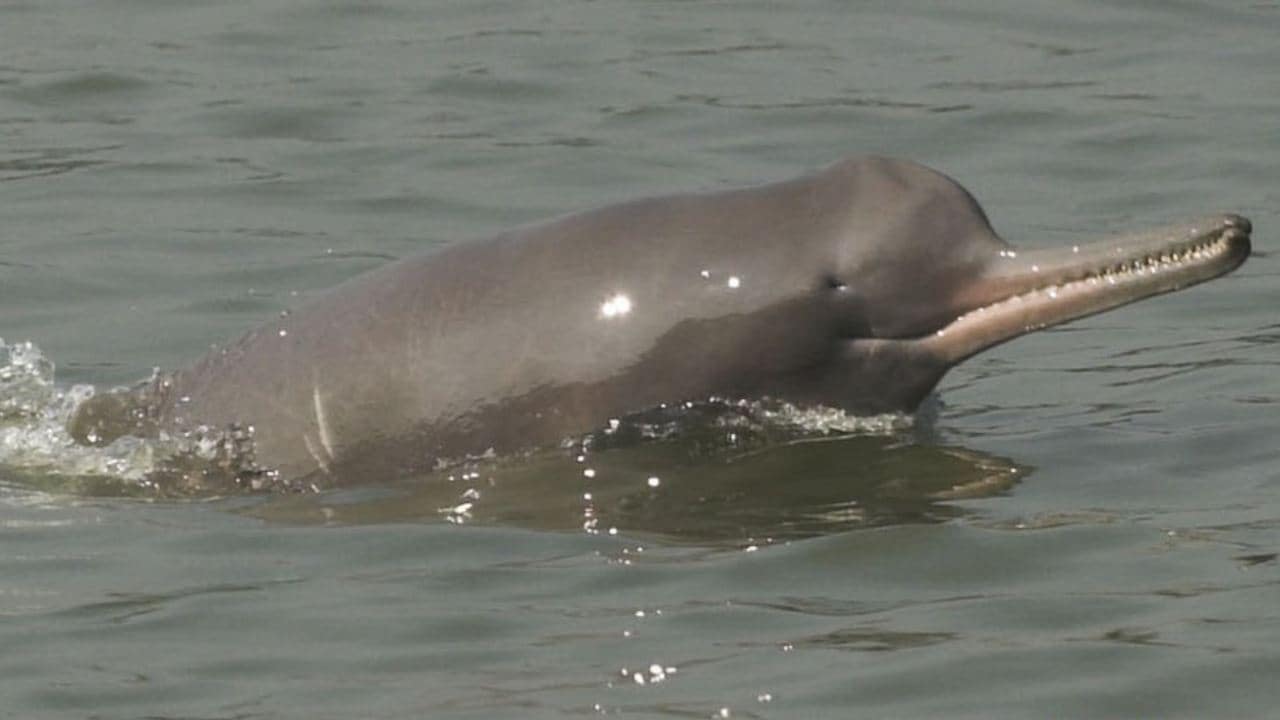 A Gangetic River Dolphin bobs its head above the water for some air. Image credit: WCS[/caption]The "extensive" survey lasted 23 days, during which time a large number of threatened Gangetic dolphins were counted along simultaneous, 300-kilometre segments of the Ganga. The stretches included two tributaries of the Ganga — the Gandak and Ghaghara — in Bihar, the Times report added.And while the survey was done simultaneously in all three segments of the river, researchers used a direct 'visual count' of dolphins to estimate how many there were. Each was counted based on their size and height as they came up to the surface to breathe. While the report is still being prepared and yet to be released by the government, researchers haven't confirmed if the dolphin numbers are significant yet.Whether it has increased or decreased in recent years is difficult to say because this is the first survey of such a scale to been carried out for the river, Sharma told Down to Earth.But researchers from ZSI do think their findings are telling of the health of the Ganga for its marine life."I am happy to inform that the river Ganga is alive in this part of Bihar. The river water quality here is relatively better than upper stream, though pollution danger persists," Sunil Kumar Choudhary, coordinator of Vikramshila Biodiversity Research and Education Centre in Bhagalpur, told Down to Earth."The presence of dolphins in good numbers says it all," he added.Dolphins are highly intelligent aquatic animals that have an important role to play in ecology. If a dolphin is sick, injured or dead, it is a strong indicator that their aquatic environments are unsafe and unhealthy for marine life (and humans, for that matter).[caption id="attachment_6121541" align="alignnone" width="1280"]
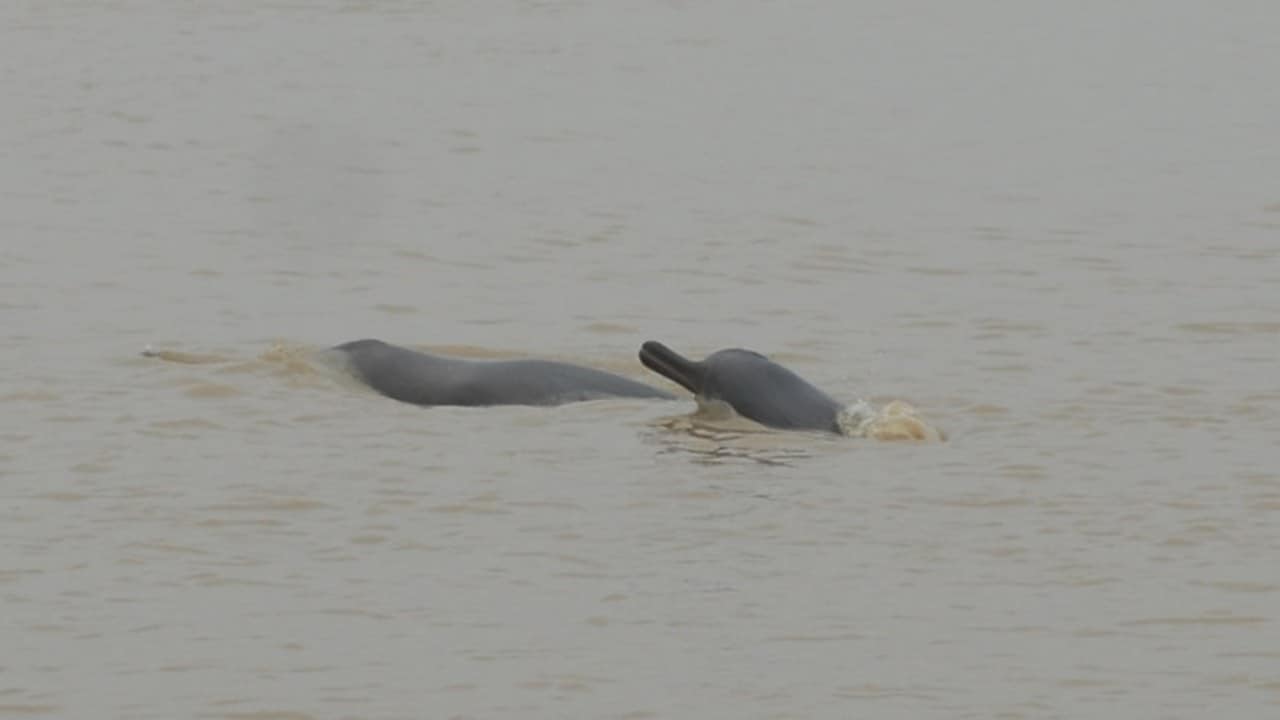 Ganges River Dolphin. Image credit: S Paudel[/caption]According to a WWF estimate, there are fewer than 3,000 freshwater or river dolphins in the world — of which around 2,000 are in India. Bihar currently has the biggest population of Gangetic dolphins in any single region worldwide.Dolphins are among the most vulnerable species on Earth, their population still on the decline. The findings of this study could (tentatively) be a big win for Bihar. The Wildlife Trust of India's (WTI's) inputs from the survey are expected soon. They are yet to submit their findings to the government, according to a recent tweet.They shared with us that their Gangetic dolphin counts were not as high in some parts of the Ganga as ZSI's.The comprehensive, first-of-its-kind survey also studied other aquatic fauna. The team also studied 45 different species of endangered and migratory birds as well as several species of fish.
First Published:Feb 21, 2019, 14:22:46 IST
Advertisement
Advertisement

Careless Whispers: Scientists discover that plants can 'talk' to each other using smells
Japanese scientists have recorded a video that shows plants, in certain conditions, communicate with each other using mists that carry smells. The discovery, reveals that plants release a fine mist of airborne compounds, to warn nearby plants of potential dangers
Life on Mars? European Space Agency’s Orbiter discovers ice water deposits at equator
European Space Agency's Mars Express Orbiter has identified massive ice and ice water deposits beneath the surface of Mars. The Mars Express orbiter was also the first to confirmed the presence of ice on Mars in 2004
Microsoft briefly overtakes Apple as the most valuable company, Apple back on top again
At its peak during the session, Microsoft's value reached $2.903 trillion, with a 2% surge. As of writing this article, Apple closed at $2.89 trillion, whereas Microsoft closed at $2.86 trillion
Even NASA is facing a tough time, starts layoffs following major budget cuts
NASA is facing some massive budget cuts, because of which, it has been forced to postpone some upcoming missions. NASA's Jet Propulsion Laboratory has been hit hard by recent federal budget cuts, resulting in the layoff of 100 contractors last week
ISRO, NASA's NISAR satellite to get ready by Jan-end, will monitor Earth's snow-covered regions
The NISAR satellite which has been developed jointly ISRO and NASA, should be ready for launch by the end of January 2024. The collaboration between NASA and ISRO on NISAR is the first time the two agencies have cooperated on hardware development for an Earth-observing mission
Advertisement
Advertisement