


Hubble finds unusual black hole at a spiral galaxy's centre 130m light years away
The black hole is at the heart of a spiral galaxy, NGC 3147, located 130 million light-years away.

Black holes need to eat to survive and any matter or object that comes near their force field gets consumed. They shred and decimate that matter.So Hubble scientists were pretty confused and amazed when they found a black hole that would have been considered to be ‘starving’, with disc around it.The black hole is at the heart of a spiral galaxy - NGC 3147, located 130 million light-years away. This galaxy is thought to be a low luminosity galaxy, which means that there is not enough matter that is captured by its gravitational pull to feed its black hole. It shouldn’t have had a disc around it.[caption id="attachment_6979831" align="alignnone" width="1280"]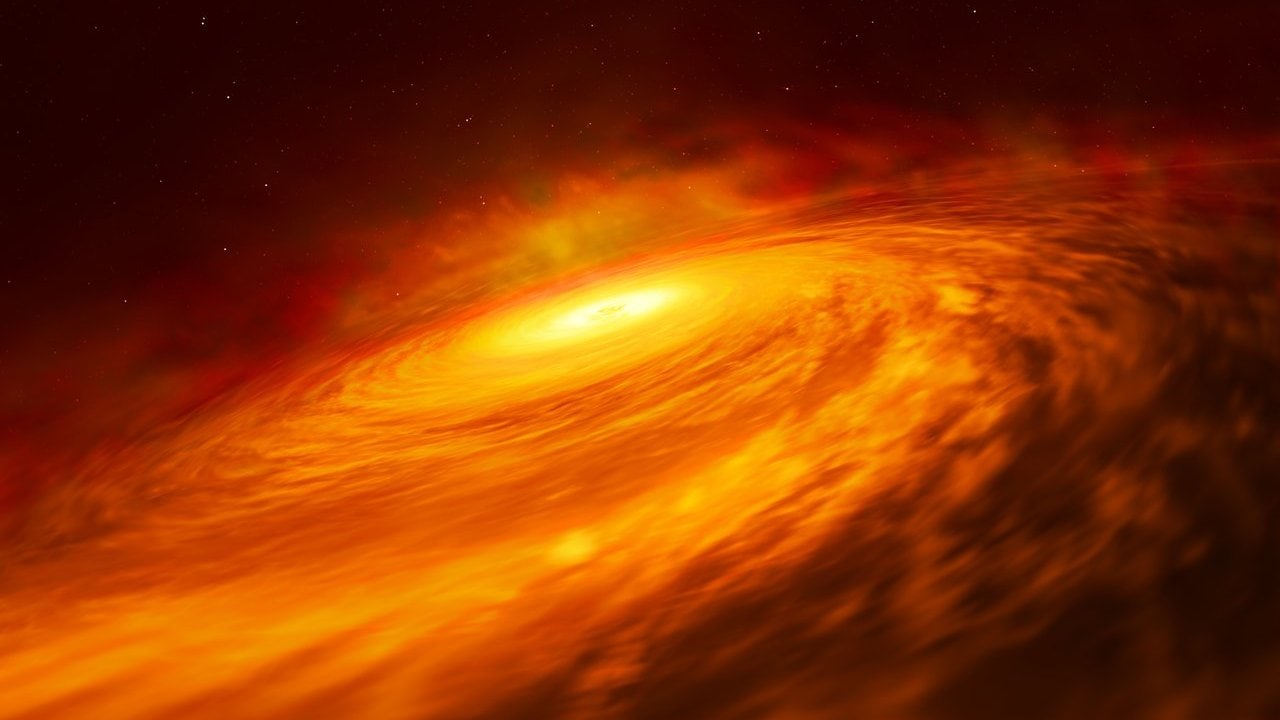 Artist’s impression of the peculiar thin disc of material circling a supermassive black hole at the heart of the spiral galaxy NGC 3147, located 130 million light-years away. Image credit: Hubble telescope[/caption]This black hole now provides scientists with an opportunity to test Albert Einstein’s theory of relativity which is a combination of two theories – general and special relativity. The disc is so deeply embedded in the black hole’s gravitational field that the light from the disc is being altered, giving astronomers a look into the dynamic processes close to a black hole.“We’ve never seen the effects of both general and special relativity in visible light with this much clarity,” said team member Marco Chiaberge of AURA for ESA, STScI and Johns Hopkins University said in a statement.In order to study the matter swirling deep inside this disc, the researchers used the Hubble Space Telescope Imaging Spectrograph (STIS) instrument.The astronomers selected this galaxy to prove the accepted models of low luminosity galaxies and their starving black holes.[caption id="attachment_6979871" align="alignnone" width="1280"]
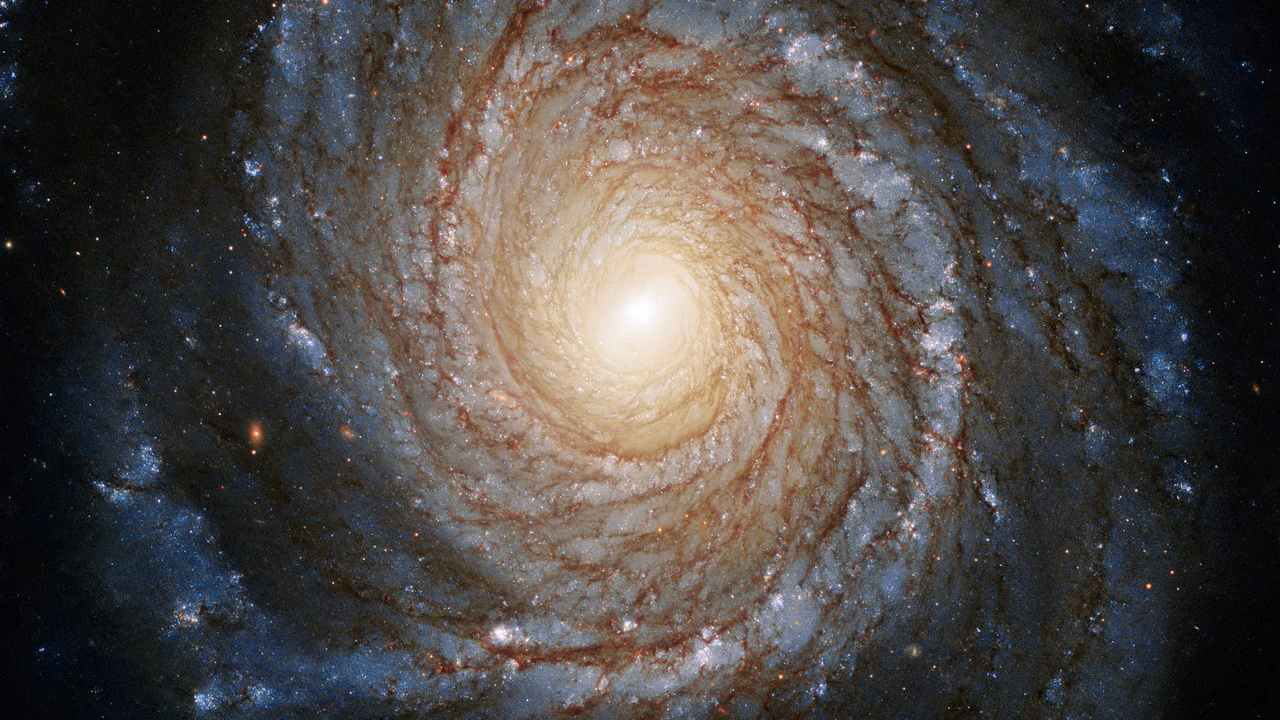 Artist impression of the Galaxy NGC 3147 Image credit: Hubble telescope[/caption]“The type of disc we see is a scaled-down quasar that we did not expect to exist,” Bianchi explained in a statement. “It’s the same type of disc we see in objects that are 1000 or even 100 000 times more luminous. The predictions of current models for very faint active galaxies clearly failed.”A quasar is a large but distant object in space that emits large amounts of energy and is said to have a supermassive black hole at its centre.The Hubble telescopes is a collaboration between the US space agency NASA and the European Space Agency (ESA).The finding of this study is published in the science journal Monthly Notices of the Royal Astronomical Society.

Careless Whispers: Scientists discover that plants can 'talk' to each other using smells
Life on Mars? European Space Agency’s Orbiter discovers ice water deposits at equator
Microsoft briefly overtakes Apple as the most valuable company, Apple back on top again
Even NASA is facing a tough time, starts layoffs following major budget cuts
ISRO, NASA's NISAR satellite to get ready by Jan-end, will monitor Earth's snow-covered regions