


Hubble captures what may be the largest spiral galaxy in our local universe
The UGC 2995 galaxy is as large as you can make a disk galaxy without hitting anything else in space.

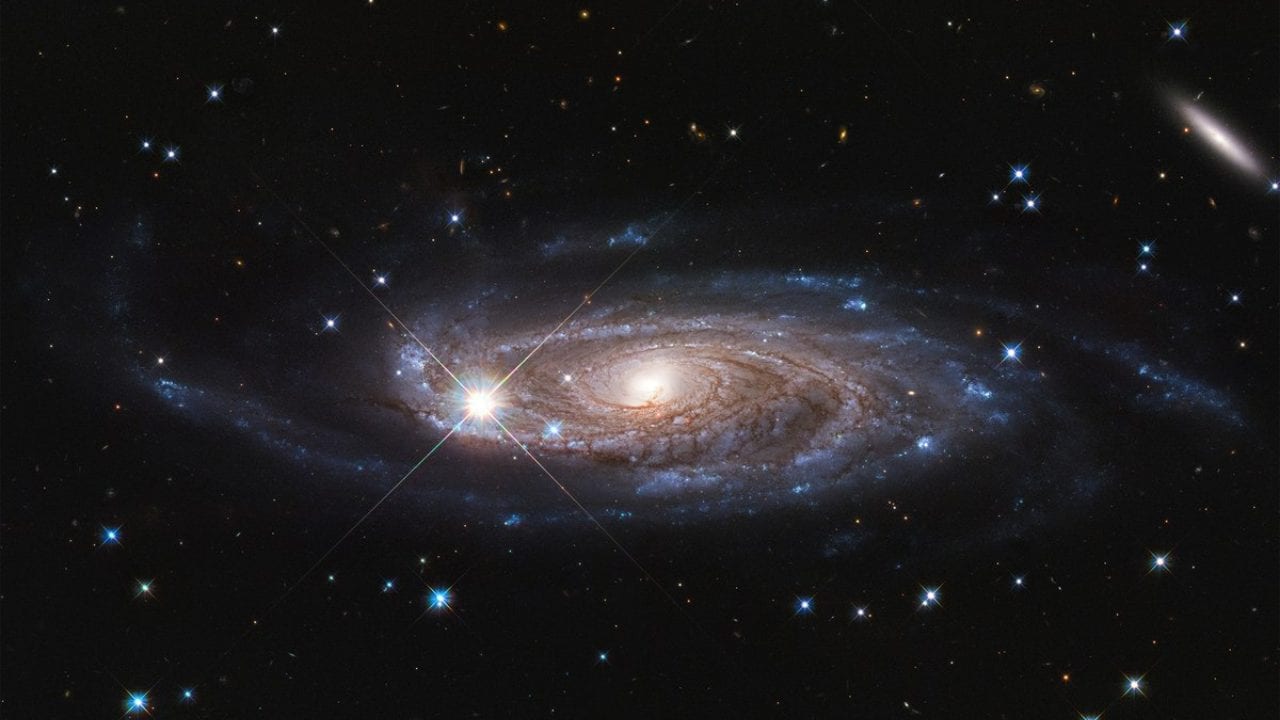
Galaxy UGC 2885 may be the largest one in the local universe. It is 2.5 times wider than our Milky Way and contains 10 times as many stars. This galaxy is 232 million light-years away, located in the northern constellation of Perseus.[/caption]"Dr Rubin measured the galaxy’s rotation, providing evidence for dark matter that makes up most of the galaxy’s mass," Dr Holwerda said. His research into the size and features of UGC 2885 has been inspired largely by the work of Vera Rubin in the 1980s. Holwerda and his colleagues from Canada and the United States are studying the galaxy to understand what led to its enormous size."It’s as big as you can make a disk galaxy without hitting anything else in space," Holwerda said. "Did the monster galaxy gobble up much smaller satellite galaxies over time? Or did it just slowly accrete gas to make new stars?"Holwerda thinks the galaxy appears to be "puttering along, slowly growing." UGC 2885 is situated in a fairly isolated locale, without many galaxies in striking distance to crash into and disrupt the shape of its disk. But it is close enough to Earth for Dr Holwerda and his co-authors to make some finer observations. For instance, the number of globular star clusters that appear in UGC 2885's halo."It is close enough for Hubble observations to resolve the globular cluster population," the astronomers said.

Careless Whispers: Scientists discover that plants can 'talk' to each other using smells
Life on Mars? European Space Agency’s Orbiter discovers ice water deposits at equator
Microsoft briefly overtakes Apple as the most valuable company, Apple back on top again
Even NASA is facing a tough time, starts layoffs following major budget cuts
ISRO, NASA's NISAR satellite to get ready by Jan-end, will monitor Earth's snow-covered regions