


Healthy babies born to same-sex mice parents using stem cells and gene editing
The offsprings from two mothers developed well enough to go on to have normal children of their own.

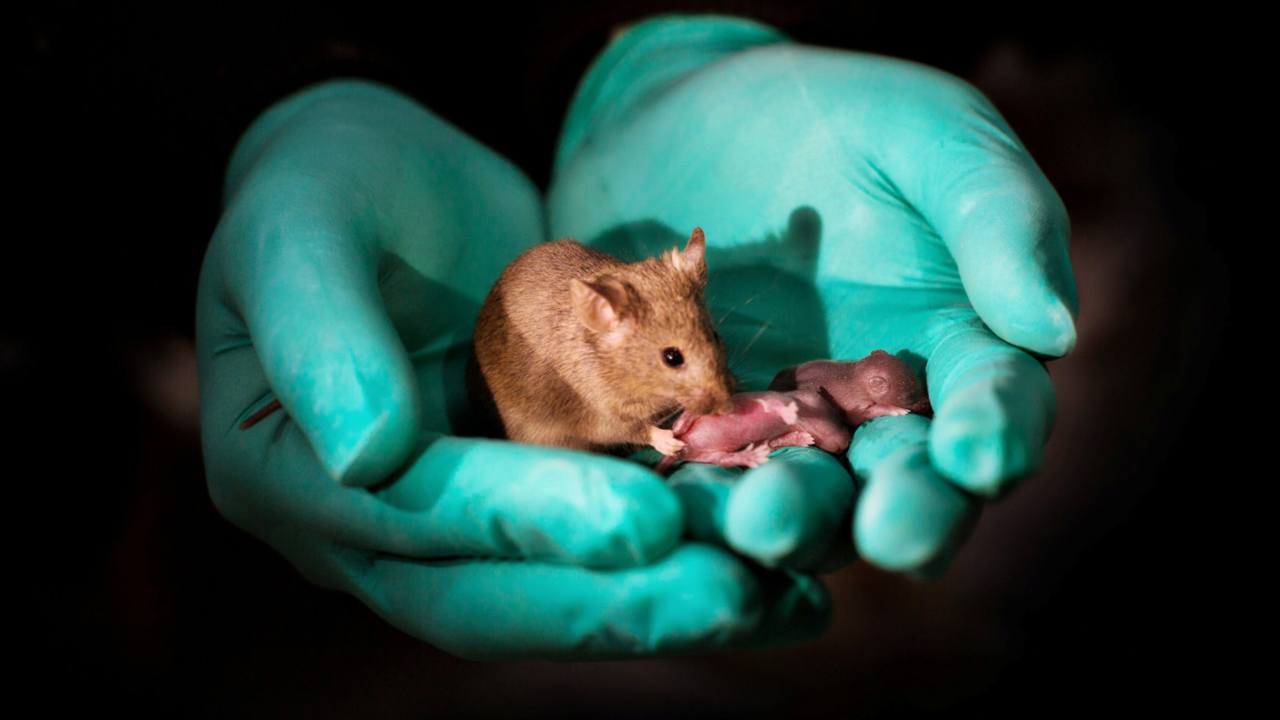
A mother mouse and her babies. Image: SWNS.com[/caption]To create their bi-maternal mice, a team of scientists led by Qi Zhou used cells known as haploid embryonic stem cells (ESCs), which contain half the normal number of chromosomes and DNA from only one parent.Using gene editing techniques, the scientists deleted three imprinting regions of the genome from haploid ESCs containing a female parent’s DNA and injected them into eggs from another female mouse. This work produced 29 live mice from 210 embryos. The mice were normal, lived to adulthood, and went on to have babies of their own.Making mice from two fathers was more complicated, the researchers said, and involved modifying haploid ESCs containing only a male parent’s DNA to delete seven key imprinted regions.The edited haploid ESCs were then injected - along with sperm from another male mouse — into an egg cell that had its nucleus, and therefore its female genetic material, removed. This created embryos containing only genomic DNA from the two males, and these embryos were then transferred to surrogate mothers. These pups survived for only 48 hours after birth.“This research shows us what’s possible,” said Wei Li, who co-led the work.The scientists said there are still obstacles to using such methods in other mammals, including identifying which imprinted genes need to be deleted. They said, however, that they hoped to explore the techniques in other research animals in the future.Azim Surani, a germline and epigenomics specialist at Britain’s Cambridge University, said the work was impressive, but the “extensive genetic manipulation” involved meant it is not a plausible way to create human babies from same-sex parents.

Careless Whispers: Scientists discover that plants can 'talk' to each other using smells
Life on Mars? European Space Agency’s Orbiter discovers ice water deposits at equator
Microsoft briefly overtakes Apple as the most valuable company, Apple back on top again
Even NASA is facing a tough time, starts layoffs following major budget cuts
ISRO, NASA's NISAR satellite to get ready by Jan-end, will monitor Earth's snow-covered regions