


Greenland's ice summit witnessed rainfall for the first time in history, scientists worry about climate change
Researchers recorded rainfall on 14 August and its estimated that about seven billion tonnes of water fell across the sheet.

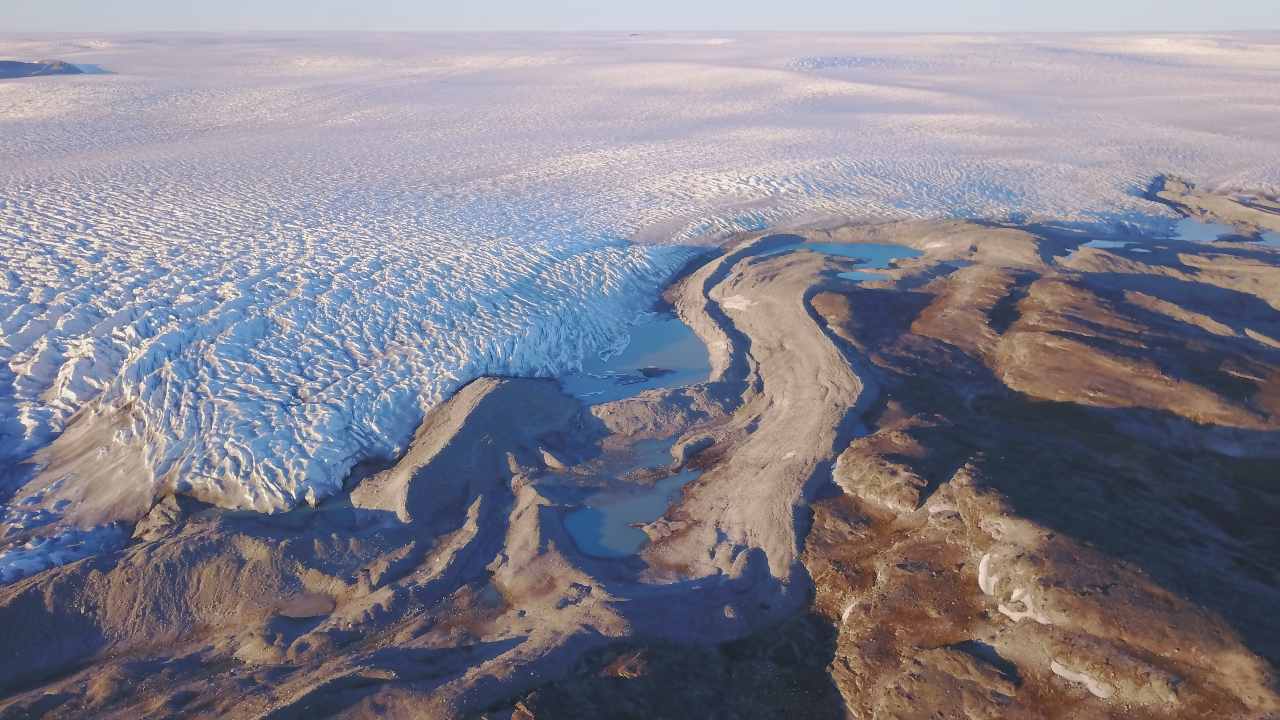
The edge of the Greenland Ice Sheet. Credit: Jason Briner[/caption]Researchers recorded rainfall on 14 August. It has been estimated that about seven billion tonnes of water fell across the sheet. The rainfall caused significant melting in most of Greenland, an area approximately four times the size of the UK.This marks the third time in recorded history that temperatures in Greenland have gone above freezing point. The region also saw a large-scale melting episode in July this year, making scientists worried about the effect of climate change.In an interview, Ted Scambos, a scientist at the National Snow and Ice Data Center at the University of Colorado, called the event “unprecedented". "We are crossing thresholds not seen in millennia, and frankly this is not going to change until we adjust what we’re doing to the air,” he added.In May this year, scientists had stated that a large portion of Greenland’s ice sheet was nearing a significant tipping point, after which accelerated melting of the ice would be a given, even if global warming was stopped.The global sea levels would rise by six metres if all of Greenland’s ice melted. The event would affect millions around the world and submerge low-lying cities such as Amsterdam, New York, and Shanghai. Though the event could take centuries to occur, the rapid levels of ice melt due to global warming is a cause of worry for scientists.It has been estimated that if aggressive interventions are not taken, the Arctic could be ice-free by 2050.

Careless Whispers: Scientists discover that plants can 'talk' to each other using smells
Life on Mars? European Space Agency’s Orbiter discovers ice water deposits at equator
Microsoft briefly overtakes Apple as the most valuable company, Apple back on top again
Even NASA is facing a tough time, starts layoffs following major budget cuts
ISRO, NASA's NISAR satellite to get ready by Jan-end, will monitor Earth's snow-covered regions